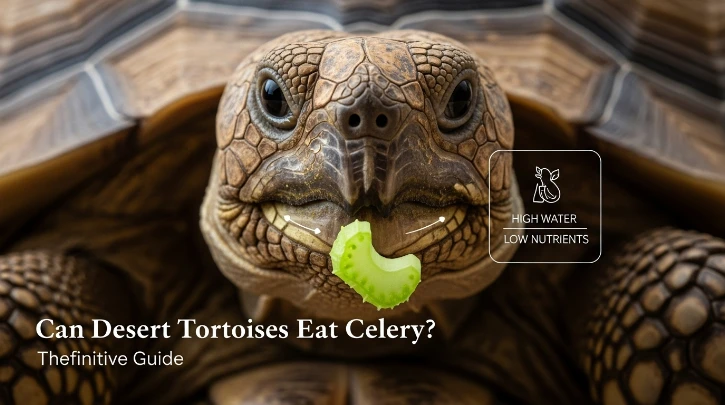
No, desert tortoises should not eat celery. Celery provides very little nutritional benefit for these specific reptiles and can even cause serious health problems. Its high water content and poor nutrient profile make it a dangerous choice for your beloved pet. Your tortoise’s health is a delicate balance. Giving them the wrong food can lead to serious, even fatal, health issues. Don’t risk it! Keep reading to learn exactly why celery is harmful and discover safe, healthy options to protect your precious pet. Your tortoise trusts you to make the right choices for their well-being.
You care deeply about your desert tortoise. You want to give them the best life possible. Understanding their unique dietary needs is vital for their health. Many common human foods are not safe for them. This guide will help you sort fact from fiction. You will learn what foods keep your tortoise thriving. You will also understand why some foods, like celery, are best avoided.
Understanding Your Desert Tortoise’s Natural Diet
Your desert tortoise evolved to eat specific foods found in their harsh native habitat. Their digestive system is perfectly suited for these plants. Understanding their natural diet helps you choose the best foods for them at home.
Desert tortoises are herbivores. This means they eat only plants. In the wild, they graze on a variety of native weeds, grasses, and wildflowers. These plants are tough and fibrous. They provide the right mix of nutrients, fiber, and moisture. They get most of their water from these plants, too. This natural diet keeps them healthy and strong.
The Importance of Fiber for Desert Tortoises
Fiber is a cornerstone of your desert tortoise’s diet. It helps their digestion work correctly. Without enough fiber, their gut can slow down.
A tortoise’s digestive system needs plenty of fiber. This roughage keeps their intestines moving. It prevents problems like constipation. Fiber also helps maintain a healthy gut microbiome. These are the good bacteria that aid digestion. When food moves too fast, like with watery foods, it can cause diarrhea. This strips away vital nutrients.
Essential Nutrients for Tortoise Health
Desert tortoises need specific vitamins and minerals to grow properly. Calcium is especially important for strong bones and a healthy skeleton.
Calcium and phosphorus levels are very important. Tortoises need much more calcium than phosphorus. This balance prevents serious health issues. Vitamin D3 is also crucial. It helps their body absorb calcium. They get Vitamin D3 from sunlight. When kept indoors, they need special UVB lighting. This helps them make their own Vitamin D3. A balanced diet and proper lighting work together.
Why Celery is Harmful to Desert Tortoises
Celery seems harmless, but it poses several risks to your desert tortoise. Its nutritional makeup is not suitable for their unique needs. Feeding celery can lead to serious health problems over time.
Many people think celery is a healthy snack for humans. It is low in calories and mostly water. For a desert tortoise, these qualities are not good. Their bodies need dense, fibrous greens. They also need specific mineral ratios. Celery simply does not meet these requirements.
Low Nutritional Value and High Water Content
Celery is mostly water, which means it offers little in terms of essential nutrients your tortoise needs. This lack of nutritional density is a major concern.
Your tortoise needs nutrient-rich plants. Celery is about 95% water. This high water content quickly fills their stomach. It leaves little room for truly nutritious foods. It can also cause diarrhea. Diarrhea makes it harder for them to absorb important nutrients. This leads to poor health over time. Think of it as eating empty calories for a human, but much worse for a tortoise.
The Dangers of Oxalates in Celery
Celery contains compounds called oxalates. While not extremely high, they can still be an issue, especially with frequent feeding.
Oxalates are natural chemicals found in many plants. They can bind with calcium in the tortoise’s body. This makes the calcium unavailable for use. Over time, this can lead to calcium deficiency. Calcium deficiency can cause metabolic bone disease (MBD). MBD weakens bones and shells. It is a painful and often fatal condition. Oxalates can also contribute to bladder stones.
Unsuitable Fiber and Stringy Texture
The fiber in celery is not the right kind for a desert tortoise. Its stringy nature can be difficult to digest.
Desert tortoises need broadleaf, coarse fiber. Celery’s fiber is long and stringy. This type of fiber can be hard for their gut to process. It can even cause impaction. Impaction means food gets stuck in their intestines. This is a medical emergency. The stringy fibers can also wrap around their internal organs. This causes great pain and blockages.
Risk of Pesticides and Chemicals
Store-bought celery often has pesticide residues. These chemicals are toxic to your sensitive tortoise.
Most produce you buy from a grocery store is treated with pesticides. These chemicals protect crops from insects. Even after washing, some residues remain. Tortoises are small and sensitive. Even tiny amounts of pesticides can be harmful. They can cause illness or even death. Always choose organic or homegrown foods for your tortoise. Wash them very well.
The Ideal Desert Tortoise Diet: What They *Should* Eat
Providing the right diet is the single most important thing you can do for your desert tortoise. Their diet should mimic their natural foraging habits. This means offering a wide variety of specific plants.
Your tortoise’s diet should be high in fiber and calcium. It needs to be low in protein and phosphorus. A diverse diet ensures they get all the necessary nutrients. Offer fresh foods every day. Remove any uneaten food quickly. This keeps their enclosure clean and prevents rot.
Safe and Nutritious Greens and Weeds
Many common weeds and leafy greens are excellent choices for your desert tortoise. These plants provide vital nutrients and fiber.
Some of the best foods for desert tortoises include:
- Dandelion greens and flowers: A favorite, packed with calcium.
- Broadleaf plantain: A common weed, very nutritious.
- Hibiscus leaves and flowers: A good source of fiber and vitamins (ensure pesticide-free).
- Mulberry leaves: High in calcium and fiber.
- Endive and Escarole: Good leafy greens, offer sparingly.
- Chicory: Another excellent leafy green.
- Mustard greens: Offer in moderation due to oxalate content.
- Turnip greens: Similar to mustard greens, use sparingly.
- Alfalfa hay: Good for fiber, especially when fresh weeds are scarce.
- Orchard grass: Another good hay option for fiber.
Always ensure any wild-collected plants are from areas free of pesticides and pollutants. You want to keep your tortoise safe from harmful chemicals.
Fruits and Vegetables: A Special Note
Fruits and most common vegetables should be given sparingly, if at all. Their natural diet does not include much of these.
Fruits are high in sugar. Too much sugar can cause digestive upset. It can also lead to tooth decay, though tortoises do not have teeth. They get metabolic bone disease. Offer small pieces of fruit, like a tiny bit of berry, only as a very rare treat. Think once a month or less. Most vegetables, like carrots or bell peppers, are also too high in sugar or have an improper calcium-to-phosphorus ratio. Stick to leafy greens and weeds as their main diet.
Comparing common human foods with ideal tortoise foods highlights the differences.
| Food Item | Suitable for Desert Tortoise? | Key Nutritional Concern |
|---|---|---|
| Celery | No | Low nutrients, high water, oxalates, stringy fiber |
| Dandelion Greens | Yes | High calcium, high fiber, balanced nutrients |
| Lettuce (Iceberg) | No | Very high water, almost no nutrients |
| Spinach | No (High Oxalates) | Extremely high oxalate content binds calcium |
| Carrots | Rare Treat Only | High sugar, low calcium-to-phosphorus ratio |
| Bell Peppers | Rare Treat Only | High water, improper nutrient balance |
| Hibiscus Leaves | Yes | Good fiber, calcium, vitamins |
| Alfalfa Hay | Yes (as a supplement) | Excellent fiber, protein source, and feed in moderation |
The Role of Supplements
Even with a perfect diet, sometimes your tortoise needs a little extra help. Calcium and vitamin supplements can fill gaps.
Calcium powder is often needed. It should be phosphorus-free. You dust their food lightly with it a few times a week. Vitamin D3 is also important. If your tortoise gets plenty of natural sunlight or proper UVB lighting, they usually makes enough D3. If not, a specific vitamin supplement might be needed. Always talk to a vet first. They can tell you exactly what your tortoise needs. Over-supplementing can also be harmful.
Consequences of an Improper Diet
Feeding your desert tortoise the wrong foods can lead to severe, often irreversible health problems. These issues can drastically shorten their lifespan and cause immense suffering. You must understand these risks to protect your pet.
A poor diet slowly erodes your tortoise’s health. The effects might not be immediate. However, over months or years, the damage becomes clear. These conditions are preventable with proper care. You hold the key to their long-term well-being.
Metabolic Bone Disease (MBD)
Metabolic Bone Disease is one of the most common and devastating issues caused by poor nutrition. It directly affects their bones and shell.
MBD happens when tortoises don’t get enough calcium. It can also happen if they get too much phosphorus. Or, if they lack vitamin D3. This disease weakens their bones. Their shell can become soft or bumpy. Their legs might become rubbery. MBD is very painful. It can deform your tortoise permanently. In severe cases, it causes organ failure. Proper diet and UVB lighting are crucial to prevent MBD. See a vet immediately if you suspect MBD. Learn more about MBD from the Veterinary Partner, a trusted source for pet health information: Metabolic Bone Disease in Reptiles.
Kidney and Bladder Stones
Certain foods and improper hydration contribute to the formation of painful stones in your tortoise’s urinary system.
Foods high in oxalates can lead to calcium binding. This creates crystals. These crystals can form painful stones in their kidneys or bladder. A diet too high in protein can also stress their kidneys. Stones cause pain, difficulty urinating, and infections. They often require surgery to remove. Ensuring a low-oxalate, appropriate protein diet and good hydration prevents these issues.
Shell Deformities and Pyramiding
The shell is a vital part of your tortoise’s body. A poor diet can lead to abnormal shell growth.
Pyramiding is a common shell deformity. The scutes, or plates on the shell, grow upwards into pyramids. This makes the shell rough and uneven. It is a sign of a bad diet, usually too much protein and too little fiber. It can also come from low humidity. While primarily cosmetic, severe pyramiding can restrict lung function. Once a shell pyramid, it cannot be fixed. Prevention is key. Focus on a high-fiber, low-protein diet.
Digestive Issues and Impaction
Feeding unsuitable foods can disrupt your tortoise’s delicate digestive system, leading to serious blockages.
Foods like celery, with their stringy, indigestible fiber, can cause impaction. This is when food gets stuck. It can also be caused by eating too much substrate. Impaction is very serious and life-threatening. Symptoms include lethargy, no appetite, and not passing waste. High-water foods can cause diarrhea, leading to dehydration and nutrient loss. Always choose foods easy for your tortoise to digest.
You can identify signs of an unhealthy tortoise diet. Keep an eye on these warning signals.
| Sign of an Unhealthy Diet | What It Looks Like | Potential Cause |
|---|---|---|
| Lethargy/Weakness | Slow movement, little activity, hides often | Nutrient deficiency, dehydration, MBD |
| Soft Shell | Shell feels pliable or spongy, not hard | Severe Metabolic Bone Disease (MBD) |
| Pyramiding | Shell scutes grow unevenly, forming bumps | High protein, low fiber, improper humidity |
| Diarrhea | Loose, watery stools, messy vent | High water content foods, parasites, sudden diet changes |
| Constipation | No stool for days, straining to defecate | Low fiber, dehydration, impaction |
| Swollen Limbs/Jaw | Joints look puffy, jaw looks thick | Metabolic Bone Disease, gout |
| Weight Loss/Gain | Visible change in body mass, bones visible, or overweight | Malnutrition, too much high-calorie food |
Best Practices for Feeding Your Desert Tortoise
Establishing a routine and providing variety are key components of a successful feeding strategy. Your careful attention ensures a happy, healthy tortoise.
Feeding your tortoise is more than just putting food in front of them. It involves selecting the right items, preparing them safely, and offering them at appropriate times. Consistency helps their digestive system stay regular. You want to make their mealtime a positive, healthy experience.
Variety is the Spice of Life (for Tortoises Too!)
Offering a wide range of safe plants is crucial. No single plant provides all the nutrients your tortoise needs.
Think of it like this: you wouldn’t eat the same thing every day. Your tortoise benefits from a diverse diet, too. Rotate different safe greens, weeds, and flowers. This ensures a broad spectrum of vitamins and minerals. It also keeps mealtime interesting for them. Aim for at least 3-5 different types of plants daily or throughout the week.
Washing and Preparing Food Safely
Always wash all produce thoroughly before offering it to your tortoise. This removes dirt, pests, and potential chemicals.
Even organic produce can have dirt or small bugs. Use cool running water to rinse all items. If you collect wild weeds, ensure they come from areas free of pesticides. Avoid roadside plants. Cars release pollutants. Cut large leaves into smaller, bite-sized pieces. This makes it easier for your tortoise to eat. It also prevents choking hazards.
Hydration: A Silent Hero
Water is just as important as food, especially for a desert creature. Dehydration can lead to many health issues.
While desert tortoises get some water from their food, they also need access to fresh water. Provide a shallow, sturdy water dish. It should be easy for them to climb into and out of. Change the water daily. Clean the dish regularly to prevent bacterial growth. Soaking your tortoise in shallow, warm water a few times a week is also beneficial. This helps them hydrate and encourages defecation. You can find more detailed guidance on desert tortoise care from the San Diego Zoo Wildlife Alliance: Desert Tortoise Care.
A good understanding of food types and their impact is essential. Consider the breakdown of different food categories for your tortoise.
| Food Category | Examples | Frequency | Reasoning |
|---|---|---|---|
| Staple Foods | Dandelion, plantain, hibiscus, clover, various grasses | Daily | High fiber, balanced calcium-to-phosphorus ratio, nutrient-rich |
| Occasional Foods | Endive, escarole, mustard greens, turnip greens, collard greens | A few times a week | Good nutrients, but some have moderate oxalates or a specific nutrient profile.s |
| Rare Treats | Small pieces of berries, apple, bell pepper, cactus fruit (without spines) | Once a month or less | Higher sugar content or imbalanced nutrient ratios should be minimal |
| Foods to Avoid Entirely | Celery, lettuce (iceberg), spinach, avocado, dairy, meat, dog/cat food, processed foods | Never | Harmful oxalates, low nutrients, high water, toxic, or improper digestion |
Environmental Factors That Influence Diet and Health
Beyond food itself, your tortoise’s environment plays a big role in how well they digest and use nutrients. Proper lighting and temperature are just as important as the diet itself.
A healthy tortoise needs more than just good food. Their surroundings affect their appetite, digestion, and ability to absorb vitamins. You want to create an environment that supports their natural processes. This holistic approach ensures their best health.
The Critical Role of UVB Lighting
UVB light is not just for basking. It is essential for calcium absorption.
Desert tortoises need UVB light to make Vitamin D3. Vitamin D3 helps their bodies take calcium from food. Without enough UVB, even a calcium-rich diet won’t prevent MBD. Provide a high-quality UVB bulb in their enclosure. Place it where they can bask. Replace bulbs every 6-12 months, even if they still light up. The UVB output fades over time. Natural sunlight is always best, but not always possible indoors. For more on UVB lighting, consult reputable reptile care guides, such as those from the Tortoise Trust: UVB for Tortoises.
Temperature and Digestion
Your tortoise is a cold-blooded animal. Their body temperature affects how well they digest food.
Tortoises need a warm environment to digest their food properly. If they are too cold, their digestion slows down. Food can sit in their stomach for too long. This can cause problems like impaction or fermentation. Provide a basking spot with a temperature gradient. This allows them to warm up or cool down as needed. A good range ensures their metabolism works efficiently.
Conclusion: Prioritizing Your Desert Tortoise’s Health
Your desert tortoise relies on you for every aspect of their care. When it comes to their diet, making informed choices is crucial for their long, healthy life. Remember, celery is not a suitable food. Instead, focus on a diverse diet of safe, nutrient-rich weeds, grasses, and leafy greens. Your dedication to their specific needs will ensure your shelled companion thrives for many years to come.
Frequently Asked Questions About Desert Tortoise Diet
Can desert tortoises eat romaine lettuce?
Romaine lettuce can be offered sparingly as a very small part of the diet. It has some nutrients but is high in water, so it should not be a staple. Always prioritize nutrient-dense weeds and greens.
What foods are toxic to desert tortoises?
Avocado, rhubarb, spinach (high oxalates), most fruit (too much sugar), dairy products, dog or cat food, and any processed human foods are toxic or very harmful. Always research new foods carefully.
How often should I feed my desert tortoise?
Adult desert tortoises generally benefit from daily feeding. Offer a generous amount of fresh greens and weeds each morning. Remove any uneaten food at the end of the day.
Do desert tortoises need calcium supplements?
Most captive desert tortoises benefit from a calcium supplement. Dust their food lightly with a phosphorus-free calcium powder a few times per week. Consult your vet for precise recommendations.
Can desert tortoises eat grass from my yard?
Yes, many types of grass are excellent for desert tortoises, but only if your yard is completely free of pesticides, herbicides, and other chemicals. Avoid grass from areas frequented by pets, which could have parasites.
Disclaimer: This article provides general information and guidance. It is not a substitute for professional veterinary advice. Always consult a qualified exotic veterinarian for specific health concerns or dietary recommendations for your desert tortoise. Improper care can lead to serious health risks for your pet.