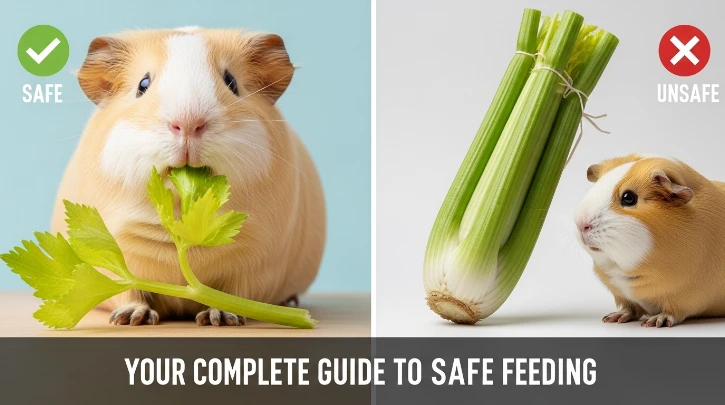
Yes, guinea pigs can eat celery, but only in moderation and with proper preparation. Celery offers some good nutrients for your furry friend, like vitamins and hydration, but its stringy texture and certain compounds can pose risks if not handled correctly. Understanding the right way to offer celery ensures your guinea pig enjoys this crunchy treat safely.
You adore your guinea pig, don’t you? Their tiny squeaks and happy popcorns fill your home with joy. But a wrong snack could lead to serious health issues, causing pain and suffering you never want for your beloved pet. Don’t risk your guinea pig’s well-being. Keep reading to learn exactly how to feed celery safely and what to avoid, so your little one thrives and stays healthy.
Understanding Guinea Pig Diets: Why Food Choices Matter
Your guinea pig’s diet is the most important part of their health. What they eat directly impacts their energy, their fur, and even how long they live. Getting their food right means a happy, long life for your little companion.
The Core of Your Guinea Pig’s Diet
Guinea pigs need a very specific diet to stay healthy. This diet is mostly made up of three key things: hay, pellets, and fresh water. These items form the foundation of their daily meals.
Hay: The Endless Supply
Unlimited fresh hay is crucial for guinea pigs. Timothy hay or orchard hay keeps their digestive system working well. Hay also wears down their constantly growing teeth, preventing painful dental problems. Your guinea pig should always have access to a fresh, clean pile of hay.
Pellets: A Daily Boost
High-quality guinea pig pellets offer important vitamins and minerals. These pellets are a concentrated source of nutrients. Choose plain, fortified pellets specifically for guinea pigs, not rabbit food. A small amount each day is usually enough.
Water: Always Fresh
Fresh, clean water must always be available. Use a sippy bottle or a heavy ceramic bowl. Change the water daily and clean the container often. Good hydration is vital for every bodily function.
Why Fresh Vegetables Are Essential
Beyond hay and pellets, fresh vegetables add vital nutrients. They provide extra vitamins, minerals, and much-needed moisture. These fresh additions make your guinea pig’s diet complete.
Guinea pigs cannot make their own Vitamin C. This means they must get it from their food. Fresh vegetables are excellent sources of this essential vitamin. Without enough Vitamin C, guinea pigs can get very sick, suffering from a condition called scurvy. Your careful selection of veggies helps prevent this.
Fresh foods also offer good hydration. This helps keep your guinea pig’s kidneys healthy. The variety of textures keeps mealtime interesting for them, too.
Celery for Guinea Pigs: The Good and The Bad
Celery can be a fun treat, but it has both benefits and potential dangers. Knowing these details helps you decide if and how to offer it. We’ll look at celery’s components closely.
The Benefits of Celery for Guinea Pigs
Celery offers several positive things for your guinea pig’s health. It is a source of hydration and contains some helpful vitamins and fiber. These benefits make it a worthy occasional snack.
Hydration: A Water-Rich Snack
Celery is mostly water, making it a good source of hydration. This can be especially helpful if your guinea pig doesn’t drink enough water. The moisture supports kidney function and overall well-being. Think of it as a crunchy, watery treat.
Vitamins and Minerals: Tiny Boosts
Celery contains some beneficial vitamins. It has Vitamin K, important for blood clotting. It also offers folate, which helps cell function. These are small amounts, but they contribute to their overall health. You are providing a little nutritional bonus with each bite.
Fiber: Digestive Support
The fiber in celery helps keep the digestive system moving. Good fiber intake prevents tummy troubles. It aids in healthy gut motility. This is important for all herbivores like guinea pigs.
The Risks of Celery for Guinea Pigs
While celery has benefits, it also carries important risks. You must be aware of these to protect your pet. Improper feeding can lead to serious health issues for your guinea pig.
Choking Hazard: The Stringy Truth
The long, fibrous strings in celery stalks are a major concern. These strings can get stuck in your guinea pig’s throat. This creates a serious choking hazard. Always remove these strings before offering celery.
Digestive Upset: Too Much Water
Because celery is so high in water, too much can cause diarrhea. Guinea pigs have sensitive digestive systems. A sudden increase in watery foods can upset their stomach balance. Small amounts are key to avoiding this.
Calcium Concerns: Stone Formation
Celery contains calcium. While some calcium is necessary, too much is harmful. High calcium intake can lead to the formation of bladder stones or urinary tract issues in guinea pigs. These conditions are painful and often require veterinary care. This risk is why moderation is so vital.
Different parts of celery have varying calcium levels. The leaves often contain more calcium than the stalks. You must be mindful of this when preparing the snack. Balancing calcium from all food sources prevents problems.
Oxalate Levels: A Minor Worry
Celery also has oxalates, though in moderate amounts. High oxalate levels can contribute to stone formation, like calcium. However, the amount in celery is usually not a major concern if fed sparingly. It’s another reason to keep portions small and infrequent.
Pesticide Residue: Always Wash
Celery can carry pesticide residues. These chemicals are harmful to your guinea pig. Always wash celery thoroughly under running water before feeding it. Organic celery is a safer choice if you can find it.
How to Safely Feed Celery to Your Guinea Pig
Feeding celery safely means following a few clear steps. Proper preparation, careful portion sizes, and smart frequency protect your pet. You can make celery a harmless, enjoyable treat.
Proper Preparation Steps
Preparation is the most critical part of feeding celery. You must remove the dangerous stringy fibers. This simple step prevents a life-threatening choking incident. Your diligence keeps your guinea pig safe.
First, wash the celery stalk well. Rinse it under cool running water. This removes any dirt or pesticide residues. Then, use a vegetable peeler or your fingers to pull off the long, tough strings. These strings run along the length of the stalk. You need to get rid of them completely.
After destringing, cut the celery into very small, bite-sized pieces. Think about the size of a pea or smaller. This further reduces any choking risk. It makes the celery easy for your guinea pig to chew and swallow.
The Right Amount: Portion Sizes
Portion control is extremely important for celery. Celery should always be a small treat, not a main meal. Too much can cause digestive upset or contribute to health problems.
Offer only a very small piece of celery. A good rule is to give one or two pieces about a half-inch long. This small amount provides some nutrients without overwhelming their system. You want to add variety, not replace their essential foods.
How Often: Frequency Guidelines
Celery is not a daily food for guinea pigs. Its calcium and water content make it unsuitable for frequent feeding. Offer it sparingly to keep your guinea pig healthy.
You can give your guinea pig celery about once or twice a week at most. If your guinea pig has never had celery, introduce it slowly. Start with an even smaller piece and watch for any reactions. This helps their digestive system adjust.
Observing Your Guinea Pig: Watch for Reactions
After giving any new food, especially celery, watch your guinea pig closely. Their reactions tell you if the food agrees with them. Your careful observation is a key part of responsible pet ownership.
Look for changes in their stool. Diarrhea or very soft poop means you gave too much. Watch their behavior, too. Any signs of discomfort, reduced appetite, or lethargy mean something is wrong. If you see concerning symptoms, stop feeding celery and contact your vet. You are your guinea pig’s best advocate.
Celery Stalks vs. Celery Leaves: What’s Best?
Celery offers two main parts: the stalks and the leaves. Each has slightly different nutritional content and textures. Understanding these differences helps you make the best choice for your guinea pig.
Celery Stalks: The Main Event
The stalks are the main part people usually think of when they hear “celery.” They are crunchy and full of water. Stalks provide good fiber once the strings are removed. However, they are also where the problematic strings are most prominent. Always destring them carefully.
After preparing them correctly, stalks offer good hydration. They are a familiar source of some vitamins. Always cut them into tiny pieces to prevent choking. This careful approach ensures safety.
Celery Leaves: A Greener Option
Celery leaves are often a better choice for guinea pigs. They are less stringy than the stalks. This greatly reduces the choking risk. The leaves also have a slightly different nutrient profile. They might contain a bit more calcium, so moderation is still important.
Many guinea pigs actually prefer the leaves. They are softer and easier to eat. Just ensure they are fresh and clean. Offer a small sprig of leaves, well-washed, as an occasional treat. This provides variety and nutrition with fewer concerns.
What Other Vegetables Are Safe for Guinea Pigs?
Celery is just one option in a wide world of safe vegetables. Providing a variety of fresh greens and veggies is crucial. This ensures your guinea pig gets all the nutrients they need. A diverse diet keeps them healthy and happy.
A Rainbow of Healthy Choices
Many fresh vegetables can safely be part of your guinea pig’s diet. These foods offer essential vitamins, minerals, and hydration. They also provide interesting flavors and textures. Rotate different vegetables to give a broad range of nutrients.
These vegetable options include bell peppers, romaine lettuce, and small amounts of carrots. Each brings unique benefits. Always introduce new vegetables slowly and in small portions. Watch for any tummy upset. You want to see consistent, healthy droppings. Avoid watery stools, which signal too much moisture.
Consider the daily and weekly options for your guinea pig’s vegetable intake:
| Vegetable | Benefits for Guinea Pigs | Recommended Frequency |
|---|---|---|
| Bell Peppers (Red, Yellow, Orange) | Excellent Vitamin C source, high in antioxidants. Essential for preventing scurvy. | Daily (small slice) |
| Romaine Lettuce | Good hydration, some fiber, and vitamins. Avoid iceberg lettuce. | Daily (small handful) |
| Cucumber | Very high in water, good for hydration. Low in calcium. | 2-3 times per week (small slice) |
| Carrots (Small amounts) | Vitamin A, but high in sugar. Treat only. | 1-2 times per week (tiny piece) |
| Parsley (Flat-leaf) | Good Vitamin C, but high in calcium. Use sparingly. | 1-2 times per week (small sprig) |
| Cilantro | Good Vitamin C. Lower in calcium than parsley. | 3-4 times per week (small sprig) |
| Green Leaf Lettuce | Good hydration, mild flavor. | Daily (small handful) |
Vegetables to Avoid: Protecting Your Guinea Pig’s Health
Just as some vegetables are safe, others are very dangerous. Feeding the wrong food can cause severe illness or even death. You must know which foods are strictly off-limits to protect your pet.
Foods That Harm
Some common human foods are toxic to guinea pigs. These can cause digestive issues, poisoning, or other serious health problems. Never offer these items to your guinea pig, even a tiny amount.
Avoid foods like onions, garlic, and chives. These can harm their red blood cells. Do not give potatoes or sweet potatoes, especially raw ones, as they contain harmful compounds. Avocado is too fatty and can cause digestive upset.
Iceberg lettuce is another big no-no. It has very little nutritional value and too much water. This can quickly cause diarrhea. Any kind of processed human food, sugary treats, or dairy products is also forbidden. Stick to fresh, safe vegetables and hay.
Expert Insights and Trusted Care
Caring for guinea pigs involves ongoing learning and attention to detail. Reputable sources and veterinary advice are your best guides. Your commitment to their well-being ensures they live full, happy lives.
Veterinarians specializing in small mammals, often called exotic vets, confirm these feeding guidelines. Dr. Angela Lennox, a respected exotic veterinarian, frequently emphasizes the need for high-fiber, Vitamin C-rich diets for guinea pigs. “The number one issue I see related to diet is improper Vitamin C intake and too little hay,” she states. “Owners often mean well but underestimate the specific needs of guinea pigs.” Your choices directly impact their health.
For more detailed information on guinea pig nutrition and care, trusted organizations offer valuable resources. The ASPCA provides general guidance on small pet care. The Guinea Lynx website is an exceptionally detailed and highly regarded resource for guinea pig health. This site offers in-depth information on diet, illnesses, and overall care. Consulting these resources helps you make informed decisions for your pet.
Regular veterinary check-ups are also vital. Your vet can provide tailored dietary advice based on your guinea pig’s individual needs. They can also catch potential health issues early. Partnering with a good vet creates a strong foundation for your guinea pig’s health journey.
Your dedication to researching and understanding their needs is what makes you an excellent pet parent. Learning about safe foods like celery, along with what to avoid, shows your commitment. This care ensures your guinea pig enjoys a long, healthy, and vibrant life.
Your guinea pig’s diet is a direct reflection of your care. While celery can be a fun, occasional treat, remember the importance of moderation and careful preparation. Always prioritize hay, high-quality pellets, and a varied selection of guinea pig-safe fresh vegetables. By following these guidelines, you ensure your furry friend receives the best nutrition, leading to a long and joyful life together.
Disclaimer
The information in this article is for general educational purposes only. It is not a substitute for professional veterinary advice. Always consult with a qualified veterinarian regarding your guinea pig’s specific health and dietary needs. If you suspect your guinea pig is ill, seek veterinary attention immediately.
FAQ Section
Can guinea pigs eat celery daily?
No, guinea pigs should not eat celery daily. Its high water and calcium content can lead to digestive upset or bladder stones. Offer celery only once or twice a week in very small amounts.
Can guinea pigs eat celery leaves?
Yes, guinea pigs can eat celery leaves. The leaves are generally less stringy than the stalks, reducing the choking risk. Always wash them thoroughly and offer them in moderation due to the calcium content.
Is celery good for guinea pigs?
Celery offers some hydration, fiber, and minor vitamins like Vitamin K. However, due to its stringy nature and calcium content, it poses risks if not prepared and fed carefully. It is best as a small, occasional treat.
What vegetables are bad for guinea pigs?
Many common vegetables are harmful to guinea pigs. Avoid onions, garlic, chives, potatoes, sweet potatoes, and avocado. Iceberg lettuce also offers no nutritional value and can cause diarrhea. Always research new foods carefully.
How do you prepare celery for guinea pigs?
First, wash the celery stalk well. Then, carefully remove all the long, fibrous strings from the stalk. Finally, cut the destringed celery into very small, bite-sized pieces to prevent choking.