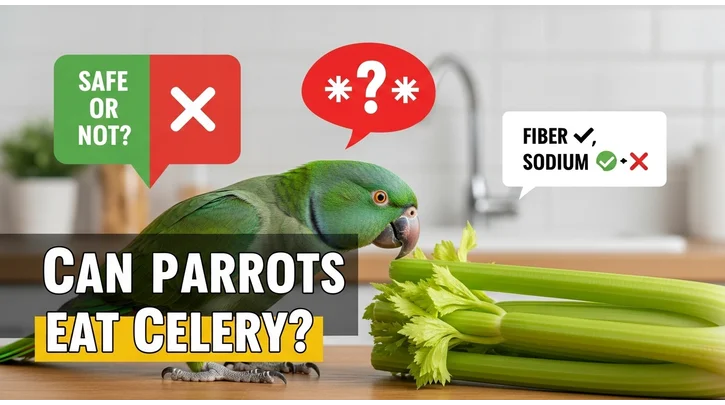
Yes, parrots can eat celery! Celery is a safe and healthy vegetable for most parrot species when prepared properly. It offers good hydration and some vitamins. But you must know how to serve it safely. Ignoring key preparation steps could harm your beloved bird. Keep reading to learn how to offer celery without risk. Your parrot’s health depends on your careful choices. Discover all the facts now to protect your feathered friend.
The Green Light: Why Celery Can Be Good for Your Parrot
Celery can be a great addition to your parrot’s diet. It offers many health perks. This crisp veggie provides hydration and valuable nutrients. It helps keep your parrot healthy and happy. A varied diet is key for all birds.
Nutritional Boost for Your Parrot
Celery provides important vitamins and minerals. It gives your parrot a good nutritional boost. These nutrients support overall health. They help your bird stay strong.
Key nutrients found in celery include:
- Vitamin K: This helps with blood clotting and bone health.
- Vitamin C: An antioxidant that boosts the immune system.
- Folate: Important for cell growth and function.
- Potassium: Essential for nerve and muscle function.
- Dietary Fiber: Aids in healthy digestion.
These elements work together to keep your parrot in top shape. They are part of a balanced bird diet. Always remember that celery is a treat, not a main meal.
Hydration and a Satisfying Crunch
Celery has a lot of water. This makes it very hydrating for your parrot. Hydration is vital for all living things. It helps your bird’s body work well.
Your parrot will also love the crunchy texture. This crunch provides mental stimulation. It gives them something interesting to chew. Chewing is a natural parrot behavior. It helps keep their beaks healthy, too.
Many parrots enjoy tearing and shredding their food. Celery is perfect for this. It offers a fun foraging experience. This keeps your bird engaged and happy.
Safe Parts and How to Offer
Most parts of celery are fine for parrots. The stalk is the most common part given. It is easy to prepare and feed. You can offer small pieces of the stalk to your bird.
The leaves are also safe in moderation. They contain similar nutrients. Always ensure the celery is clean. Wash it very well before feeding your parrot. We will cover this in more detail later. Remember, preparation is important for safety.
Avoid giving large chunks of celery. Small, manageable pieces are best. This prevents choking hazards. Your parrot should eat it easily.
The Yellow Flags: What to Watch Out For
While celery is good, some things need your attention. You must be aware of potential risks. Knowing these helps you keep your parrot safe. Proper preparation can avoid these issues.
Stringy Dangers for Small Birds
Celery stalks have long, tough strings. These strings can be a problem. They can cause choking, especially for smaller parrots. These strings are hard to digest.
The strings can get caught in your bird’s crop. The crop is a pouch in their throat. It holds food before digestion. If strings get stuck, it can lead to blockages. A blockage is a serious health risk. Always remove these strings before feeding celery. This simple step protects your parrot.
Even for larger parrots, removing strings is a good idea. It makes celery easier to eat. It also reduces any digestive issues. Your parrot will enjoy it more without the strings.
Pesticide Worries on Your Produce
Celery is often sprayed with pesticides. Pesticides are chemicals used on farms. They kill pests that eat plants. These chemicals are harmful to birds. They can make your parrot very sick.
Parrots are very sensitive to toxins. Even small amounts of pesticides can be dangerous. Always buy organic celery if you can. Organic celery is grown without these chemicals. It is a safer choice for your parrot.
If organic celery is not available, wash it thoroughly. Wash it under running water. You can also use a vegetable wash. This helps remove surface chemicals. Never skip this crucial step. It keeps your parrot healthy.
Portion Control is Key
Even healthy treats need limits. Celery should be a small part of your parrot’s diet. It is not meant to be a main food. Too much can cause problems.
A parrot’s main diet should be pellets. Add fresh vegetables and fruits. These offer variety and extra nutrients. Celery fits into the vegetable part. Offer it a few times a week, not daily.
A good portion is a small, thumb-sized piece. This depends on your parrot’s size. Smaller birds need smaller pieces. Large birds can have a bit more. Always watch your parrot’s reaction. If they eat it all, that’s fine. If they leave some, reduce the amount next time.
Preparing Celery Perfectly for Your Parrot
Proper preparation is vital for feeding celery. It ensures your parrot’s safety. Follow these steps for the best results. A little care goes a long way.
Washing Away Worries
Start by washing the celery very well. This removes dirt and pesticides. Even organic celery needs a good wash. You can use cool, running water. Rinse each stalk carefully.
For extra cleaning, use a produce wash. These are made for fruits and vegetables. They help remove more residue. Some people use a mixture of water and vinegar. A 1:4 vinegar to water solution works well. Soak for a few minutes, then rinse thoroughly. Make sure no vinegar smell remains.
Pat the celery dry with a clean towel. Excess water is not harmful, but a dry surface makes it easier to cut. Clean celery means a safer treat for your parrot.
Chopping for Safety
Once clean, prepare the celery for cutting. First, trim the ends off the stalks. These parts can be tougher and less appealing. Then, remove those tough strings.
Peel the strings from the outer curved side of the stalk. You can use a vegetable peeler or your fingers. Just snap the stalk and pull. These strings come off easily. This prevents choking and digestive issues.
Next, chop the celery into small pieces. Small chunks are safer than long sticks. A parrot can easily pick up and eat small pieces. For smaller parrots like budgies, dice it finely. Larger parrots can handle slightly bigger bits. Aim for pieces that are easy for your bird to manage. A trusted source like Lafeber Company emphasizes the importance of proper sizing for bird safety.
Different Ways to Serve Celery
You can offer celery in various ways. This keeps mealtime interesting for your parrot. Variety adds fun and enrichment. Here are some ideas for serving this crunchy treat:
- Small Chunks: This is the simplest way. Just offer diced celery in their food bowl.
- Mixed with Other Veggies: Combine celery with other parrot-safe vegetables. A colorful mix is often more appealing.
- Foraging Toy: Stuff small celery pieces into a foraging toy. This encourages natural behaviors. It also makes mealtime a puzzle.
- Hanging Treat: Clip a small piece of celery to the side of the cage. Ensure it’s secure. Your parrot can peck at it as a snack.
Always introduce new foods slowly. Watch how your parrot reacts. Some birds love celery right away. Others might need time to try it. Be patient and offer it a few times.
How Much Celery Is Too Much?
Finding the right amount is important. Celery should be a small part of your parrot’s diet. Balance is key to their health. Too much of any one food can be bad.
Introducing New Foods Slowly
When you first offer celery, give a tiny amount. A very small piece is enough. Watch your parrot closely for a day or two. Check for any signs of upset tummy or strange droppings.
If your parrot handles it well, you can offer it again. Slowly increase the amount over time. Do not make big changes all at once. This gentle introduction helps their digestive system adjust. It also lets you spot any problems early.
Always talk to your avian vet about your parrot’s diet. They can give tailored advice. Every parrot is unique. What works for one might not work for another.
Balancing the Diet
Your parrot’s diet should be mostly pellets. High-quality pellets provide core nutrition. Then add fresh vegetables and fruits. These add variety, vitamins, and enrichment.
Celery falls into the vegetable category. It should make up a small portion of the fresh food. Think of it as a healthy treat. Offer it two or three times a week. A small piece or two is usually enough.
Too much celery can fill up your parrot. They might not eat their main food. This can lead to nutritional gaps. Always offer a balanced mix of foods. Your vet can guide you on the best ratios. The Avian Welfare Coalition provides excellent resources on balanced avian nutrition.
When NOT to Offer Celery
While generally safe, there are times to avoid celery. Or parts of it that are not suitable. Knowing these exceptions keeps your parrot even safer. Always put your bird’s health first.
Seeds and Leaves: A Closer Look
Celery stalks are safe. But what about the seeds and leaves? Celery seeds are very small. They are not typically found in store-bought celery. If you grow your own, be careful.
Celery seeds can be a choking hazard for tiny parrots. They are also not a common part of a parrot’s diet. It is best to stick to the stalks and a few leaves. This avoids any unknown risks.
The leaves are generally safe. Offer them in small quantities. They are more potent in flavor. Some parrots might not like them. Always wash them well, just like the stalks. They can also carry pesticides. Moderation is key for the leaves as well.
Signs of Discomfort
Watch your parrot after they eeatscelery. Look for any changes in behavior. Changes can signal a problem. Your parrot might feel sick or uncomfortable.
Signs to look for include:
- Changes in droppings: Loose, watery, or strangely colored droppings.
- Lethargy: Your bird seems tired, quiet, or less active.
- Loss of appetite: Not eating other foods.
- Vomiting or Regurgitation: Bringing up food.
- Difficulty breathing: Open-mouthed breathing or wheezing.
If you see any of these signs, stop feeding celery. Contact your avian vet right away. These symptoms need quick attention. Early care can prevent serious problems.
Celery vs. Other Veggies: A Nutritional Comparison
It helps to see how celery stacks up. Comparing its nutrients to other bird-safe veggies gives perspective. This chart shows some popular choices. It helps you build a varied diet for your parrot.
These vegetables offer distinct benefits for your parrot’s health:
| Vegetable | Key Nutrients | Water Content | Recommended Serving |
|---|---|---|---|
| Celery | Vitamin K, Vitamin C, Folate, Potassium, Fiber | Very High (95%) | Small piece, 2-3 times/week |
| Carrots | Beta-carotene (Vitamin A), Biotin, Vitamin K1, Potassium | High (88%) | Small piece, daily or every other day |
| Bell Peppers (all colors) | Vitamin C, Vitamin A, Vitamin B6, Folate, Fiber | High (92%) | Small strips, daily or every other day |
| Broccoli | Vitamin C, Vitamin K, Folate, Manganese, Potassium, Fiber | High (90%) | Small florets, 2-3 times/week |
This overview shows that celery provides unique benefits. But it’s part of a bigger picture. Offering a rainbow of vegetables ensures your parrot gets all they need.
Expert Advice on Parrot Nutrition
Following expert advice is crucial for your parrot’s well-being. Avian veterinarians are the best source. They dedicate their lives to bird health. Their guidance helps you make good choices.
Dr. Susan O’Connell, a noted avian specialist, often stresses variety. She states, “A parrot’s diet should mirror the diversity found in their natural habitat. No single food provides everything. Offer a wide range of safe, fresh produce daily.” This highlights the importance of not relying too heavily on any one item, including celery.
Always make pellets the foundation of your parrot’s diet. Pellets are specially made to be complete. Then add fresh fruits and vegetables. These add enrichment and extra vitamins. Offer a smaller amount of seeds as treats only. Seeds are high in fat. Too many can lead to obesity.
Rotate the fresh foods you offer. One day might be celery and bell peppers. The next could be carrots and broccoli. This rotation ensures a broad spectrum of nutrients. It also keeps your parrot interested in their food. Healthy eating is a journey, not a destination.
Conclusion
Celery can be a wonderful, hydrating, and nutritious treat for your parrot. It brings good vitamins and a satisfying crunch to their diet. Remember to always wash it well and remove the strings. Chop it into small, manageable pieces to keep your bird safe. Offer it in moderation as part of a varied and balanced diet. Your care makes all the difference in keeping your feathered friend happy and healthy for many years to come.
FAQ Section
Can all types of parrots eat celery?
Most parrot species can safely eat celery. This includes popular birds like Cockatiels, Conures, African Greys, Amazons, and Macaws. Always prepare it properly, regardless of your parrot’s size.
What if my parrot does not like celery?
Some parrots are picky eaters. Do not force them to eat celery if they do not like it. There are many other safe and healthy vegetables you can offer instead.
Can parrots eat raw celery?
Yes, parrots should eat raw celery. Cooking celery can remove some of its valuable nutrients. Raw, properly prepared celery is the best way to serve it.
How often can I give my parrot celery?
Offer celery in moderation, about two to three times a week. It should be a small part of their overall fresh food intake. Avoid giving it daily as a primary vegetable.
Are there any parts of celery that are toxic to parrots?
The main stalk and leaves are safe when cleaned and prepared. Celery seeds are generally not recommended due to potential choking hazards for smaller birds and a lack of common dietary use.
Does celery help with parrot hydration?
Yes, celery has a very high water content, around 95%. This makes it an excellent source of hydration for your parrot, especially in warmer weather or if your bird doesn’t drink much water.
Disclaimer: This article provides general information and is not a substitute for professional veterinary advice. Always consult with a qualified avian veterinarian for specific health concerns or dietary recommendations for your parrot. The information given here is for educational purposes only and should not be used to diagnose or treat any medical conditions.