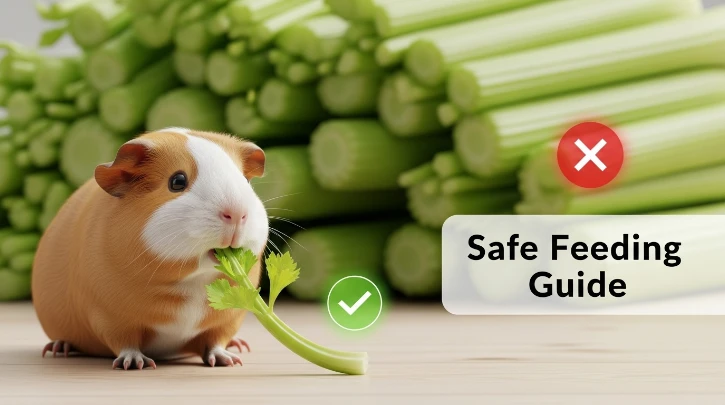
Yes, guinea pigs can eat celery in moderation, but with important precautions. Celery stalks and leaves offer essential water and vitamins, which can be a healthy addition to your guinea pig’s diet.
However, you must always remove the fibrous strings from the stalks and limit the serving size to prevent digestive issues or health risks from too much calcium. Giving your guinea pig too much celery, or serving it incorrectly, can lead to serious health problems like bladder stones or tummy troubles.
Don’t risk your pet’s well-being! Keep reading to learn the exact safe amounts and proper preparation steps to ensure your furry friend stays happy and healthy. Your guinea pig’s life depends on knowing these vital details!
Understanding Your Guinea Pig’s Diet Needs
Your guinea pig needs a special diet. This diet keeps them strong and healthy. They are herbivores, meaning they eat only plants. Their bodies are built for lots of fiber. This helps their digestion work properly.
The main food for guinea pigs is hay. Hay should always be available. Timothy hay is best. It helps their teeth stay trim. It also keeps their gut moving smoothly. Fresh water is also a must. You need to give them clean water every day.
Guinea pigs cannot make their own vitamin C. They need it from their food. This is very important. Without enough vitamin C, they can get sick. This sickness is called scurvy. So, fresh veggies are key to a good diet.
A good diet includes some fresh fruits and vegetables. These add vitamins and minerals. But not all plants are safe. Some can be harmful. Knowing what to feed and how much is vital. You want your piggy to thrive.
The Green Truth: Is Celery Safe for Guinea Pigs?
Celery can be a safe treat for guinea pigs. Many owners wonder about this green snack. The answer is yes, with careful steps. It offers good things, but also some risks.
Celery is mostly water. This helps keep your guinea pig hydrated. It also contains vitamins. These vitamins support your pet’s health. But some parts of celery are not good. The long, tough strings can cause problems.
Guinea pigs have sensitive digestive systems. These strings are hard to digest. They can even cause choking. You must always remove them. This simple step makes celery much safer. Always put your guinea pig’s safety first.
Nutritional Benefits of Celery for Guinea Pigs
Celery offers several benefits for your guinea pig. It is more than just a watery crunch. This vegetable packs some important nutrients. These nutrients help your pet stay in top shape.
A key benefit is its high water content. This helps your guinea pig stay hydrated. Hydration is important for all body functions. It helps their kidneys and digestion.
Celery contains Vitamin K. Vitamin K helps blood clot. It also supports bone health. Your guinea pig needs strong bones. This vitamin helps with that.
It also provides some folate. Folate is a B vitamin. It helps with cell growth. It is good for overall health. A little bit of folate is beneficial.
Celery also has a small amount of Vitamin A. Vitamin A is good for vision. It also helps with skin and coat health. A shiny coat shows a healthy pig.
The fiber in celery helps digestion. It is a good addition to their regular hay. Fiber keeps their gut active. This prevents tummy troubles. A healthy gut means a happy pig.
Potential Risks and Downsides of Celery
Despite its benefits, celery also carries risks. You need to be aware of these. Ignoring them can harm your guinea pig. Your pet’s health is in your hands.
The biggest risk comes from celery strings. These long, fibrous strands are very dangerous. They can get stuck in your guinea pig’s throat. This causes choking. They can also cause blockages in their gut. This is a serious problem.
Celery contains calcium. Too much calcium is bad for guinea pigs. It can lead to bladder stones. These stones are very painful. They often need surgery to fix. This is a common issue with many veggies.
High water content can be a double-edged sword. Too much can cause diarrhea. Guinea pigs have sensitive tummies. Loose stools can lead to dehydration. Always offer small amounts.
Pesticides are another concern. Celery can have these chemicals. Always wash celery very well. Use clean, fresh water. You want to remove any harmful residues.
Some guinea pigs might just not like it. Watch their reaction. If they do not eat it, do not force it. Offer other safe veggies instead. Every pig has unique tastes.
How to Prepare Celery Safely for Your Guinea Pig
Preparing celery correctly is vital. This step protects your guinea pig. Follow these easy steps closely. Safe preparation ensures a happy, healthy snack time.
First, always choose fresh, organic celery if possible. Organic celery has fewer pesticides. If you cannot get organic, wash it extra well. Fresh celery is crisp and firm. Avoid limp or discolored pieces.
Next, you must wash the celery thoroughly. Rinse it under cold running water. You can even scrub it gently. This removes dirt and chemical residues. Make sure it is sparkling clean.
Then, remove the tough outer strings. These are the fibrous strands. Use a vegetable peeler or a sharp knife. Pull them away from the stalk. You want only the smooth, inner part. This step is non-negotiable for safety.
You can offer both the stalks and the leaves. The leaves are also nutritious. Make sure they are clean, too. They add flavor and variety.
Finally, cut the celery into small, manageable pieces. Small cubes or short strips work best. This prevents choking. Your guinea pig should chew it easily. Never give large chunks.
Step-by-Step Preparation Guide
Follow these steps every time you offer celery. This careful process protects your furry friend. Each step is simple but important for their well-being.
- Select Fresh Celery: Pick crisp, green celery stalks. Avoid any that look wilted or brown.
- Wash Thoroughly: Rinse the entire stalk under cool water. Gently rub to remove dirt and any sprays.
- Trim Ends: Cut off the very top and bottom parts of the celery stalk. These parts can be tough or dirty.
- Peel Strings: Use a peeler or knife to remove all the long, stringy fibers from the stalk. This is very important to prevent choking or digestive issues.
- Chop Small: Cut the de-stringed stalk into tiny, bite-sized pieces. About half an inch is a good size.
- Consider Leaves: The leaves are safe and often enjoyed. Chop them into small bits too.
- Serve Fresh: Give the prepared celery to your guinea pig right away. Do not leave it out for too long.
How Much Celery Can Guinea Pigs Eat? Safe Portions and Frequency
Knowing the right amount of celery is crucial. Too much can cause problems. Too little might not provide benefits. Your guinea pig’s size matters here. Smaller guinea pigs need less than larger ones.
A good rule is to offer celery as a treat, not a main meal. It should be a small part of their daily fresh vegetable intake. Think of it like a human having a small snack.
For most adult guinea pigs, a tiny piece is enough. This means about a one-inch piece of de-stringed stalk. You can offer this small amount once or twice a week. This low frequency helps manage calcium intake. It also prevents stomach upset.
Always watch your guinea pig after they eat new foods. Look for changes in their poop. Check their behavior. Any signs of discomfort mean you should stop. Your veterinarian is the best guide for diet changes. Cornell University College of Veterinary Medicine provides excellent general care information for guinea pigs.
The following shows safe serving guidelines for celery and similar vegetables.
| Vegetable | Portion Size (Adult Guinea Pig) | Frequency |
|---|---|---|
| Celery (de-stringed) | 1-inch piece of stalk or a few small leaves | 1-2 times per week |
| Bell Pepper (any color) | 1-inch square | Daily (good for Vitamin C) |
| Lettuce (Romaine, Green Leaf) | Small handful | Daily |
| Cucumber | 1-inch slice | 2-3 times per week |
| Carrot | 1-inch slice | 2-3 times per week (high sugar) |
| Parsley | Small sprig | 2-3 times per week (high calcium) |
Connecting Celery to a Balanced Guinea Pig Diet
Celery fits into a larger diet plan. It is one small piece of the puzzle. A truly healthy guinea pig eats many different things. Variety is important for their well-being. This ensures they get all the needed nutrients.
A balanced diet is mostly hay. Timothy hay should be 80% of their food. It helps their teeth and gut. They should have unlimited access to fresh hay every day. This foundation is non-negotiable.
Next comes fresh vegetables. Offer about one cup of fresh veggies daily for an adult guinea pig. This cup should be a mix. Include items high in Vitamin C. Bell peppers are excellent for this. Romaine lettuce is also a good choice.
A small amount of guinea pig pellets is also important. Choose high-quality pellets. They should be Timothy hay-based. Pellets provide extra vitamins and minerals. Do not overfeed pellets, as they can cause weight gain.
Fruits are like desserts. Offer them rarely and in tiny amounts. Fruits are high in sugar. Too much sugar is not good for guinea pigs. A small piece of apple or berry is fine once a week.
Always introduce new foods slowly. Give only a tiny bit at first. Watch for any bad reactions. If your guinea pig has soft stools or gas, stop the new food. This careful approach keeps them safe.
Other Safe and Unsafe Foods for Guinea Pigs
Knowing what else to feed is just as important. Some foods are great, others are dangerous. You need to be a careful chef for your piggy. Your guinea pig relies on your good choices.
Safe Vegetables Include:
- Bell peppers (red, yellow, orange) – excellent source of Vitamin C.
- Romaine lettuce – hydrating and low in calcium.
- Green leaf lettuce – another good, safe lettuce option.
- Cucumber – mostly water, refreshing.
- Zucchini – low in calcium and good for hydration.
- Carrots (in moderation) – high in sugar.
- Broccoli (small amounts) – can cause gas if too much.
- Parsley (in moderation) – good Vitamin C, but higher in calcium.
- Cilantro – often enjoyed, but monitor calcium.
Unsafe Foods to Avoid:
- Iceberg lettuce – too much water, no nutrients, can cause diarrhea.
- Potatoes – toxic.
- Onions and garlic – toxic.
- Cabbage can cause severe gas.
- Rhubarb – toxic.
- Avocado – high fat, can be toxic.
- Any processed human foods – harmful sugars and additives.
- Seeds or nuts – choking hazard, high fat.
- Dairy products – guinea pigs cannot digest lactose.
- Meat – guinea pigs are herbivores.
Always double-check new foods with reliable sources. The PDSA (People’s Dispensary for Sick Animals) offers detailed guidance on guinea pig diets.
Monitoring Your Guinea Pig’s Health After Feeding Celery
After giving your guinea pig celery, you must watch them. Their health is your top concern. Any new food needs careful monitoring. This helps you catch problems early.
Look for changes in their eating habits. Are they still eating their hay? Are they drinking water as usual? A sudden loss of appetite is a red flag. It can mean they feel sick or have pain.
Check their droppings. Their poop should be firm and uniform. Soft stools or diarrhea are signs of an upset stomach. This means the celery might not agree with them. Too much water or fiber can cause this.
Watch their energy levels. Are they less active than usual? Do they seem lethargic? Pain or discomfort can make them withdrawn. A healthy guinea pig is usually active and curious.
Listen for any strange noises. Gas can make their tummies gurgle loudly. Squeaking or grunting could mean pain. Always pay attention to these subtle cues. Your guinea pig cannot tell you in words if something hurts.
If you see any concerning signs, stop feeding celery. Contact your veterinarian right away. Early action can prevent serious illness. Your vet can give the best advice. They know your guinea pig’s health history.
Keeping a small food diary can be helpful. Note what you feed and how much. Write down any reactions. This helps you track what works and what does not. It also helps your vet understand the issue.
Expert Insights on Guinea Pig Nutrition and Celery
Veterinary experts emphasize careful feeding. They stress the importance of a balanced diet. Celery, while good, fits specific rules. Their advice helps you make the best choices.
Dr. Anna Rowland, a small animal veterinarian, states, “Guinea pig digestive systems are delicate. High fiber hay is their bedrock. Treats like celery are fine, but in tiny, prepared portions. Calcium intake is a constant concern for bladder stones.” This highlights the need for moderation.
The RSPCA (Royal Society for the Prevention of Cruelty to Animals) advises a varied diet. They recommend a ‘rainbow’ of vegetables. This ensures a wide range of vitamins. They also warn against sugary foods. Celery, fitting this advice, should be part of a diverse selection, not a primary component.
Nutritionists for small animals often point to Vitamin C. They say it is the most critical vitamin. Guinea pigs cannot store it. So, a daily source is a must. While celery has some, it is not a main source. Bell peppers are better for daily Vitamin C. Always choose veggies rich in this vital nutrient every single day.
The consensus is clear. Celery can be a safe and healthy addition. But owners must be responsible. Always remove strings. Give very small pieces. Offer it only sometimes. Never let it replace their hay. Your dedication to these rules ensures your guinea pig’s health.
Conclusion
Giving celery to your guinea pig can be a rewarding experience when done right. It offers hydration and some good vitamins, enriching their diet. Remember to always remove those dangerous strings and offer them in tiny, infrequent amounts to prevent health issues like choking or bladder stones. Prioritize hay and a wide variety of guinea pig-safe vegetables. By following these careful steps, you ensure your beloved pet enjoys a healthy, happy life with you, filled with safe and delicious treats.
FAQ: Common Questions About Celery for Guinea Pigs
Can guinea pigs eat celery leaves?
Yes, guinea pigs can safely eat celery leaves. Make sure they are washed well and offered in small amounts, just like the stalks.
How often can I give my guinea pig celery?
You should only give your guinea pig celery one to two times per week. This prevents too much calcium intake and potential digestive upset.
Is the stringy part of celery bad for guinea pigs?
Yes, the stringy parts of celery are very bad for guinea pigs. They pose a serious choking hazard and can cause dangerous blockages in their digestive system.
What happens if a guinea pig eats too much celery?
Eating too much celery can lead to diarrhea due to its high water content, and the calcium in celery can contribute to bladder stones over time.
What other vegetables are good for guinea pigs?
Good vegetables for guinea pigs include bell peppers, romaine lettuce, green leaf lettuce, cucumber, and small amounts of carrots or zucchini.
Disclaimer: This article provides general information and guidance on feeding celery to guinea pigs. It is not a substitute for professional veterinary advice. Always consult with a qualified veterinarian regarding your guinea pig’s specific dietary needs and any health concerns. Individual guinea pigs may react differently to foods, and what is safe for one may not be for another. Your veterinarian can provide personalized recommendations based on your pet’s health status and breed.