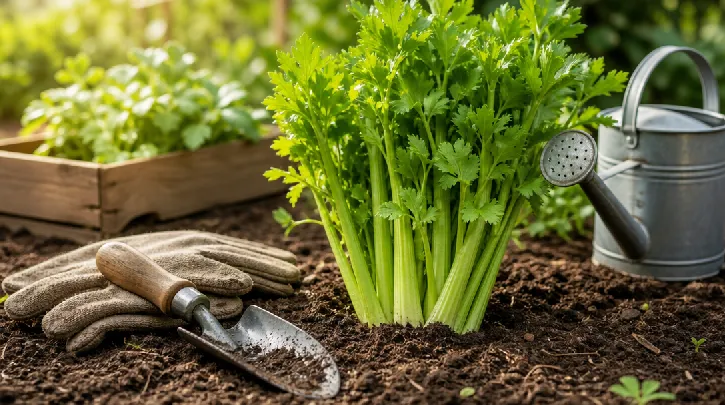
Growing crisp, flavorful celery in your home garden is a deeply rewarding experience, but it demands the right approach and, crucially, the right tools. To truly succeed and produce those coveted tender stalks, you’ll need more than just a basic gardening kit. This guide dives into the essential tools that make growing celery not just possible, but genuinely productive, focusing on practical gear for soil preparation, planting, watering, protection, and harvesting.
Cultivating celery, whether it’s the self-blanching varieties or the more traditional trench-grown types, requires specific conditions and care. The right tools streamline these processes, ensuring your plants receive consistent moisture, nutrient-rich soil, and protection from pests, all while making your gardening efforts more efficient and enjoyable. With these expert-recommended tools, you can transform your celery patch into a model of productivity, yielding stalks bursting with flavor and crunch.
Essential Tools for Celery Success
From breaking ground to bringing in the harvest, each stage of celery cultivation benefits immensely from specialized tools. Understanding their purpose and proper use is key to a thriving crop.
Soil Preparation: Laying the Foundation
Celery thrives in consistently moist, rich, well-draining soil with a pH between 6.0 and 7.0. Proper soil preparation is non-negotiable for healthy growth.
Garden Fork and Spade
A sturdy garden fork is indispensable for loosening compacted soil, incorporating organic matter, and aerating the garden bed. Its tines penetrate deeper than a spade, making it perfect for breaking up heavy clay or turning over cover crops. Follow up with a garden spade for defining beds, moving soil, and digging trenches if you’re growing traditional celery varieties. Choosing tools with strong, durable handles and sharp, rust-resistant heads will significantly reduce strain and improve efficiency.
Rotary Tiller (Optional for larger plots)
For gardeners preparing extensive celery beds, a rotary tiller can save considerable time and effort. It effectively breaks up soil, mixes in amendments, and creates a fine seedbed. However, for smaller plots, manual tools are often sufficient and can prevent over-tilling, which can disrupt soil structure.
Garden Rake
After loosening and amending the soil, a garden rake becomes essential. Use it to level the soil surface, break up any remaining clods, and remove debris like stones or sticks. A smooth, even bed ensures uniform planting depth and prevents water from pooling unevenly.
Soil Testing Kit
Before you even put a seed in the ground, understanding your soil’s composition is paramount. A soil testing kit allows you to measure pH levels and nutrient availability, providing crucial insights for proper amendments. “Knowing your soil’s baseline pH and nutrient levels is like having a roadmap for successful gardening,” says Dr. Emily Parker, a horticultural researcher. “Without this information, you’re essentially guessing, which can lead to deficiencies or excesses that directly impact crop health and yield.” These kits are inexpensive and widely available, offering either simple chemical tests or professional lab analysis options for more detailed results. Many local extension offices in the US offer affordable soil testing services.
Here’s a quick comparison of essential soil prep tools:
| Tool | Primary Function | Benefit for Celery |
|---|---|---|
| Garden Fork | Loosening compacted soil, aeration | Improves drainage, allows root penetration, incorporates organic matter |
| Garden Spade | Digging, moving soil, trenching | Creates planting trenches, defines beds, helps in deep cultivation |
| Garden Rake | Leveling soil, breaking clods | Ensures even planting, prevents waterlogging in depressions |
| Soil Testing Kit | Measures pH and nutrient levels | Informs precise soil amendments, optimizes growing conditions |
Planting and Transplanting: Getting Celery Started Right
Celery seeds are tiny and require a long growing season, often benefiting from indoor starting and careful transplanting.
Hand Trowel
A sturdy hand trowel is your go-to tool for digging individual planting holes for celery starts. Look for one with a comfortable handle and a strong, sharp blade. It’s also useful for mixing small amounts of fertilizer or compost into planting holes and for gently firming soil around newly planted seedlings.
Dibber
For making precise, uniformly spaced holes for celery seedlings, a dibber is invaluable. This pointed tool creates holes of consistent depth, which is vital for even root development. Uniform planting depth contributes to consistent growth and makes subsequent care, like watering and blanching, more manageable.
Seed Starting Trays and Grow Lights
Celery has a long germination period and requires a consistent environment. Seed starting trays with individual cells provide the ideal protected space for seeds. Paired with grow lights, which simulate sunlight, you can ensure strong, stocky seedlings ready for transplanting. Starting seeds indoors 10-12 weeks before the last frost date is common practice in many US regions.
Watering and Nutrition: Consistent Care is Key
Celery is a thirsty plant, demanding consistent moisture. Erratic watering leads to tough, stringy stalks.
Watering Can
For delicate seedlings and precise watering in small spaces, a watering can with a fine rose (sprinkler head) is essential. It delivers a gentle, even shower of water, preventing soil erosion and protecting fragile young plants.
Garden Hose with Sprayer
Once celery plants are established, a garden hose fitted with an adjustable sprayer nozzle makes efficient work of watering larger beds. Look for nozzles with multiple spray patterns, including a gentle shower and a steady stream, to adapt to different needs. A watering wand attachment can extend your reach and allow for more targeted watering at the soil level, minimizing leaf wetness which can encourage fungal diseases.
Drip Irrigation System
For ultimate water efficiency and consistency, a drip irrigation system is a game-changer for celery. This system delivers water directly to the root zone, minimizing evaporation and ensuring that plants receive steady moisture. Drip irrigation significantly reduces water waste and helps prevent common celery problems like blackheart, which can be caused by inconsistent watering. A study published in the Journal of Irrigation and Drainage Engineering found that drip irrigation systems can reduce water usage by 30-60% compared to traditional overhead watering methods in vegetable crops.
Fertilizer Spreader (Optional)
Celery is a heavy feeder. If you’re applying granular organic fertilizers or amendments to a large bed, a fertilizer spreader can ensure even distribution. For smaller applications, hand-broadcasting is usually sufficient.
Weeding and Pest Control: Protecting Your Crop
Weeds compete with celery for water and nutrients, while pests can quickly decimate a crop.
Hand Weeder
For close-up work around delicate celery plants, a sharp hand weeder is invaluable. Tools like a hori-hori knife, dandelion weeder, or fishtail weeder allow you to precisely remove weeds without disturbing the shallow root system of your celery.
Hula Hoe/Stirrup Hoe
For weeding between rows or in larger areas, a hula hoe (also known as a stirrup hoe or scuffle hoe) is incredibly effective. Its oscillating blade cuts weeds just below the soil surface with minimal effort, allowing you to quickly clear an area without deep cultivation that could harm celery roots.
Row Covers
To protect young celery plants from early season pests like celery leaf miners or late frosts, lightweight row covers are an excellent chemical-free solution. These permeable fabrics allow light and water to pass through while creating a physical barrier. They also help to retain soil moisture and stabilize soil temperatures, which benefits celery’s consistent growth requirements.
Blanching: The Secret to Tender Stalks
Blanching celery reduces bitterness and produces those classic pale, tender stalks. While some modern varieties are “self-blanching,” many still benefit from this technique.
Celery Blanching Collars/Tubes
Specialized celery blanching collars or tubes, often made of plastic or cardboard, are designed to wrap around individual celery plants, blocking sunlight from the stalks. These are reusable and provide a uniform blanching result. You simply secure them around the growing stalks a few weeks before harvest.
Cardboard or Trenching Tools
Alternatively, you can blanch celery using readily available materials. Wrapping the stalks tightly with strips of cardboard or brown paper secured with twine works well. For traditional trench-grown celery, you will use your garden spade to gradually mound soil up around the stalks as they grow, achieving the same blanching effect.
Harvesting: Reaping Your Reward
After months of diligent care, harvesting your celery correctly ensures maximum freshness and flavor.
Garden Knife or Sharp Pruners
When your celery stalks are plump and ready, a sharp garden knife or a clean pair of pruners is essential for a clean cut. For whole heads, cut the entire plant at the soil line. If you prefer to harvest individual outer stalks, cut them at the base to allow inner stalks to continue growing. Always use sharp tools to minimize damage to the plant and prevent disease entry.
Ergonomics and Tool Maintenance: Work Smarter, Not Harder
Investing in quality tools is only half the battle; taking care of them and yourself ensures a long, productive gardening season.
Choosing Ergonomic Tools
Gardening can be tough on the body. Opt for tools with ergonomic handles that fit comfortably in your hand and reduce strain on your wrists and back. Look for features like padded grips, lightweight construction, and appropriate handle lengths for your height. This is especially important for repetitive tasks like weeding or digging, where prolonged discomfort can lead to injury.
Keeping Your Tools Sharp and Clean
Dull tools make work harder and can damage plants. Regularly sharpen your spades, hoes, and knives with a sharpening stone or file. After each use, clean off soil and debris to prevent rust and the spread of plant diseases. Store tools in a dry place. A quick wipe-down with an oily rag can also help protect metal surfaces.
Advanced Tips for Celery Growers
Beyond the basics, a few specialized techniques and tools can elevate your celery growing game.
Trenching for Traditional Celery
For those seeking the intensely blanched, tender stalks of traditional celery varieties, trenching is key. This involves digging a shallow trench (6-8 inches deep) and planting celery at the bottom. As the plants grow, you gradually fill the trench with soil, mounding it around the stalks to achieve natural blanching. Your garden spade and rake are crucial for this process.
Pest and Disease Identification Aids
While not strictly “tools,” resources like a good gardening reference book or online guides focused on pest and disease identification can be invaluable. Quick identification allows for timely intervention, protecting your celery crop from common issues like leaf spot, fusarium wilt, or celery worms. Many university extension services across the US provide free, detailed guides specific to local conditions.
Comparing Essential Celery Gardening Tools
Here’s a comparison of some core tools, highlighting their specific advantages for celery cultivation:
| Tool Category | Key Tools | Specific Advantage for Celery | Considerations |
|---|---|---|---|
| Soil Prep | Garden Fork, Spade | Breaks up heavy soil, critical for celery’s need for deep, rich medium. Spade aids in trenching. | Choose high-carbon steel for durability. |
| Planting | Hand Trowel, Dibber | Precise hole creation for delicate celery seedlings, minimizes root disturbance during transplanting. | Ergonomic handles reduce hand fatigue. |
| Watering | Watering Can, Drip System | Consistent, targeted moisture delivery; prevents stress and common celery issues like blackheart. Drip irrigation is highly efficient. | Drip system requires initial setup; watering cans for small patches. |
| Weeding | Hand Weeder, Hula Hoe | Removes weeds efficiently without disturbing celery’s shallow roots. Hula hoe for speed in rows. | Keep blades sharp for effectiveness. |
| Blanching | Blanching Collars, Cardboard | Blocks sunlight to stalks, reducing bitterness and promoting tenderness, mimicking natural processes. | Collars are reusable; cardboard is cost-effective. |
| Harvesting | Garden Knife, Pruners | Clean cuts prevent plant damage and promote regrowth for continuous harvesting of outer stalks. | Sanitize blades regularly. |
FAQ
What is the most important tool for growing celery?
While many tools are important, a soil testing kit is arguably the most crucial for celery. Celery demands specific soil conditions, and knowing your soil’s pH and nutrient levels allows you to make precise amendments, ensuring the foundational health of your plants.
Can I grow celery without special blanching tools?
Yes, you can blanch celery without specialized tools. You can use readily available materials like cardboard, brown paper, or even mound soil around the stalks as they grow (a technique called trenching) to block sunlight and achieve the desired tenderness and reduced bitterness.
How often should I water my celery plants?
Celery requires consistent and ample moisture. The general rule is to keep the soil consistently moist but not waterlogged. Depending on your climate and soil type, this might mean watering daily or every other day, especially during hot, dry spells. Drip irrigation is highly recommended for consistent watering.
When is the best time to harvest celery?
Celery is typically ready for harvest when the stalks are 6 to 8 inches tall from the base of the plant. You can harvest the entire head at once by cutting it at the soil line, or you can harvest individual outer stalks as needed, allowing the inner stalks to continue growing.
Conclusion
Growing celery from seed to harvest can be a highly rewarding gardening endeavor, yielding crisp, flavorful stalks far superior to store-bought options. Success hinges on a combination of diligent care and the right tools. From preparing the perfect soil with a garden fork and spade, to ensuring consistent moisture with a drip irrigation system, to tenderizing stalks with blanching collars, each specialized tool contributes to an abundant and delicious harvest. By equipping yourself with these essential gardening tools and understanding their purpose, you’re well on your way to enjoying the freshest celery from your own backyard.
