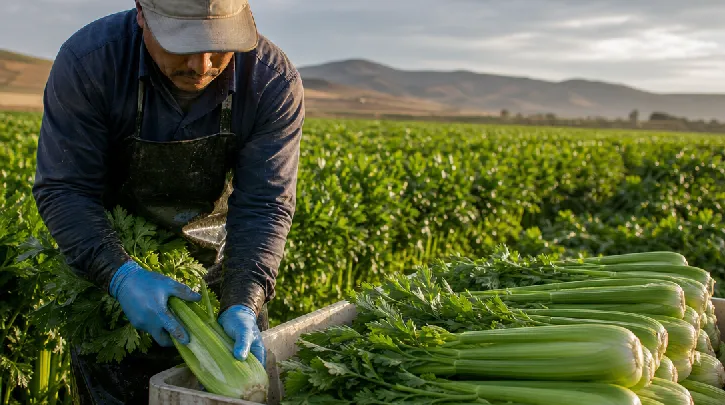
Commercial celery farming is a complex, intensive agricultural endeavor. It demands precision from soil preparation to post-harvest handling to deliver the crisp, vibrant stalks consumers expect on supermarket shelves. This article guides you through the practical aspects of cultivating celery on a commercial scale, focusing on the critical steps that ensure quality and profitability in the United States.
Success in celery farming hinges on understanding and meticulously managing every stage of growth and handling. Without hands-on experience, it is difficult to grasp the nuances that turn a healthy field into a marketable product. This deep dive moves beyond theory, offering actionable insights for those committed to growing high-quality celery.
Choosing the Right Celery Varieties for Commercial Production
Selecting the appropriate celery variety is the first crucial decision for any commercial grower. Varieties differ in their growth habit, disease resistance, stalk color, flavor, and suitability for various climates and market demands. In the U.S., most commercially grown celery falls into the “Pascal” type, known for its long, green, crisp stalks.
Key considerations when selecting varieties include:
- Market Demand: Understand what your buyers (wholesalers, retailers) prefer in terms of stalk length, thickness, and color.
- Climate Suitability: Some varieties perform better in cooler climates, while others tolerate warmer conditions. Celery generally prefers cool weather with nighttime temperatures around 50°F and daytime temperatures between 60-70°F.
- Disease Resistance: Opt for varieties with resistance to common celery diseases in your region, such as early blight or fusarium yellow.
- Growth Duration: Consider the time to maturity, which can range from 85 to 120 days from transplanting.
Popular commercial varieties often include selections from ‘Tall Utah’, ‘Conquistador’, and ‘Green Giant’, each with slightly different characteristics tailored for specific growing conditions and market preferences.
Site Selection and Soil Preparation: Laying the Foundation for Success
Celery is a demanding crop that requires optimal soil conditions for vigorous growth. A well-prepared field is paramount to prevent issues like pithiness or stunted growth. Wild celery naturally thrives near water, indicating its preference for rich, deep, moist, well-drained soil with plenty of organic matter.
Optimal Soil Characteristics
- Texture: Traditionally, celery grows on muck soils, but it can also thrive on coarse-textured mineral soils.
- Organic Matter: High organic matter content improves soil structure, water retention, and nutrient availability. Incorporating significant amounts of compost is highly beneficial.
- pH Level: Maintain the soil pH above 5.5 in muck soils and 6.5 in mineral soils. Celery prefers a neutral pH between 6.5 and 7.5. Lime may be added to acidic soils to raise the pH.
- Drainage: While celery needs consistent moisture, it cannot tolerate waterlogged conditions. Good drainage is essential to prevent root rot and other fungal diseases.
Preparing the Field
Before planting, a comprehensive soil test is non-negotiable. This reveals existing nutrient levels and helps tailor your fertilization program. Based on the soil test results, amend the soil to meet celery’s high nutritional demands.
Soil Amendment Checklist:
- Incorporate well-rotted compost or other organic matter to a depth of 6-12 inches. This enhances soil fertility and moisture-holding capacity.
- Apply necessary lime if the soil pH is too low.
- Broadcast and work in pre-plant fertilizers, especially phosphorus (P2O5) and potassium (K2O), to build up nutrient reserves.
- Consider pre-irrigation to germinate weeds, followed by shallow tillage to remove them, especially for summer-planted celery. This “stale seedbed” technique reduces initial weed competition.
Propagation: From Seed to Robust Transplants
Commercial celery production almost exclusively relies on transplants rather than direct seeding due to celery’s small, difficult-to-germinate seeds and long growing season.
Greenhouse Production of Transplants
Celery seeds are tiny and require specific conditions to germinate successfully. Most growers sow seeds in greenhouses 10-12 weeks before field planting. Approximately 2.5 ounces of seed can produce 35,000 plants.
- Seed Treatment: Freshly harvested celery seed can exhibit dormancy. Storing seeds below 40°F (4°C) for six months or longer, or treating them with phytohormones, can improve germination rates. Storing seed for three years can also reduce the incidence of seed-borne leaf blights.
- Sowing: Sow seeds thinly on the surface of peat-based plug trays, as they require light for germination. Cover them lightly with soil or vermiculite.
- Temperature: Maintain greenhouse temperatures at 70-75°F (21-24°C) until emergence, then 65-70°F (18-21°C) for steady growth. Night temperatures should stay above 55°F (13°C) to prevent premature bolting (seed stalk development).
- Watering and Fertilizing: Water uniformly and carefully, especially with smaller cell sizes, as they dry out quickly. Use a diluted liquid fertilizer frequently, as seedlings in small cells have limited root space.
- Hardening Off: Gradually acclimate transplants to outdoor conditions 7-10 days before field planting by reducing water. Avoid hardening by lowering temperatures, as this can induce bolting.
Planting and Spacing: Optimizing Field Layout
Proper spacing is crucial for celery to develop full-sized, tender stalks and minimize disease issues. Celery is a cool-season crop that thrives in moderately cool temperatures (55-75°F, 13-24°C).
Transplanting to the Field
Celery transplants are typically set into the field from April through July in the northern U.S. In southern regions, planting occurs in late fall for mid-winter harvest. It is essential to plant when the risk of frost is minimal for young plants.
Spacing Recommendations:
- Between Rows: Commercial growers often space rows 30-34 inches apart. Some sources suggest 12-18 inches between rows for good airflow.
- Between Plants: Space plants 6-7 inches apart within the row for full-sized celery. For heart production, closer spacing of 4.5-5 inches can be used. A plant density of 30,000 to 35,000 plants per acre is common for full-sized celery.
Optimal spacing prevents overcrowding, which can lead to stunted, stringy, or bitter stalks and increased susceptibility to fungal diseases due to poor airflow.
Irrigation Techniques: The Lifeblood of Celery
Celery is a shallow-rooted crop and extremely sensitive to water stress. Consistent moisture is the most critical factor for producing tender, crisp stalks. Any water stress, especially near harvest, can lead to stringy, bitter, or pithy celery.
Water Requirements
Celery needs about 1-2 inches of water per week throughout the growing season, from rainfall or irrigation. This demand peaks in the last 1-2 months before harvest, when plants undergo rapid growth.
Common Irrigation Methods
- Drip Irrigation: This is increasingly preferred by commercial growers, especially in California, for its efficiency and ability to deliver consistent moisture and nutrients (fertigation). Drip systems, often surface-installed, allow for precise water application directly to the root zone, minimizing water loss.
- Sprinkler Irrigation: Sprinklers maintain a constant moisture supply and can protect plants from frost. However, they carry a higher risk of foliar fungal diseases like Septoria due to wetting the foliage.
- Furrow Irrigation: Less common for celery, it may be used in areas with strong winds but is generally less precise than drip or sprinkler systems.
Maintaining soil moisture tension in the desirable range is key. Frequent, low-volume irrigations are often more effective than infrequent, heavy watering, particularly with drip systems.
Nutrient Management: Feeding a Hungry Crop
Celery is a heavy feeder, especially of nitrogen and potassium. It requires a continuous supply of nutrients for optimal growth and quality.
Key Nutrients and Application
A 30-ton per acre celery crop can remove substantial amounts of nutrients: approximately 200 lbs of nitrogen (N), 150 lbs of phosphate (P2O5), and 600 lbs of potash (K2O).
- Nitrogen (N): Essential for leaf and stalk growth. Celery needs about 200-250 lbs/acre of nitrogen for high yields. Nitrogen demand is low initially but increases rapidly after about 25 days in the field. Split applications are recommended, with sidedressings every two weeks after transplanting for a total of 3-4 applications.
- Phosphorus (P): Important for root development. Maintain P2O5 levels at 120-150 lbs/acre.
- Potassium (K): Critical for stalk strength and overall plant health. Celery has a very high demand for potassium, requiring up to 500-600 lbs/acre.
- Calcium (Ca): Crucial for strong cell development and preventing disorders like black heart, where the center of the plant turns black. Ensure adequate calcium, especially with consistent moisture.
- Boron (B): Celery has a high boron requirement; deficiency can cause stem cracking. Apply 1.5-3 lbs/acre of boron annually if soil tests show low levels.
Fertigation (applying fertilizers through the irrigation system) is a highly efficient way to deliver nutrients, especially nitrogen, continuously and directly to the root zone. This minimizes losses and ensures a steady supply throughout the crop cycle.
Pest and Disease Control: Protecting Your Investment
Celery is susceptible to various pests and diseases that can significantly impact yield and quality. An Integrated Pest Management (IPM) approach is essential, combining cultural, biological, and chemical strategies.
Common Pests
- Aphids: Small, soft-bodied insects that suck plant sap, causing distorted growth and transmitting viruses.
- Celery Leafminer: Larvae tunnel within leaves, creating serpentine mines.
- Spider Mites: Tiny arachnids that cause stippling on leaves, particularly in hot, dry conditions.
Key Diseases
- Early Blight (Cercospora apii) and Late Blight (Septoria apiicola): Fungal diseases causing leaf spots and lesions, which can defoliate plants. These spores can be seed-borne.
- Fusarium Yellows: A soil-borne fungal disease that causes yellowing, stunting, and vascular discoloration. Crop rotation is crucial for management.
- Black Heart: A physiological disorder caused by calcium deficiency and inconsistent moisture, leading to the breakdown and blackening of internal tissues.
- Pink Rot (Sclerotinia sclerotiorum): A fungal disease causing watery soft rot, often at the soil line.
IPM Strategies
- Resistant Varieties: Choose celery varieties with known resistance to prevalent diseases.
- Crop Rotation: Rotate celery with unrelated crops (e.g., corn or onions) to break disease cycles and prevent pest buildup.
- Sanitation: Remove plant debris and control weeds that can harbor pests and diseases.
- Scouting: Regularly inspect fields for early signs of pests or diseases to allow for timely intervention.
- Biological Controls: Introduce beneficial insects or use bio-pesticides where appropriate.
- Chemical Controls: Apply fungicides and insecticides judiciously, following label instructions and rotating active ingredients to prevent resistance development.
Weed Management: Minimizing Competition
Weeds pose a significant threat to celery, especially in its early growth stages, due to its slow initial growth and shallow root system. Weeds compete for light, water, and nutrients, reducing yields and delaying maturity. Competition during the first four weeks after transplanting can reduce quality grades by 30-40%.
Effective Weed Control Methods
- Field Selection: Choose fields with low weed pressure.
- Crop Rotation: Integrate celery into a rotation with crops that allow for different weed control strategies.
- Stale Seedbed Technique: Prior to transplanting, prepare beds and irrigate to encourage weed germination, then kill emerged weeds with shallow cultivation, flaming, or non-selective herbicides like glyphosate.
- Cultivation: Frequent, shallow cultivation between rows helps control weeds. Care must be taken to avoid damaging celery’s shallow roots. Specialized weeding equipment like basket weeders can be effective.
- Hand Weeding: Often necessary to remove weeds within the row, especially in the early stages.
- Herbicides: Use pre-emergent herbicides (e.g., S-metolachlor, bensulide, trifluralin) before transplanting for residual control. Post-emergent herbicides (e.g., sethoxydim for grasses, prometryn for broadleaves) can be applied in-season, strictly following label directions for timing and application rates.
- Mulching: Organic mulches can suppress weeds and help retain soil moisture.
A combination of these methods is typically most effective for comprehensive weed management in commercial celery fields.
Harvesting: Timing and Technique
The goal of harvesting is to collect celery at its peak maturity and quality, ensuring optimal flavor and texture. Celery typically takes 90-120 days from transplanting to reach maturity, but some varieties can take up to 140 days.
When to Harvest
Whole celery plants are ready for harvest when they are 3 inches or more in diameter and the outer petioles (stalks) are at least 6-7 inches long.
Indicators of Maturity:
- Stalk Size: Outer stalks should be well-developed and firm.
- Color: Most commercial celery is green. Some varieties may be blanched (light excluded from stalks) to produce lighter, more tender stalks, though this can reduce vitamin content.
- Compactness: The plant should be compact, with stalks held tightly together.
Harvesting celery in hot, dry weather can result in tough, stringy, and bitter stalks. Consistent moisture leading up to harvest is crucial for quality.
Harvesting Methods
- Manual Harvesting: For fresh market celery, manual harvesting is common. Workers cut the entire plant just below the soil surface, trim outer leaves and roots, and pack it directly into field crates. This method allows for careful selection and handling, minimizing damage.
- Mechanical Harvesting: Larger operations may use specialized celery harvesters. These machines cut the celery, lift it, and convey it to a platform where workers perform initial trimming and packing. Mechanical harvesting increases efficiency but requires uniform plant size and field conditions.
Post-Harvest Handling: From Field to Packinghouse
Once harvested, celery is highly perishable. Proper post-harvest handling is critical to retain freshness, crispness, and extend shelf life. The objective is to rapidly remove field heat and prepare the product for market.
Key Steps in Post-Harvest Handling
- Washing: Celery is typically washed thoroughly to remove dirt and debris. This often occurs on automated packing lines where stalks pass through water sprays.
- Trimming: Outer, damaged, or discolored stalks and excess root material are trimmed. The butt is usually cut cleanly.
- Cooling: Rapid cooling immediately after harvest is essential.
- Hydro-cooling: Celery is immersed in or sprayed with chilled water. This is a very effective and common method for quickly reducing its temperature to near 32°F (0°C).
- Forced-air cooling: Cold air is circulated rapidly through packed celery.
- Hydrovac cooling: A combination of hydro-cooling and vacuum cooling. Celery is wetted before being subjected to a vacuum, which causes water to evaporate and cool the product.
Prompt cooling to 32-36°F (0-2°C) is ideal to maintain quality for up to 5-7 weeks in storage.
Grading and Packing: Meeting Market Standards
Celery is graded according to USDA standards to ensure consistency and quality for consumers and buyers. These standards define different levels of quality based on characteristics like development, form, cleanliness, trim, and freedom from defects.
USDA Celery Grades (Fresh)
The primary grades for fresh celery in the U.S. are U.S. Extra No. 1, U.S. No. 1, and U.S. No. 2.
| Grade | Key Characteristics | Minimum Midrib Length (Outer Whorl) |
|---|---|---|
| U.S. Extra No. 1 | Well developed, well formed, clean, well trimmed, compact; free from blackheart, brown stem, soft rot, doubles, and damage from freezing, cracks, pithy branches, seedstems, disease, insects, or mechanical means. Stalks green unless specified otherwise. | 7 inches |
| U.S. No. 1 | Similar varietal characteristics, well developed, well formed, clean, well trimmed, fairly compact; free from blackheart, soft rot, and damage from freezing, cracks, pithy branches, seedstems, dirt, doubles, wilting, blight, other disease, insects or mechanical means. Stalks green unless specified otherwise. | 6 inches |
| U.S. No. 2 | Reasonably well developed, reasonably well formed, fairly well trimmed; free from blackheart and soft rot, and free from serious damage caused by freezing, cracks, pithy branches, seedstems, dirt, doubles, wilting, blight, other disease, insects or mechanical means. Stalks green unless specified otherwise. | 4 inches |
Tolerances are allowed for variations incident to proper grading and handling, typically 10% for defects (including 2% for soft rot), and 5% for off-length stalks or midribs.
Packaging
After grading, celery is packaged for shipment to retailers. Common packaging includes:
- Plastic Bags: Individual stalks or small bunches are often packaged in perforated translucent polyethylene bags, sometimes with a dark-colored base for presentation. These bags help retain moisture while allowing some gas exchange.
- Trays: Celery hearts or cut celery may be packed in trays and covered with stretch film or flow-pack.
- Shipping Containers: Packaged celery units are then placed into cardboard or wooden boxes for transport. These containers typically hold 12-14 kg (about 26-31 lbs) of product.
Ventilation is crucial in packaging to prevent excessive moisture and condensation, which can lead to decay.
Storage and Transportation: Maintaining the Cold Chain
Maintaining a continuous cold chain from the packinghouse to the supermarket is paramount for celery quality. Celery is highly perishable and sensitive to temperature fluctuations and ethylene gas.
Optimal Storage Conditions
- Temperature: Store fresh celery at 32°F (0°C). Temperatures above 36°F (2°C) can lead to continued growth of inner stalks and accelerate decay.
- Relative Humidity: Maintain high relative humidity, ideally 98-100%, to prevent wilting and maintain crispness.
- Ethylene Sensitivity: Celery produces very little ethylene, but it can lose its green color if exposed to high ethylene concentrations (10 ppm or higher) at temperatures above 41°F (5°C). Avoid storing or transporting celery near ethylene-producing commodities.
- Controlled Atmosphere (CA) Storage: For extended storage (up to 10 weeks), a CA of 2-4% O2 and 3-5% CO2 can reduce green color loss and decay.
Under optimal conditions, celery can maintain good quality for up to 1-3 months. For short-term storage, wrapping celery tightly in aluminum foil with the cut end slightly exposed can keep it crisp for three weeks or more in a refrigerator.
Transportation
Refrigerated trucks are used to transport celery from packinghouses to distribution centers and retailers. Maintaining consistent temperature and humidity throughout transit is essential. Any breaks in the cold chain can lead to rapid deterioration of quality.
Celery is often shipped in mixed loads, so compatibility with other produce regarding temperature and ethylene production must be considered. Elevated CO2 levels can delay yellowing and decay but may not be suitable in mixed loads with lettuce, which does not tolerate CO2-enriched atmospheres.
Market Access and Distribution: Reaching the Consumer
Commercial celery growers typically access markets through various channels, depending on their scale and business model. The primary goal is to efficiently move the product from the farm to the consumer.
Distribution Channels
- Wholesalers/Distributors: Large-scale farms often sell to wholesalers who then distribute to supermarkets, restaurants, and food service companies. This provides a consistent market for high volumes.
- Retail Direct: Some larger farms may have direct contracts with supermarket chains, bypassing wholesalers. This requires significant logistical capabilities.
- Farmers’ Markets/CSAs: Smaller growers might sell directly to consumers, which allows for higher profit margins but limits volume.
- Processors: Celery that doesn’t meet fresh market cosmetic standards, or specific varieties, can be sold to processors for use in juices, pre-cut mixes, or other value-added products.
In 2018, the total value of celery utilized in the U.S. was nearly $421 million.
According to Dr. Roberta Cook, Extension Economist at UC Davis, “The ability to consistently deliver high-quality produce, meet stringent food safety standards, and adapt to evolving consumer preferences for sustainable practices are critical for long-term success in the
fresh produce industry.” This highlights the multifaceted demands on modern commercial growers.
Challenges and Future Trends in Celery Farming
Commercial celery farming faces several ongoing challenges and is continuously adapting to new trends.
Current Challenges
- Labor Costs and Availability: Celery harvesting and much of its post-harvest handling are labor-intensive, making labor a significant cost and a persistent challenge.
- Water Scarcity: Celery’s high water requirements make it vulnerable in regions experiencing drought. Efficient irrigation (like drip irrigation) is becoming even more critical.
- Pest and Disease Pressure: Evolving pest resistance and new disease strains require constant vigilance and adaptation of IPM strategies.
- Climate Change: Extreme weather events, including unexpected frosts or prolonged heat waves, can severely impact celery crops, which prefer stable, cool temperatures.
- Market Fluctuations: Prices can vary based on supply and demand, impacting profitability. For example, average FOB prices were significantly higher in 2022 compared to 2021, at $24.01 per carton vs. $15.82.
Future Trends
- Automation and Mechanization: Continued investment in automated planting, weeding, and harvesting equipment will address labor challenges.
- Precision Agriculture: Utilizing data from sensors, drones, and satellite imagery to optimize irrigation, fertilization, and pest control.
- Sustainable Practices: Growing emphasis on organic production, reduced pesticide use, water conservation, and soil health.
- New Varieties: Development of celery varieties with enhanced disease resistance, improved shelf life, and better nutritional profiles.
- Value-Added Products: Increased demand for pre-cut, washed, and packaged celery, as well as celery for juicing and other convenience foods.
FAQ Section
What soil pH is best for commercial celery farming?
Celery prefers a slightly acidic to neutral soil pH. For muck soils, maintain pH above 5.5, and for mineral soils, aim for above 6.5. The ideal range is generally between 6.5 and 7.5.
How much water does commercial celery need per week?
Commercial celery requires consistent moisture, needing approximately 1 to 2 inches of water per week from irrigation or rainfall throughout the growing season. This water is especially critical as harvest approaches.
What are the ideal storage conditions for harvested celery?
Harvested fresh celery should be stored at 32°F (0°C) with a high relative humidity of 98-100% to maintain crispness and prevent wilting. Prompt cooling after harvest is essential.
Can celery be grown from direct seeding in commercial operations?
While possible in some amateur settings, commercial celery farming almost exclusively uses greenhouse-grown transplants. This is due to celery’s small, difficult-to-germinate seeds and its long growing season, giving plants a necessary head start.
Conclusion
Commercial celery farming, from planting in the field to its arrival on the supermarket shelf, is a testament to meticulous planning and execution. It demands an unwavering commitment to precise environmental control, nutrient management, and post-harvest care. By understanding the intricacies of variety selection, soil health, irrigation, pest control, and maintaining the cold chain, growers can navigate the challenges and consistently deliver the high-quality, crisp celery that consumers expect. The industry continues to evolve, embracing new technologies and sustainable practices to ensure this beloved vegetable remains a staple in kitchens across the United States.
Explore Related Content
- more on Agriculture
- Commercial Crops
- Is Celery Safe for Farm Animals Like Horses, Cows, or Chickens to Eat? Your Practical Guide to Healthy Farm Treats
- Comparing the Environmental Footprint of Conventionally Grown Versus Organic Celery: Water Usage, Pesticide Impact, and Carbon Emissions
- Beyond Packaging: Celery Cellulose in Sustainable Textiles and Bioplastics Development
- How does the global supply chain for fresh celery impact its availability and price fluctuations? Understanding Market Dynamics
- What Role Did Celery Play in Ancient Greek and Roman Medicine, Rituals, and Mythology? A Surprising History
