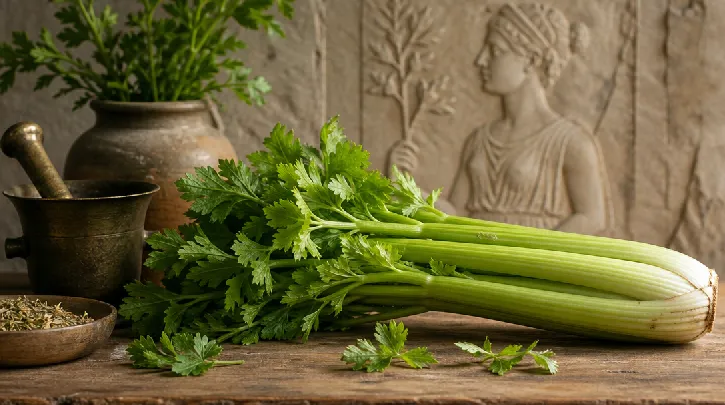
Celery has a surprisingly rich and varied history, transforming from a bitter, wild marsh plant prized for its medicinal and ceremonial uses in antiquity to the crisp, cultivated vegetable we commonly enjoy today. Its journey spans thousands of years, reflecting shifts in human culture, culinary practices, and agricultural innovation. This unassuming plant has played roles in ancient rituals, medieval remedies, and modern diets, making its evolution a fascinating story of botanical adaptation and human ingenuity.
The Humble Beginnings: Celery in Antiquity
The origins of celery, botanically known as Apium graveolens, trace back to the Mediterranean region and parts of Eurasia. In its wild form, this plant thrived in marshy, salty soils, far removed from the neatly cultivated stalks we see in grocery stores today. The wild version, sometimes called smallage, possessed a much stronger, more pungent, and bitter flavor.
Early Wild Varieties and Habitats
Wild celery was a common sight in wetlands across a vast geographical range. This range extended from Ireland in the west, through Europe, and eastward to Central Asia and the Himalayas, as well as North Africa. Its natural habitat suggests its resilience and adaptability.
Medicinal and Ritualistic Uses in Ancient Egypt and Greece
Ancient civilizations were among the first to recognize celery, albeit not primarily as a food. Egyptians held celery in high regard, associating it with funerary rituals and using its leaves in garlands found in tombs, including that of King Tutankhamun. They also utilized it for medicinal purposes, such as treating rheumatism and digestive complaints.
The ancient Greeks knew celery as selinon, a term that gives us its modern botanical name. They wove celery leaves into wreaths for winners of athletic competitions, like the Isthmian and Nemean Games, symbolizing victory. However, celery also carried chthonian symbolism, linking it to death and the afterlife, and was used in garlands for the deceased.
Celery’s Role in Roman Cuisine and Culture
The Romans also incorporated celery into their lives. They believed celery could ward off intoxication and used it to treat hangovers and indigestion. The scholar Pliny the Elder documented celery’s healing properties. While primarily medicinal, celery also appeared in Roman recipes, often as a flavoring or an ingredient in various dishes and sauces.
Roman diets included a variety of vegetables, and celery was among them, consumed raw in salads or cooked in stews. One Roman dish, tybaris, featured celery in vinegar, a piquant relish. Its seeds were ground with other herbs for spice powders.
Medieval and Renaissance Eras: From Medicine to Mirth
During the medieval period, celery continued its primary role as a medicinal herb across Europe. Its culinary use began to emerge more explicitly in the Renaissance, particularly in Italy.
European Cultivation and Early Culinary Experiments
Medieval herbalists recommended celery for a range of ailments, from calming nerves and promoting sleep to aiding digestion and controlling hysteria. It was a staple in monastic physic gardens. Cultivation in gardens in Italy and Northern Europe became more common in the 16th century, though still largely for medicinal purposes.
The first recorded use of cultivated celery specifically as a food was in France around 1623. For about a century, it was mainly used as a flavoring due to the strong pungency of early varieties. By the late 17th century, improvements to wild types began to reduce bitterness, making the stalks and leaves more palatable, sometimes eaten raw with oil.
The Rise of Celery as a Potent Medicinal Ingredient
Throughout these centuries, celery seeds, leaves, and roots were utilized in various herbal remedies. The English herbalist Nicholas Culpeper praised smallage in his 1653 Complete Herbal for its cleansing and diuretic properties, echoing ancient beliefs. Celery seed was particularly noted for treating conditions like flatulence, indigestion, asthma, bronchitis, arthritis, gout, and high blood pressure.
Symbolism and Superstition
Beyond its practical uses, celery also held symbolic weight. Its association with victory in Greece persisted. In some cultures, it was considered an aphrodisiac, with legends even attributing Casanova’s stamina to large quantities of the vegetable. This blend of medicinal, culinary, and symbolic significance underscored its importance.
The Enlightenment and Beyond: Cultivation and Culinary Innovation
The 18th and 19th centuries marked a pivotal period for celery, as systematic cultivation led to the development of milder, more tender varieties, paving the way for its widespread culinary acceptance.
Horticultural Advancements and Varietal Development
Significant selection efforts were made, particularly in Italy, to reduce the bitterness and enhance the plant’s structure, leading to more modern strains with edible stalks. Gardeners discovered that growing celery in cooler conditions could lessen its pungency. By the late 17th and early 18th centuries, improvements transformed the wild plant, making its petioles (stalks) better suited for salads.
This period saw the development of three primary cultivar groups: stalk celery (Dulce Group), leaf celery (Secalinum Group), and celeriac (Rapaceum Group). Each group was selectively bred for a specific part of the plant for consumption.
Celery’s Entry into French and Italian Cuisines
As cultivation improved, celery found a more prominent place in European kitchens. France and Italy were at the forefront of this culinary shift. By the mid-18th century, affluent people in northern Europe enjoyed celery stored in cellars during winter months.
English gardener John Evelyn recommended celery in his 1699 work, Acetaria: A Discourse of Sallets, noting its “high and grateful Taste” and suggesting it be placed prominently in grand salads. By 1726, celery was commonly used in England to flavor soups and stews.
The English Garden and Celery’s Growing Popularity
Celery’s season in England extended significantly by the 19th century, lasting from September to late April. The practice of blanching, by earthing up soil around the stalks, was crucial for reducing bitterness and achieving a more tender texture. This technique, though labor-intensive, was key to making celery a desirable vegetable.
Celery Crosses the Atlantic: America’s Embrace of a New Vegetable
The journey of celery to the United States marked another significant chapter in its history, where it transitioned from a specialized crop to a widely beloved vegetable.
Early Introduction to the Americas
European colonists introduced celery to North America. By 1806, four cultivated varieties of celery were listed in the United States, indicating its gradual adoption into American gardens.
The Victorian Era Celery Craze in the US
In the 19th century, especially during the Victorian era, celery became a coveted luxury food in the United States. It was considered a status symbol due to its difficulty in cultivation and limited availability before the advent of modern agriculture.
Wealthy families would display celery as a centerpiece in elegant glass celery vases, showcasing their prosperity. The New York Public Library’s historical menu archive shows celery as the third most popular dish in New York City during the late 19th and early 20th centuries, trailing only coffee and tea.
Celery was enjoyed raw, often salted, and also cooked in dishes like celery au gratin. As American cultivation improved, particularly with Dutch farmers establishing celery fields in Kalamazoo, Michigan (earning it the nickname “Celery City”) around the 1870s, celery became more accessible. However, once it became widely available, its luxury status diminished among the upper classes.
The Rise of Commercial Celery Production
Commercial production of celery in the US expanded significantly in the 19th and 20th centuries. The ‘Pascal’ variety became, and largely remains, the dominant cultivar for commercial production due to its robust stalks. Innovations like self-blanching varieties further streamlined cultivation, reducing the need for labor-intensive earthing-up.
California and Michigan emerged as leading states for celery production, supplying both the fresh market and processed food industries. The development of efficient harvesting, packaging, and refrigeration technologies allowed celery to become a year-round commodity.
| Era/Period | Key Development | Primary Use |
|---|---|---|
| Ancient Civilizations (c. 9th Century BCE – 400 CE) | Wild varieties in Mediterranean, early cultivation attempts. | Medicinal, ceremonial (garlands, wreaths), flavoring. |
| Medieval & Renaissance Europe (c. 5th – 17th Century) | Continued medicinal use, early garden cultivation. | Herbal medicine, initial culinary flavoring in France (1623). |
| 17th – 18th Century Europe | Horticultural advancements reduce bitterness, ‘smallage’ improves. | Flavoring for soups and stews, limited raw consumption. |
| 19th Century US (Victorian Era) | Introduction to America, significant varietal improvement, “celery craze.” | Luxury vegetable, served raw as a centerpiece, culinary ingredient. |
| 20th Century – Present | Large-scale commercial production, ‘Pascal’ variety dominance, global distribution. | Common vegetable (raw, cooked, juiced), health food. |
Modern Celery: A Global Commodity and Health Icon
Today, celery is a ubiquitous vegetable, valued for its crisp texture, mild flavor, and impressive nutritional profile. It has become a global commodity, readily available year-round.
Innovations in Harvesting and Distribution
Modern agriculture and logistics have made celery widely accessible. Advanced harvesting techniques and a robust cold chain ensure that celery reaches consumers fresh. Most US celery is sold fresh, but a significant portion is processed for use in prepared foods like soups, juices, and convenience meals.
Large producers dominate commercial markets, possessing the infrastructure to deliver this perishable crop efficiently. This ensures a consistent supply with minimal seasonal variation.
Nutritional Benefits and Popularity in Health Trends
Celery is recognized as a healthy food, offering numerous benefits. It is approximately 95% water, making it excellent for hydration and very low in calories. A 100-gram serving provides just 14 calories.
It is an excellent source of dietary fiber, which aids digestion and promotes gut health. Celery also contains important vitamins and minerals:
- Vitamin K: Essential for blood clotting and bone strength.
- Vitamin C: Boosts the immune system and supports gum health.
- Potassium: Helps regulate blood pressure and cardiovascular health.
- Folate: Important for red blood cell production, especially during pregnancy.
Moreover, celery is rich in antioxidants like flavonoids, phenolic acids, apigenin, and luteolin. These compounds help protect cells from oxidative damage and reduce inflammation, contributing to heart health, managing blood pressure, and potentially lowering the risk of certain chronic diseases.
“Celery is a low-calorie vegetable that provides much-needed nutrients, water, and some fiber,” notes registered dietitian Amber Sommer, RDN, LD. “Antioxidants protect against free radicals that can damage cells and tissues, causing inflammation.”
In recent years, celery has experienced renewed popularity, especially through the “celery juice” wellness trend. While some claims about celery juice lack scientific backing, the trend has undeniably brought attention to this healthful vegetable.
Despite a slight decrease in per capita retail celery availability from 5.56 pounds in 2011 to 4.97 pounds in 2019, celery remains a popular choice for many US consumers. In 2019, California alone harvested 15.7 million cwt of celery, valued at nearly $474 million, underscoring its continued economic significance.
From Snack to Culinary Versatility
Celery’s versatility in the kitchen is unmatched. It is a staple in various cuisines as a base for flavor, such as the French mirepoix (with onion and carrot) and the Cajun “holy trinity” (with bell pepper and onion).
It is commonly consumed raw as a crunchy snack, often paired with dips or peanut butter (as in “ants on a log”). Cooked, it adds texture and flavor to soups, stews, casseroles, and stir-fries. The leaves, which are rich in calcium, potassium, and vitamin C, can also be used as a garnish or in salads.
Celery seeds, with their strong aromatic flavor, are used as a spice or processed into celery salt. These seeds are still utilized in herbal treatments today.
FAQ
What was celery used for in ancient times?
In ancient times, celery was primarily used for its medicinal properties and in ceremonial rituals. Ancient Egyptians incorporated its leaves into funeral garlands, while the Greeks used celery wreaths to crown winners of athletic games.
When did people start eating celery as a vegetable?
People began systematically cultivating and eating celery as a vegetable primarily in the 17th century in Europe. The first recorded use of cultivated celery as a food was in France around 1623.
What is the “celery craze” of the Victorian era?
The “celery craze” refers to the period in the 19th-century United States when celery became a luxury item and a symbol of status. Wealthy Victorians displayed celery in elaborate glass vases as centerpieces, and it was a prominent feature on upscale dinner menus.
What are the main nutritional benefits of celery?
Celery is highly nutritious, being mostly water and low in calories, yet rich in essential vitamins and minerals. It is a good source of Vitamin K, Vitamin C, potassium, and folate, and contains antioxidants that support heart health, reduce inflammation, and aid digestion.
Are there different types of celery?
Yes, there are three main cultivated types of celery: stalk celery (the common variety), leaf celery (grown for its aromatic leaves), and celeriac (cultivated for its large, edible root). Each is used differently in cooking.
Conclusion
The journey of celery from a wild, bitter marsh plant to a global culinary staple is a testament to human agricultural prowess and evolving tastes. From its sacred status in ancient Egypt and Greece to its role as a luxury item in Victorian America, celery has continuously adapted to human needs and desires. Today, it stands as a versatile, nutritious vegetable, deeply integrated into kitchens worldwide, proving that even the most humble herbs can possess a fascinating and impactful history.
Explore Related Content
- Agriculture
- History
- What Role Did Celery Play in Ancient Greek and Roman Medicine, Rituals, and Mythology? A Surprising History
- Is Celery Safe for Farm Animals Like Horses, Cows, or Chickens to Eat? Your Practical Guide to Healthy Farm Treats
- Comparing the Environmental Footprint of Conventionally Grown Versus Organic Celery: Water Usage, Pesticide Impact, and Carbon Emissions
- Beyond Packaging: Celery Cellulose in Sustainable Textiles and Bioplastics Development
- How does the global supply chain for fresh celery impact its availability and price fluctuations? Understanding Market Dynamics
