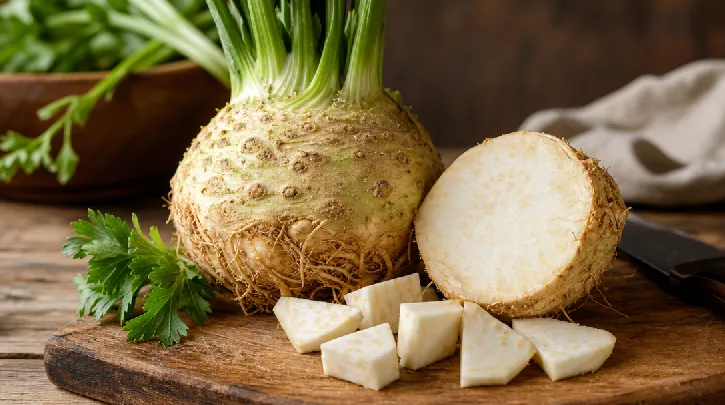
Many home cooks hesitate at the sight of an unfamiliar ingredient, especially one as gnarled and unassuming as celery root. This guide cuts through the confusion, revealing how to confidently transform celery root into a versatile, delicious, and nutrient-rich addition to your culinary repertoire. We explore what is celeriac and how this unique vegetable can become a kitchen staple.
Demystifying Celeriac: What Exactly Is Celery Root?
Celeriac, scientifically known as Apium graveolens var. rapaceum, is a root vegetable. Farmers cultivate celeriac for its bulbous hypocotyl, not for its stalks. While celeriac shares a botanical family with common celery, it represents a distinct variety. Growers specifically breed this plant for its edible root. This often irregularly shaped, knob-covered vegetable typically ranges from the size of an orange to a small cantaloupe. It possesses a rough, brown exterior and a creamy-white interior. Its flavor profile offers a unique blend, often described as subtly nutty, earthy, and mildly celery-like, with a hint of parsley. This root vegetable provides a more complex and refined taste compared to its stalky cousin.
Often overlooked in grocery stores, celeriac has been a culinary staple in European kitchens for centuries, particularly in French and German cuisine. There, its robust flavor and adaptability are highly valued. Celery root thrives in cooler climates. Growers typically harvest this vegetable in late fall and winter, making it an excellent ingredient for hearty, seasonal dishes. When buying, look for roots that feel firm and heavy for their size. Avoid those with soft spots or excessive sprouts, which indicate age or improper storage.
Celeriac vs. Celery Stalk: Understanding Their Distinctive Characteristics
Both celeriac and celery stalk come from the same plant species. However, their culinary applications, flavors, and textures diverge significantly. Understanding these differences is key to successful cooking with celery root and its leafy counterpart.
Celery stalks are primarily valued for their crisp, watery texture and distinct, pungent, somewhat bitter flavor. Many people eat them raw in salads, as a crunchy snack, or as an aromatic base in stocks and mirepoix. Their high water content means they soften quickly when cooked. They offer a refreshing bite.
Celeriac, on the other hand, boasts a dense, starchy, and firm texture, similar to a potato or turnip. Its flavor, while reminiscent of celery, is milder, sweeter, and more earthy, without the intense bitterness often associated with raw celery stalks. This makes celery celeriac suitable for a wider range of cooking methods. These methods transform its texture and concentrate its flavor, from roasting to pureeing.
Here’s a comparative breakdown to highlight their key differences:
| Feature | Celeriac (Celery Root) | Celery Stalk |
|---|---|---|
| Primary Edible Part | Root (hypocotyl) | Stalks and leaves |
| Appearance | Rough, gnarled brown globe | Long, green, crunchy stalks |
| Texture (Raw) | Crunchy, firm, dense, starchy | Crisp, watery, fibrous |
| Flavor Profile | Earthy, nutty, subtle celery, slightly sweet | Pungent, herbaceous, mildly bitter |
| Typical Uses | Roasted, mashed, pureed, gratins, soups, stews, raw in remoulade | Raw in salads/snacks, mirepoix, stocks, stir-fries |
| Preparation Complexity | Requires peeling and trimming of fibrous exterior | Simple washing and chopping |
Harvesting Health: The Surprising Celeriac Benefits for Your Well-being
Beyond its distinctive flavor and versatility in the kitchen, celeriac offers a compelling array of nutritional benefits, making it a valuable addition to a health-conscious diet. This root vegetable is nutrient-dense. It can contribute significantly to overall wellness, offering remarkable apio root benefits.
Rich in Essential Vitamins and Minerals: Celeriac Nutrition Information
Celeriac is particularly rich in several key micronutrients. It is an excellent source of vitamin K, crucial for blood clotting and bone health, as noted by the National Institutes of Health. A single serving can provide a substantial portion of the daily recommended intake. It also contains good amounts of vitamin C, an antioxidant that supports immune function and skin health. Furthermore, celeriac supplies B vitamins, including B6, which plays a role in metabolism and brain development, and folate, essential for cell growth and DNA formation. Understanding celeriac nutrition information reveals its robust profile.
Aiding Digestion with Dietary Fiber
Like many root vegetables, celeriac is a good source of dietary fiber. Fiber is vital for maintaining a healthy digestive system. It promotes regular bowel movements and prevents constipation. The fiber content in celeriac also contributes to feelings of fullness, which can be beneficial for weight management. According to the U.S. Department of Agriculture, a cup of raw celery root provides a significant amount of dietary fiber. This contributes to the overall celeriac benefits.
Supporting Heart Health
The potassium content in celeriac is noteworthy. Potassium is an electrolyte that plays a critical role in maintaining fluid balance, nerve signals, and muscle contractions. Adequate potassium intake links to supporting healthy blood pressure levels, a key factor in cardiovascular health. The high fiber content also helps manage cholesterol levels, further contributing to a healthy heart. These are important benefits of celeriac for cardiovascular wellness.
Antioxidant Properties
Celeriac contains various antioxidants. These compounds help protect the body’s cells from damage caused by free radicals. These antioxidants, including vitamin C and certain phenolic compounds, may reduce oxidative stress and inflammation within the body. While specific long-term studies focusing solely on celeriac are ongoing, the general understanding of antioxidant-rich diets supports their protective benefits for chronic disease prevention. For more detailed celeriac nutritional information on dietary antioxidants, the Linus Pauling Institute at Oregon State University provides comprehensive research.
Incorporating celeriac into your meals can therefore be a delicious way to boost your intake of vital nutrients, support digestive health, and contribute to overall well-being. Its low calorie count for its density also makes it a smart choice for those monitoring their caloric intake.
From Rough Exterior to Refined Dish: Mastering Celeriac Preparation
Preparing celeriac can seem daunting due to its irregular shape and tough skin. With the right approach, however, it becomes a straightforward process. The key involves working systematically to reveal the tender, edible flesh beneath.
Step-by-Step Celeriac Preparation
- Clean Thoroughly: Start by rinsing the entire celery root under cold running water. Use a stiff vegetable brush to scrub away any trapped dirt in its crevices. This initial cleaning prevents transferring grit to the peeled flesh.
- Stabilize the Root: Place the celeriac on a cutting board. Cut off a small slice from the bottom to create a stable, flat base. This prevents the root from rolling around, ensuring safety during peeling.
- Peel the Skin: Use a sharp chef’s knife or a sturdy vegetable peeler. Carefully cut away the thick, knobby skin. Work from top to bottom, following the contours of the root. Aim to remove all the brown and greenish parts, as these can be bitter and fibrous. Do not be shy about trimming off any overly gnarled bits or deep indentations. Many find a knife more effective for the initial, rough removal, followed by a peeler for any remaining thin skin.
- Trim and Inspect: Once peeled, inspect the celeriac for any remaining dark spots or fibrous streaks. You should trim these away to ensure a consistently tender final product. The goal is a clean, creamy-white globe.
-
Cut as Desired: Now that the celery root is peeled, you can cut it into various shapes depending on your recipe. Common cuts include:
- Cubes: For roasting, soups, or stews.
- Matchsticks (julienne): For raw salads or quick sautéing.
- Slices or rounds: For gratins or baking.
- Prevent Oxidation: Celeriac, like apples or potatoes, oxidizes quickly and turns brown when exposed to air. To prevent this, immediately place the cut pieces into a bowl of cold water mixed with a squeeze of lemon juice or a splash of white vinegar. This keeps the celeriac looking fresh until you are ready to cook it.
A well-prepared celeriac is the foundation for delicious dishes. Take your time with the peeling and trimming, as it directly impacts the texture and flavor of your final culinary creation.
Unlocking Flavor: Creative Celeriac Uses in the Kitchen
Once prepared, celeriac opens up a world of culinary possibilities. It offers a unique flavor and texture that can enhance a variety of dishes. Cooking with celery root moves beyond mere side dishes, making it a star ingredient.
Roasting for Earthy Sweetness
Roasting is one of the simplest and most satisfying ways to enjoy celeriac. Cut peeled celery root into 1-inch cubes or wedges. Toss them with olive oil, salt, pepper, and your favorite herbs like thyme or rosemary. Roast at 400°F (200°C) for 25-35 minutes, or until tender and caramelized. The high heat brings out the celeriac’s natural sweetness. It creates a beautifully tender interior with slightly crisp edges. This makes an excellent side dish for roasted meats or a flavorful addition to grain bowls.
Creamy Purees and Mashes
Celeriac’s starchy texture makes it an ideal candidate for purees and mashes. You can use it as a healthier, lower-carb alternative to mashed potatoes, or combine it with potatoes for a more nuanced flavor. Simply boil peeled and cubed celery root until very tender. Then, mash or blend with butter, milk or cream, and seasonings. A celeriac and apple puree offers a delightful balance of sweet and savory notes, perfect alongside pork or poultry.
Elevating Soups and Stews
The robust, earthy flavor of celeriac shines in soups and stews. Add diced celery root to vegetable or meat broths along with other root vegetables like carrots and parsnips. It thickens the broth slightly. It also imparts a subtle, savory depth without overpowering other ingredients. For a velvety texture, blend a portion of the cooked celeriac into the soup before serving. A classic French celeriac soup, often enriched with cream, showcases its elegant potential.
Refreshing Raw Preparations: Celeriac Remoulade
Do not overlook celeriac’s potential in raw dishes. Its crisp texture, when finely julienned or grated, makes it an excellent base for salads. The most iconic raw celeriac dish is celeriac remoulade, a classic French bistro salad. For this, cut celery root into very fine matchsticks. Toss these with a creamy, tangy dressing made from mayonnaise, Dijon mustard, lemon juice, and fresh parsley. It is a vibrant, crunchy side that cuts through rich main courses.
Incorporating into Gratins and Bakes
Layer thinly sliced celeriac with potatoes, cream, and cheese for a sophisticated gratin. The celery root will soften beautifully and absorb the creamy sauce, adding a distinctive flavor profile. It can also be used in vegetable bakes, providing substance and an intriguing flavor that complements other hearty vegetables. Many prefer blanching the celeriac slices briefly before layering to ensure even cooking and a tender result.
Buying and Storing Celeriac: Expert Tips for Freshness
Selecting and storing celeriac correctly ensures you get the most out of this unique root vegetable. This extends from its initial purchase to its use in your kitchen.
Choosing the Best Celeriac
When you are at the grocery store or farmer’s market, look for celeriac that feels firm and heavy for its size. This indicates good moisture content and freshness. Avoid roots that are soft, spongy, or have visible mold. While a few small rootlets are natural, excessive hairiness or sprouting can be a sign of age or improper storage. The skin should be relatively smooth, though some bumps are inevitable. Larger celery root often has a higher flesh-to-skin ratio, meaning less waste after peeling. For optimal flavor and texture, always opt for the firmest, heaviest specimen available, regardless of slight imperfections on the skin.
Proper Storage for Longevity
Refrigerator Storage: The best way to store whole celeriac is in the crisper drawer of your refrigerator. Place it in a loose plastic bag or a paper bag. This helps retain moisture without trapping too much humidity, which can lead to mold. Stored this way, celery root can easily last for two to three weeks, and sometimes even up to a month. Do not wash the celeriac before storing it, as excess moisture can accelerate spoilage.
Freezing Celeriac: If you have prepared too much or want to preserve celeriac for longer periods, freezing is an option. However, raw celery root does not freeze well due to its high water content, which can lead to a mushy texture upon thawing. For best results, blanch or cook the celeriac before freezing. You can blanch cubes for 2-3 minutes, then cool rapidly in ice water, pat dry, and freeze in a single layer on a baking sheet before transferring to an airtight freezer bag. Alternatively, puree cooked celeriac and freeze the puree in airtight containers or ice cube trays. These pre-cooked or pureed forms can be stored in the freezer for up to six months, perfect for adding to soups or stews later. For guidance on safe food freezing practices, consult resources like the Food Safety and Inspection Service of the U.S. Department of Agriculture.
By following these simple selection and storage guidelines, you can ensure your celeriac remains fresh and ready to use whenever culinary inspiration strikes.
Frequently Asked Questions About Celeriac
Can you eat celeriac raw?
Yes, celeriac can be eaten raw. When grated or cut into fine matchsticks, it has a crisp texture and a refreshing, slightly peppery, and earthy flavor. It is commonly used raw in salads, such as the classic celeriac remoulade, where cooks mix it with a creamy mustard dressing.
Does celeriac taste like celery?
While celeriac shares a botanical lineage with celery stalks and has a subtle celery-like essence, its flavor is distinctly different. Celeriac is milder, earthier, and nuttier, with a hint of sweetness. It lacks the strong, sometimes bitter, and pungent notes often found in raw celery stalks. This offers a more refined and less aggressive flavor profile. The distinction between celeriac and celery is important for culinary uses.
How long does celeriac last in the refrigerator?
Whole, unpeeled celeriac can last quite a long time in the refrigerator. When stored properly in a plastic or paper bag in the crisper drawer, it can remain fresh for two to three weeks, and often even up to a month, without significant loss of quality.
Is celeriac good for weight loss?
Yes, celeriac can be a beneficial food for weight loss. It is relatively low in calories and carbohydrates compared to other starchy root vegetables like potatoes, while being rich in dietary fiber. The fiber content helps promote satiety, keeping you feeling full for longer. This can aid in reducing overall calorie intake. It also provides essential vitamins and minerals, contributing to overall health during a weight management journey. These are among the many celeriac benefits for a healthy lifestyle.
Can celeriac be frozen?
Yes, celeriac can be frozen, but it is best to blanch or cook it first. Freezing raw celeriac can result in a mushy texture upon thawing. For optimal results, blanch celeriac cubes in boiling water for a few minutes. Then, cool, pat dry, and freeze. Alternatively, you can cook and puree the celery root before freezing it in airtight containers.
Are celeriac leaves edible?
Yes, celeriac leaves are edible. While the plant is primarily cultivated for its root, the leaves, which resemble celery leaves, can be used in cooking. They have a stronger, more intense flavor than celery stalks. People often use them as a garnish, finely chopped in salads, or added to soups and stocks for an aromatic boost. However, they can be quite fibrous, so their best application is often as a flavorful herb rather than a main green vegetable.
Celeriac, or celery root, is a truly versatile and underrated vegetable that deserves a place in every adventurous kitchen. Its unique earthy, nutty flavor and adaptable texture make it suitable for everything from hearty roasts and creamy purees to light, vibrant salads. By understanding its preparation and embracing its culinary potential, you can confidently transform this humble root into an array of delicious, nutritious dishes, enriching your cooking and delighting your palate. The many benefits of celeriac make it an excellent choice for health-conscious individuals.
