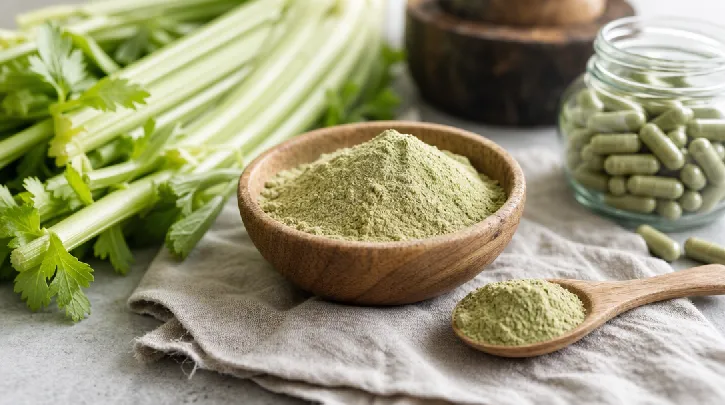
Celery powder offers versatility in both culinary arts and nutritional supplementation. This concentrated ingredient, derived from dried celery, provides distinct flavor and valuable compounds. Understanding its applications allows for effective use in various dishes and wellness routines.
Understanding Celery Powder: From Plant to Product
Celery powder originates from the Apium graveolens plant, commonly known as celery. Manufacturers dry and grind fresh celery stalks, leaves, and sometimes roots to create this fine powder. The drying process removes water, concentrating the plant’s natural components into a potent form.
What is Celery Powder?
Celery powder is a dehydrated and pulverized form of celery. It serves as a seasoning, a natural food preservative, and a dietary supplement. Its concentration means a small amount delivers significant flavor and nutritional value compared to fresh celery.
How Celery Powder is Made
The production of celery powder typically involves several stages. Farmers harvest fresh celery and then meticulously wash it to remove any dirt or impurities. Producers then dehydrate the celery using various methods, such as air drying, freeze-drying, or oven drying, which removes moisture while preserving key nutrients and flavor compounds. Finally, manufacturers grind the dried celery into a fine powder, ready for packaging and distribution.
Types of Celery Powder
Consumers encounter different types of celery powder primarily based on their intended use. Some celery powders are simply dried, ground celery for seasoning. Other versions are specifically processed to concentrate natural nitrates, making them suitable for curing meats. Cultured celery powder involves fermenting celery juice with bacterial cultures, further converting nitrates into nitrites for more effective curing applications.
Celery Powder in the Kitchen: Flavor and Function
Celery powder provides a convenient way to infuse dishes with celery’s characteristic flavor. It also acts as a natural curing agent and an umami enhancer in various recipes. Its concentrated nature allows for deeper flavor development.
A Natural Flavor Enhancer
Celery powder offers a robust, earthy, and slightly salty flavor profile. Cooks use it to deepen the taste of soups, stews, sauces, and stocks. It imparts a subtle, savory note, enhancing the overall complexity of a dish without overpowering other ingredients.
Beyond Seasoning: Celery Powder as a Curing Agent
One primary application of specific celery powders is in food preservation, particularly in curing meats. Natural nitrates present in celery powder convert into nitrites during the curing process. These nitrites inhibit bacterial growth, extending shelf life and contributing to the characteristic color and flavor of cured products like bacon, ham, and hot dogs. The USDA regulates the use of celery powder as a curing agent, requiring clear labeling when used in meat products.
| Feature | Standard Celery Powder (Spice) | Celery Powder (Curing Agent) |
|---|---|---|
| Primary Use | Flavoring, seasoning | Meat curing, preservation |
| Nitrate/Nitrite Content | Low, naturally occurring | High, concentrated for curing |
| Flavor Profile | Earthy, subtle celery taste | Contributes to cured meat flavor |
| Regulation | Generally none specific to this use | USDA regulated for meat products |
Practical Culinary Applications
Chefs incorporate celery powder into dry rubs for meats, especially poultry and pork. It also features prominently in homemade seasoning blends, such as those for poultry seasoning or vegetable broth mixes. You can sprinkle it directly into casseroles, stir-fries, and even smoothies for an added nutritional boost and savory depth. It works particularly well in dishes where fresh celery might be too fibrous or contribute too much moisture, like dressings or dips.
- Enhance homemade vegetable broth with a teaspoon of celery powder.
- Mix into meatloaf or burger patties for a deeper umami flavor.
- Add to salad dressings or mayonnaise-based spreads for subtle celery notes.
- Use in brines for pickling vegetables or curing meats.
The Nutritional Profile and Health Benefits of Celery Powder
Celery powder retains many beneficial compounds found in fresh celery. It offers a convenient source of vitamins, minerals, and potent antioxidants. These components contribute to various aspects of human health.
Rich in Essential Nutrients
Celery powder contains vital nutrients including vitamin K, vitamin C, potassium, and folate. It also provides essential electrolytes, which support hydration and nerve function. The concentration process enhances these nutrients per serving compared to an equivalent weight of fresh celery.
Powerful Antioxidant Properties
Celery powder is rich in antioxidants like flavonoids and phenolic acids. These compounds combat oxidative stress in the body by neutralizing free radicals. Reducing oxidative stress can help protect cells from damage and support overall health.
Potential Anti-Inflammatory Effects
The phytonutrients in celery powder, such as apigenin and luteolin, exhibit anti-inflammatory properties. These compounds may help mitigate inflammation throughout the body. Chronic inflammation is linked to various health conditions, making anti-inflammatory foods beneficial.
Supporting Digestive Health
Celery powder contains dietary fiber, which promotes healthy digestion. Fiber adds bulk to stool, facilitating regular bowel movements. It also supports a healthy gut microbiome, contributing to overall digestive wellness.
Dr. Emily Johnson, a leading nutritionist and researcher at the American Institute of Nutrition, states, “Celery powder provides a concentrated source of valuable phytonutrients, including antioxidants and anti-inflammatory compounds. Its convenience makes it an excellent addition for those seeking to enhance their nutrient intake, especially for compounds that support cellular health and reduce oxidative stress.”
Celery Powder as a Supplement: Forms and Usage
Consumers often find celery powder in supplement form, either as a standalone ingredient or part of a blend. It offers a convenient way to access celery’s nutritional benefits without consuming large quantities of fresh celery. Understanding proper usage ensures maximum benefit.
Common Supplement Forms
Celery powder supplements come primarily in two forms: bulk powder and capsules. Bulk powder allows for flexible dosing and easy integration into smoothies or juices. Capsules offer a pre-measured dose and convenience for those who prefer not to taste the powder directly.
Dosage and Administration
Recommended dosages for celery powder supplements vary widely based on the product’s concentration and intended use. Always follow the manufacturer’s instructions on the product label. Many supplement brands suggest starting with a small dose, such as one teaspoon of powder or one capsule daily, and gradually increasing as tolerated. Consistency is key for experiencing potential benefits.
What to Look for in a Celery Powder Supplement
When selecting a celery powder supplement, consider several factors to ensure quality. Look for products labeled as “organic” to avoid pesticides and herbicides. Check for third-party testing certifications, which confirm purity and potency. Also, examine the ingredients list for unnecessary fillers or artificial additives. A product with a single ingredient, pure celery powder, is often preferred.
Choosing and Storing Celery Powder
Selecting high-quality celery powder and storing it properly ensures its freshness, potency, and flavor. These practices help maximize the utility of this versatile ingredient.
Identifying Quality Celery Powder
High-quality celery powder typically exhibits a vibrant green color, reflecting its fresh source material. It should possess a distinct, earthy celery aroma, not a stale or chemical smell. Opt for products from reputable brands known for their transparency in sourcing and manufacturing. Reading customer reviews can also provide insights into product quality and effectiveness.
Proper Storage Techniques
Store celery powder in an airtight container away from direct sunlight, heat, and moisture. A cool, dark pantry or cupboard is ideal. Proper storage prevents clumping, maintains its aromatic compounds, and extends its shelf life. Generally, properly stored celery powder can last for one to two years, but always check the “best by” date on the packaging.
Potential Downsides and Considerations
While celery powder offers numerous benefits, users should be aware of certain considerations, particularly regarding its sodium content and natural nitrate/nitrite levels, especially when used in large quantities or for curing purposes.
Sodium Content
Celery naturally contains sodium, and when concentrated into a powder, its sodium content increases per serving. Individuals monitoring their sodium intake, especially those with high blood pressure, should consider this. Check product labels for sodium levels, particularly in supplements or concentrated culinary powders.
Natural Nitrates and Nitrites
Celery powder contains natural nitrates, which convert to nitrites. While beneficial for meat curing, excessive intake of nitrites from any source can raise concerns. Always use celery powder as a curing agent according to established guidelines and regulations, such as those from the USDA, to ensure food safety. Most people consume celery powder in small quantities as a spice, where nitrate/nitrite levels are not a significant concern.
Allergies and Sensitivities
Individuals with a known allergy to celery or other plants in the Apiaceae family (e.g., carrots, parsley, dill) should avoid celery powder. Allergic reactions can range from mild skin rashes to more severe anaphylaxis. Always consult a healthcare professional if you suspect an allergy or experience adverse reactions.
Final Thoughts
Celery powder presents a valuable ingredient for both culinary enhancement and nutritional support. Its concentrated flavor, rich nutrient profile, and functional properties make it a versatile addition to any kitchen or wellness regimen. Integrating this ingredient thoughtfully can elevate your dishes and contribute to a more balanced diet.
FAQ
What is the primary difference between celery powder for cooking and for curing?
Celery powder for cooking simply adds flavor and nutrients, while celery powder for curing is processed to have a higher concentration of natural nitrates, which convert to nitrites to preserve meats.
Can I substitute fresh celery with celery powder in recipes?
You can substitute fresh celery with celery powder, but use a much smaller amount. Approximately one teaspoon of celery powder can replace one celery stalk, depending on the desired intensity of flavor. Start with less and adjust to taste.
Does celery powder contain the same nutrients as fresh celery?
Yes, celery powder retains many of the vitamins, minerals, and antioxidants found in fresh celery. The dehydration process concentrates these nutrients, making the powder a potent source.
Is celery powder a good source of fiber?
Celery powder contains dietary fiber, contributing to digestive health. While concentrated, it may not provide as much fiber per serving as a whole stalk of fresh celery due to volume differences.
How should I store celery powder to maintain its freshness?
Store celery powder in an airtight container in a cool, dark, and dry place, such as a pantry or cupboard. This practice protects it from moisture and light, which can degrade its flavor and potency over time.
Can celery powder help lower blood pressure?
Celery contains compounds that may support healthy blood pressure, but celery powder’s direct effect on lowering blood pressure needs more conclusive research. Consult a healthcare professional for blood pressure management.
Disclaimer: The information provided in this article is for educational purposes only and not intended as medical advice. Always consult with a qualified healthcare professional before making any decisions related to your health or diet, especially if you have pre-existing medical conditions or are taking medications. This content does not endorse specific products or treatments.
