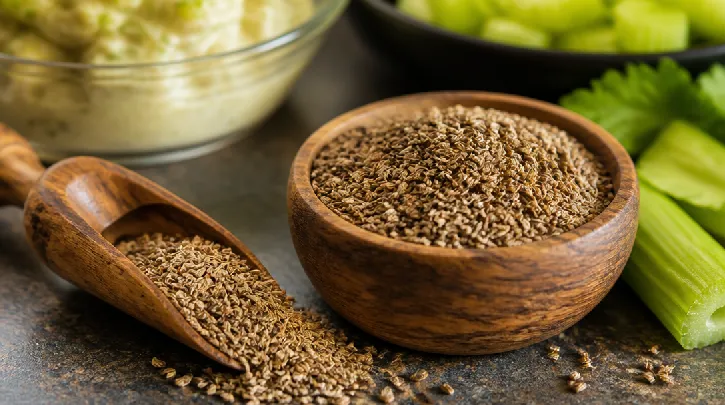
Celery seeds are the tiny, brown seeds of the wild celery plant (Apium graveolens). They deliver a concentrated, earthy, and slightly bitter flavor that is much stronger than fresh celery stalks. You use them to add depth to soups, salads, dressings, and spice blends. Unlike fresh celery, which provides crunch and water, celery seeds offer a potent, warm aroma that transforms a dish with just a pinch.
Think beyond the spice rack. Celery seed is a workhorse in kitchens that care about building layered flavors. I have used it for years in everything from dry rubs to Bloody Marys. When you toast the seeds lightly, their essential oils release a nutty, grassy note that mimics celery salt but with more complexity. The key is understanding when to use the whole seed versus the ground form. Whole seeds hold up better in long-cooking dishes, while ground celery seed blends seamlessly into dressings and marinades.
What Does Celery Seed Taste Like?
Celery seed tastes like celery concentrate. The flavor is earthy, slightly bitter, and a little peppery. It carries hints of parsley, which makes sense because they are both from the same plant family (Apiaceae).
When you crush or chew a seed, the bitterness hits first, followed by a warm, almost floral finish. Chefs often compare it to lovage or kombu because of how it deepens savory flavors. The volatile oil called sedanolide gives celery seed its signature aroma and ties it to celery salt, a common condiment made by mixing ground seeds with salt.
Why Cook with Celery Seed?
You cook with celery seed for one main reason: umami without extra liquid. Fresh celery adds water and texture, but celery seed adds the same savory essence without changing a dish’s consistency. This makes it invaluable for dry rubs, marinades, and spice blends where moisture is your enemy.
Celery seed also acts as a natural flavor enhancer. It reduces the need for salt while still making food taste more robust. In a study published in the Journal of Food Science, researchers found that celery seed extract increased perceived saltiness in low-sodium soups. This is a practical tip for anyone managing blood pressure or simply wanting to cut back on salt.
Table: Whole Celery Seed vs. Ground Celery Seed
| Form | Best For | Flavor Release | Shelf Life |
|---|---|---|---|
| Whole seeds | Braising liquids, pickling brines, breads | Slow, requires heat or time | Up to 4 years in airtight container |
| Ground seeds | Dry rubs, salad dressings, dips | Immediate, intense | 6 months due to oil oxidation |
Tip: Grind whole seeds in a mortar and pestle or a clean coffee grinder just before using. The freshly ground powder has a brightness that pre-ground spice jars cannot match.
Top Celery Seed Uses in Cooking
1. Spice Blends and Rubs
Celery seed is a backbone spice in classic blends like Old Bay seasoning and pickling spice. It brings the savory, earthy note that offsets sweet paprika and sharp mustard. For a dry rub on pork ribs, mix 2 tablespoons brown sugar, 1 tablespoon smoked paprika, 1 teaspoon celery seed, 1 teaspoon black pepper, and ½ teaspoon cayenne. Rub it onto the meat and let it sit overnight.
In his book Salt, Fat, Acid, Heat, chef Samin Nosrat emphasizes that celery seed provides a “subtle bitterness that balances richness.” That is exactly what you need when cooking fatty meats like brisket or duck.
2. Salad Dressings and Marinades
Celery seed shines in vinaigrettes and creamy dressings. A classic Russian dressing combines mayonnaise, ketchup, horseradish, and a pinch of ground celery seed. For a simple vinaigrette, whisk together 3 tablespoons olive oil, 1 tablespoon apple cider vinegar, 1 teaspoon Dijon mustard, ½ teaspoon celery seed, salt, and pepper. Let it rest for 10 minutes so the seeds soften.
Grind the seeds if you want a smoother dressing. Whole seeds add a pleasant pop, but they can be distracting in an emulsified sauce.
3. Soups, Stews, and Braises
Drop a teaspoon of whole celery seeds into a pot of chicken soup or beef stew. They rehydrate and release flavor over 30 to 60 minutes of simmering. Unlike fresh celery, which can become slimy if overcooked, seeds stay intact and keep contributing.
Minneapolis-based chef Sean Sherman, author of The Sioux Chef’s Indigenous Kitchen, uses dried celery seeds in his wild rice soups. He notes that the seeds “pay homage to traditional Native American uses of wild celery, which is a close relative.” The flavor is authentic and subtle.
4. Pickling and Fermenting
Celery seed is a key ingredient in pickling spice blends. Combine it with mustard seeds, black peppercorns, coriander seeds, dill seeds, and bay leaves. Use this mix for quick pickles of cucumbers, carrots, or green beans. The seeds add savory complexity that complements the acidity of vinegar.
For fermented vegetables like sauerkraut or kimchi, add 1 teaspoon of celery seed per quart of brine. The seeds do not ferment themselves, but they infuse the ferment with depth during the aging process.
5. Breads and Baking
Whole celery seeds work well in savory breads. You can sprinkle them on top of focaccia, dinner rolls, or bagels. The heat of the oven toasts the seeds, making them crunchy and nutty. Try adding 1 tablespoon of whole seeds to your favorite soda bread recipe for an unexpected twist.
Celery seed also belongs in cheddar biscuits. Mix it into the dry ingredients along with sharp cheddar and chives. The result is a biscuit with a savory edge that pairs beautifully with tomato soup.
6. Vegetable and Grain Dishes
Celery seed works on almost any roasted vegetable. Toss cauliflower or Brussels sprouts with olive oil, salt, and a teaspoon of celery seed before roasting at 425°F. The edges caramelize, and the seeds add a warm, earthy crunch.
Add half a teaspoon of ground celery seed to cooked quinoa, farro, or rice. It gives the grains a savory backbone that is especially good in salads with lemon and herbs.
Cooking Tips from Real Experience
Start with small amounts. Celery seed is potent, and too much will make a dish taste bitter and medicinal. For a dish serving four people, begin with ½ teaspoon of whole seeds or ¼ teaspoon of ground seeds. Taste and adjust.
Toast whole seeds in a dry skillet over medium heat for about 60 seconds. Shake the pan often. They will turn fragrant and slightly darker. Cool them before grinding or adding to dishes. This step doubles their flavor.
Store celery seed in a dark, airtight container away from heat and light. Ground celery seed loses its punch after six months. Whole seeds last up to four years. Always check the expiration date on store-bought jars.
DIY Celery Seed Blend
Create your own celery salt blend at home. Mix 2 parts fine sea salt with 1 part ground celery seed. Add a pinch of white pepper and garlic powder if desired. This blend is excellent for rimming cocktail glasses, seasoning fries, or spicing up deviled eggs.
Celery Seed in Cocktails
The earthy bitterness of celery seed pairs well with tomato juice and vodka. A dash of ground celery seed in a Bloody Mary adds complexity. Stir it into the mix along with Worcestershire sauce and hot sauce. You can also rim the glass with celery salt.
For a non-alcoholic option, muddle a pinch of celery seeds with cucumber and lime juice. Add club soda and a mint leaf. It is a refreshing, savory soda that is still sophisticated.
Nutritional Profile of Celery Seed
Celery seed is dense with nutrients. One tablespoon (about 6 grams) contains roughly 8% of the daily recommended intake of calcium and 10% of manganese. It also provides small amounts of iron, magnesium, and zinc.
| Nutrient | Amount per 1 tbsp (6 g) | % Daily Value |
|---|---|---|
| Calories | 25 | — |
| Calcium | 80 mg | 8% |
| Manganese | 0.2 mg | 10% |
| Iron | 1 mg | 6% |
| Fiber | 0.5 g | 2% |
Note: Celery seed contains high amounts of a compound called apigenin, which has shown anti-inflammatory properties in laboratory studies. According to a 2019 review in Nutrients, apigenin “exhibits antioxidant, anti-inflammatory, and anticancer activities.” Human studies remain limited, but the seed is safe in normal cooking amounts.
Potential Health Benefits
Some research suggests celery seed may help with blood pressure. An older study in the Journal of Medicinal Food (2013) found that celery seed extract lowered blood pressure in hypertensive rats. Human trials are sparse, but the seed’s diuretic effect may play a role.
The spice also contains compounds called phthalides, which can relax blood vessel walls. This might explain why some cultures use celery seed as a natural remedy for gout and arthritis. Always talk to a doctor before using large amounts as a treatment.
Recipes Using Celery Seed
Simple Celery Seed Coleslaw
Shred half a head of green cabbage and one carrot. In a bowl, whisk ½ cup mayonnaise, 2 tablespoons apple cider vinegar, 1 tablespoon sugar, 1 teaspoon celery seed, salt, and pepper. Pour over the vegetables. Toss well and refrigerate for 30 minutes before serving. The celery seed adds a subtle crunch and a savory note to a classic side dish.
Crusty Bread with Celery Seed and Cheddar
Mix 3 cups all-purpose flour, 1 ½ cups warm water, 1 teaspoon active dry yeast, 1 teaspoon salt, and 2 tablespoons whole celery seeds. Let it rise for 2 hours. Fold in 1 cup shredded sharp cheddar. Shape into a loaf and bake at 450°F for 30 minutes. The seeds toast inside the crust, creating pockets of intense celery flavor.
FAQ
What is celery seed used for in cooking?
Celery seed is used to add a concentrated, earthy celery flavor to soups, stews, salad dressings, pickling brines, spice blends, breads, and vegetable dishes. It works best when you need depth without adding extra liquid.
Can I substitute celery seed for fresh celery?
Not directly. Celery seed provides flavor but no texture or crunch. If a recipe needs both, use diced fresh celery and add a pinch of celery seed to boost the celery taste.
Is celery seed the same as celery salt?
No. Celery salt is a mix of ground celery seed and salt. Celery seed is the pure, unadulterated spice. You can make celery salt at home by grinding celery seed with salt in a 1:2 ratio.
How much celery seed should I use?
Start with ½ teaspoon of whole seeds per four servings. Ground seeds are stronger; use ¼ teaspoon per four servings. You can always add more, but bitterness becomes unpleasant if you overdo it.
Does celery seed expire?
Whole celery seeds stay fresh for up to 4 years if stored in a dark, airtight container. Ground celery seed loses potency after about 6 months. Smell it; if it smells musty or faint, replace it.
Can I eat celery seed raw?
Yes. Many people eat celery seeds raw in salads or dressings. Toasting enhances flavor and softens the seeds, but they are safe to eat whole without cooking.
Is celery seed good for high blood pressure?
Some animal studies indicate celery seed extract may lower blood pressure due to its diuretic and vasodilating properties. Human evidence is limited. Use it as a cooking spice, not a treatment, and consult your doctor for medical advice.
Conclusion
Celery seed is a small spice with a big job. It adds savory depth to everything from dry rubs to coleslaw. Its concentrated, earthy flavor makes it a go-to for cooks who want umami without extra moisture. Toast it, grind it, or drop it whole into a slow-simmering pot. Whether you are making pickles, seasoning a roast, or refining a salad dressing, celery seed delivers flavor that fresh celery cannot touch. Keep a jar in your pantry. You will reach for it more than you think.
Disclaimer
The health-related information in this article is for educational and informational purposes only. It is not a substitute for professional medical advice, diagnosis, or treatment. Always consult a qualified healthcare provider before using celery seed products for medicinal purposes, especially if you are pregnant, nursing, or taking medication for blood pressure or blood-thinning conditions.
