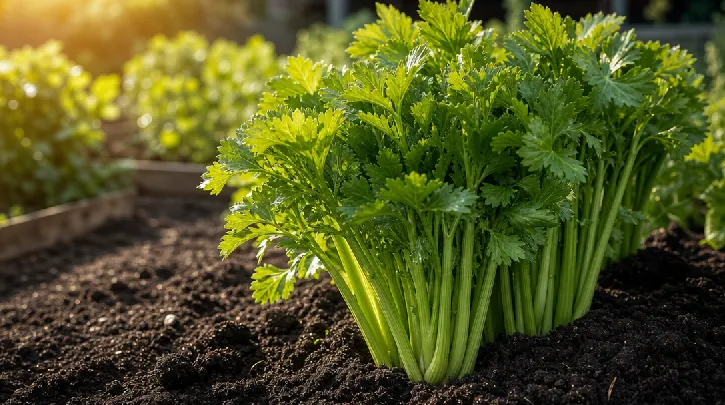
Achieving crisp, flavorful celery stalks starts with understanding its specific environmental needs. Ideal soil and light conditions for celery are paramount for a successful harvest. Celery thrives in consistently moist, nutrient-rich, well-draining soil with a pH between 6.0 and 7.0. For optimal growth, it requires at least six hours of full sun daily, though it appreciates some afternoon shade in hotter climates to prevent bolting and bitterness.
Many gardeners, both novice and experienced, often face challenges with celery that becomes tough, stringy, or bitter. This usually stems from a mismatch in its growing environment. By dialing in the perfect balance of soil characteristics and light exposure, you can cultivate vibrant, tender celery that’s a joy to harvest and eat. Let’s delve into the specifics that transform struggling plants into a bountiful crop.
Understanding Celery’s Soil Preferences
Celery is a heavy feeder and a moisture-loving plant. Its root system, while relatively shallow, is extensive, demanding a rich and consistently moist environment to support its rapid leafy growth. Poor soil quality is often the primary reason for disappointing celery harvests, leading to stunted growth, stringy stalks, and an unappealing flavor.
The Critical Role of Soil pH
Soil pH is a measure of its acidity or alkalinity. For celery, maintaining the correct pH range is vital for nutrient availability. Celery prefers a slightly acidic to neutral soil, with an optimal pH between 6.0 and 7.0.
If the soil is too acidic (below 6.0), essential nutrients like calcium and magnesium become less available to the plant. Conversely, if the soil is too alkaline (above 7.0), micronutrients such as iron and manganese can become locked up, hindering healthy growth. Regular soil testing helps you determine your current pH levels and make necessary adjustments. Soil test kits are readily available at garden centers and through university extension offices across the US.
Soil Texture and Structure: The Foundation for Growth
The physical composition of your soil, known as soil texture, profoundly impacts water retention and drainage. Celery performs best in a loamy soil texture. Loam is a balanced mix of sand, silt, and clay particles, offering the best of all worlds: good drainage from sand, nutrient retention from clay, and moisture-holding capacity from silt.
Poorly draining heavy clay soils can lead to waterlogging, suffocating celery roots. Sandy soils, while draining well, often struggle to retain enough moisture and nutrients for celery’s demanding needs. Improving soil structure through amendments is key to achieving that ideal loamy texture.
Enriching Soil with Organic Matter and Nutrients
Celery is a voracious eater, requiring a steady supply of nutrients throughout its growing cycle. Abundant organic matter is perhaps the single most important soil component for healthy celery. Organic matter, such as compost or well-rotted manure, improves soil structure, enhances water retention, and slowly releases essential nutrients as it decomposes. It also fosters a healthy microbial ecosystem in the soil, which benefits nutrient cycling and plant health.
A soil rich in organic matter will provide nitrogen for lush foliage, phosphorus for root development, and potassium for overall plant vigor and disease resistance. Trace elements like boron are also critical for celery, preventing common issues like “black heart” and cracked stems. Regular additions of compost will gradually build up these reserves in your garden beds.
Ensuring Proper Drainage
While celery loves consistent moisture, it absolutely despises “wet feet.” This means the soil needs to drain efficiently to prevent water from pooling around the roots, which can lead to root rot and fungal diseases. Raised beds or amending heavy clay soils significantly can improve drainage. Compacting soil also hinders drainage, so avoid walking on prepared beds.
Even with abundant organic matter, heavy clay soils might benefit from incorporating gypsum or coarse sand, though sand should be used cautiously as too much can create a concrete-like mixture with clay if not properly mixed. The goal is a soil that feels moist but not soggy when squeezed, allowing excess water to pass through readily.
Preparing Your Celery Beds
Proper soil preparation before planting celery is crucial for a strong start. This involves testing your soil, amending it, and ensuring it is well-tilled. Start preparing your beds several weeks, or even months, before your anticipated planting date to allow amendments to integrate and begin breaking down.
Here’s a step-by-step guide to preparing your celery soil:
- Test Your Soil: Use a reliable soil test kit. This provides a baseline for pH and nutrient levels.
- Adjust pH if Necessary:
- To raise pH (make less acidic): Incorporate agricultural lime or wood ash.
- To lower pH (make less alkaline): Add elemental sulfur, peat moss, or composted pine needles.
- Incorporate Organic Matter: Work in a generous amount of well-rotted compost (at least 2-4 inches deep) and/or aged manure. This is the cornerstone of healthy celery soil.
- Add Balanced Fertilizer: Before planting, mix in a balanced organic fertilizer, especially one higher in phosphorus and potassium, to encourage strong root development and overall plant health.
- Till and Rake: Loosen the soil to a depth of at least 12-18 inches using a broadfork or tiller. Break up any large clods and rake the surface smooth.
According to Dr. John M. White, a leading horticulturist at the University of Florida’s Institute of Food and Agricultural Sciences, “The single most impactful step a gardener can take to ensure a successful celery crop is meticulous soil preparation. Focusing on high organic matter content and appropriate pH sets the stage for healthy, disease-resistant plants and crisp stalks.”
Understanding Celery’s Light Requirements
Light is the energy source for photosynthesis, the process by which plants convert sunlight into food. For celery, the right amount and intensity of light directly influence its growth rate, stalk development, and flavor profile. Insufficient light leads to weak, leggy plants, while excessive, intense heat can cause bitterness and premature bolting.
Sunlight Requirements: Full Sun with a Caveat
Celery generally requires full sun, meaning at least six to eight hours of direct sunlight per day. This is essential for robust growth and the development of thick, crisp stalks. In northern climates or during cooler growing seasons, more sun is always better.
However, celery is a cool-season crop. In regions with hot summers, particularly in USDA Zones 7 and above, the intense afternoon sun can be detrimental. In these areas, providing some afternoon shade can prevent the plants from becoming stressed, turning bitter, or bolting (going to seed prematurely). Partial shade in the hottest part of the day, from 1 PM to 4 PM, is often ideal in warmer zones.
Light Intensity and Duration
The intensity of light matters. While six hours of direct morning sun might be sufficient, six hours of intense midday sun in a hot climate could be too much. The duration, or number of hours, is also crucial. Less than six hours of sun will result in slower growth and smaller, weaker plants.
Consider the angle of the sun and any surrounding structures or trees that might cast shadows during different parts of the day. Observing your garden’s light patterns throughout the day can help you select the best planting location for your celery. For example, a location that receives morning sun and then dappled shade from a tall tree in the afternoon could be perfect.
Impact of Inadequate Light
When celery doesn’t receive enough light, several problems can arise:
- Leggy Growth: Plants stretch to find light, resulting in tall, spindly stems and sparse foliage.
- Weak Stalks: Stalks may be thin, pale, and lack the desired crunch.
- Slow Growth: Overall development will be significantly delayed.
- Reduced Flavor: Photosynthesis is key to developing sugars and essential oils that contribute to celery’s characteristic flavor.
- Increased Disease Susceptibility: Weakened plants are more prone to pests and diseases.
Dealing with Excessive Heat and Sun
In areas where summer temperatures consistently soar above 80°F, managing direct sun exposure becomes critical for celery. Here are a few strategies:
- Provide Afternoon Shade: Plant celery where it naturally receives shade during the hottest part of the day, perhaps from a larger plant, a fence, or the east side of your house.
- Use Shade Cloth: A 30-50% shade cloth can be erected over your celery bed during peak summer. This reduces light intensity and lowers the ambient temperature around the plants.
- Blanching: While primarily done for tenderness and color, blanching celery (tying stalks together and mounding soil around them, or using cardboard collars) can also offer some protection from intense sun, though it reduces the green chlorophyll content.
- Planting Season: In hot climates, consider planting celery as a spring or fall crop to avoid the harshest summer heat.
The Interplay of Soil and Light
It’s important to remember that soil and light conditions don’t exist in isolation; they interact. For instance, soil that retains moisture well can help plants tolerate slightly more sun exposure by keeping them hydrated. Conversely, in very sunny, hot conditions, soil that dries out quickly will exacerbate plant stress.
A well-prepared bed with ample organic matter will also provide the strong root system necessary for plants to absorb enough water to withstand sun and heat. Healthy plants grown in ideal soil are simply more resilient to environmental stresses.
| Condition | Ideal for Celery | Suboptimal for Celery |
|---|---|---|
| Soil pH | 6.0 – 7.0 (slightly acidic to neutral) | Below 6.0 (too acidic) or Above 7.0 (too alkaline) |
| Soil Texture | Loamy, well-draining, rich in organic matter | Heavy clay (poor drainage), Sandy (poor moisture/nutrient retention) |
| Nutrients | High in nitrogen, phosphorus, potassium, and trace minerals (especially boron) | Nutrient-deficient, unbalanced NPK |
| Moisture | Consistently moist, never waterlogged | Dries out quickly or constantly soggy |
| Sunlight Hours | 6-8+ hours direct sun (cooler climates); 6 hours direct sun + afternoon shade (hotter climates) | Less than 6 hours direct sun; Excessive intense afternoon sun without protection in hot climates |
| Temperature | Optimal 60-75°F (15-24°C) | Consistently below 50°F (10°C) or above 80°F (27°C) |
FAQ
Can celery grow in partial shade?
Yes, celery can tolerate partial shade, especially in hotter climates where it can protect the plants from intense afternoon sun. However, it still needs at least 4-6 hours of direct sunlight, preferably morning sun, to develop strong stalks.
What is the best fertilizer for celery?
The best fertilizer for celery is a balanced one with a slightly higher nitrogen content, or one specifically formulated for leafy greens. Incorporating plenty of compost and well-rotted manure before planting often provides sufficient nutrients. You can supplement with a liquid feed every few weeks once plants are established.
Why are my celery stalks bitter?
Bitterness in celery is often caused by environmental stress, primarily heat and insufficient moisture. Inadequate water, extreme temperatures, or a lack of nutrients can all contribute to bitter-tasting stalks. Ensuring consistent watering and providing afternoon shade in hot weather can mitigate this issue.
How often should I water celery?
Celery requires consistent moisture. You should water deeply and regularly, aiming for about 1-1.5 inches of water per week, either from rainfall or irrigation. The soil should remain consistently moist but never waterlogged.
Can I grow celery indoors?
Growing celery indoors can be challenging but is possible. It requires a very large pot, consistent moisture, nutrient-rich soil, and significant artificial light (grow lights) to mimic full sun conditions. Air circulation is also important to prevent fungal issues.
Conclusion
Cultivating crisp, flavorful celery is a rewarding experience that hinges on understanding and meeting its specific needs. By providing nutrient-rich, consistently moist, well-draining soil with a pH between 6.0 and 7.0, and ensuring at least six hours of appropriate sunlight daily, you set the stage for success. Remember to amend your soil generously with organic matter, monitor its moisture levels, and protect plants from extreme heat in warmer regions. With careful attention to these fundamental soil and light conditions, you’ll soon be harvesting an abundance of tender, delicious celery straight from your garden.
