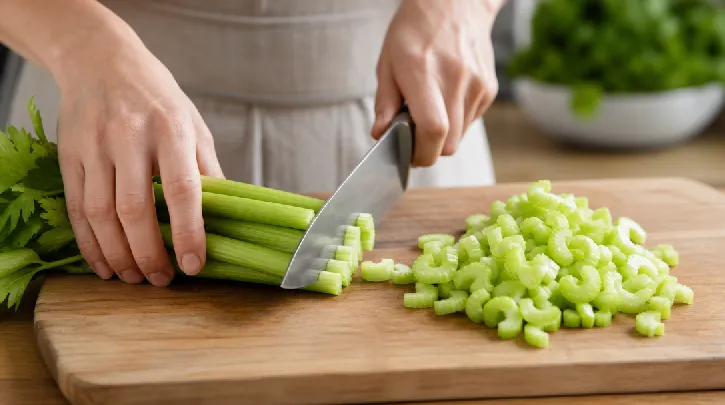
Many home cooks find themselves wrestling with celery, unsure how to properly clean, trim, and chop it for optimal flavor and texture in their dishes. Mastering how to prepare celery for cooking is not just about making neat cuts; it’s about enhancing your ingredients and ensuring food safety, leading to consistently better culinary results from crunchy salads to rich stews. This comprehensive guide will walk you through essential techniques for celery preparation, ensuring every celery cut is purposeful and precise.
Why Proper Celery Preparation Matters for Flavor and Safety
Celery, with its distinct crunch and subtle, earthy flavor, is a versatile vegetable that forms the backbone of countless recipes. However, its true potential is only unlocked when it is prepared correctly. Neglecting proper celery preparation steps can lead to gritty textures, stringy bites, and even introduce unwanted contaminants into your food.
Beyond Crunch: Enhancing Texture and Taste
The fibrous nature of celery means that how you cut celery significantly impacts its texture once cooked or served raw. Inconsistent celery cutting results in uneven cooking; some pieces become mushy while others remain too firm. A thoughtful approach to trimming celery and chopping celery ensures every piece contributes perfectly to the dish’s overall mouthfeel. Properly prepped celery offers a delightful crispness in salads or a tender, integrated presence in cooked applications. Its natural mild, somewhat peppery flavor also shines through when dirt and external impurities are thoroughly removed, enhancing the overall taste.
Food Safety First: Removing Dirt and Contaminants
Celery grows in soil, and its tightly packed stalks can harbor dirt, sand, and even small insects. Beyond visible debris, fresh produce can carry bacteria. The Centers for Disease Control and Prevention (CDC) advises washing all fruits and vegetables under running water before eating, cutting, or cooking them, even if you plan to peel celery. This critical step of cleaning celery removes potential pathogens and pesticide residues, safeguarding your health and ensuring a clean taste profile for your food.
The Essential Tools for Efficient Celery Preparation
While celery preparation might seem straightforward, having the right tools makes the process more efficient, safer, and ultimately more enjoyable. You do not need a vast collection of specialized gadgets, but a few fundamental items are indispensable for preparing celery effectively.
Your Knife: The Foundation of Good Cuts
A sharp chef’s knife is the most crucial tool for how to cut celery. A dull knife requires more force, increasing the risk of slips and uneven cuts. Invest in a good quality chef’s knife, typically with an 8-inch blade, and keep it properly sharpened. For more delicate tasks or to remove small blemishes, a sharp paring knife can also be useful. The weight and balance of your knife should feel comfortable in your hand, allowing for precise control during chopping celery and other celery cutting techniques.
Beyond the Blade: Cutting Boards and Peelers
A sturdy cutting board provides a stable, non-slip surface for safe knife work. Choose a board made from wood, bamboo, or high-density plastic, and ensure it is large enough to accommodate the celery stalks without crowding. For removing particularly tough outer layers or stubborn strings, a vegetable peeler can be surprisingly effective. While not strictly necessary for every celery prep, a peeler can make quick work of fibrous sections that might otherwise require more careful knife work, especially when you need to peel celery for specific recipes.
Cleaning Celery: The Foundation of Any Recipe
Before any trimming or celery cutting can begin, thorough cleaning celery is paramount. This stage sets the stage for hygienic and delicious cooking, ensuring no grit or unwanted elements detract from your dish.
The Initial Rinse: Washing Away Surface Debris
Start by separating the celery stalks from the main bunch. Hold each individual stalk under cool, running tap water. Use your fingers to gently rub the entire surface of the stalk, paying close attention to the concave inner curve where dirt often collects. The goal here is to wash away any loose soil, sand, or other visible debris. This initial rinse is a critical step in preparing celery for recipes. According to the U.S. Food and Drug Administration (FDA), you should not wash fruits and vegetables with soap, detergent, or commercial produce washes, as these products are not approved for consumption and can leave residues. For more safe food handling tips, visit the FDA website.
Tackling Tough Spots: Brushing and Drying
For particularly dirty stalks, especially those with visible soil embedded in the ribs, a clean vegetable brush can be invaluable. Gently scrub the surface under running water to dislodge any stubborn particles. Once thoroughly rinsed, pat the celery stalks dry with a clean kitchen towel or allow them to air dry on a rack. Excess moisture can dilute dressings in salads or prevent proper browning when sautéing, so drying is an important, often overlooked, step in celery stalk preparation.
Trimming Celery: Removing the Unwanted Parts
Trimming celery is where you begin to shape the celery, removing the parts that are less desirable for culinary use. This step is key to achieving both aesthetic appeal and optimal texture in your finished dish.
Top and Bottom: Where to Make the First Cuts
Begin by cutting off the very bottom, white-ish end of the celery stalk, usually about half an inch to an inch. This section is often tough, fibrous, and can have an unpleasant, slightly bitter taste. Similarly, trim off the leafy tops. While the delicate, light green inner leaves are often edible and can add a fresh garnish to dishes, the larger, darker outer leaves tend to be bitter and fibrous. Many recipes call for only the stalks, so remove the leaves unless otherwise specified. When trimming celery, aim for clean, straight cuts that remove only the undesirable portions, preserving as much usable stalk as possible for various celery cuts.
Addressing Strings: How to Devein Celery and Remove Tough Fibers
Celery stalks contain tough, stringy fibers that run along their length. For many applications, especially raw consumption or quick cooking, these strings can be unpleasantly chewy. The process of removing these strings is often referred to as deveining celery. To remove them, simply snap the stalk in half and pull the strings downwards. Alternatively, you can use a vegetable peeler or the tip of a paring knife to carefully strip the strings from the concave side of the stalk. I typically only remove the most prominent strings from the larger, outer stalks. For inner, more tender stalks or when celery will be cooked for a long time, like in a stew, string removal is less critical as cooking softens them considerably. Deciding whether to remove strings is a trade-off: it takes a bit of extra time, but it significantly improves the eating experience for raw or lightly cooked celery, ensuring a smoother texture when preparing celery for recipes.
Mastering How to Cut Celery for Any Dish
The way you chop celery directly influences its role in a recipe, from providing a crisp counterpoint to melting into a flavorful base. Understanding various celery cutting techniques allows you to adapt celery to specific culinary needs.
How to Cut Celery for Soup and Stews (Dicing Techniques)
For dishes like soups, stews, sauces, and stuffings, celery is often diced. Learning how to cut celery for soup means aiming for small, uniform pieces that cook evenly and integrate seamlessly into the liquid. To dice celery:
- Start by cutting the trimmed stalk into 2-3 inch long sections.
- Lay each section flat on your cutting board. Make lengthwise cuts, creating thin planks. For a fine dice, aim for planks about 1/8 to 1/4 inch thick. For a medium dice, 1/4 to 1/2 inch.
- Stack a few of these planks and make another series of lengthwise cuts, creating thin sticks or batons.
- Finally, gather these sticks and cut celery across them, creating small, uniform cubes.
A consistent dice ensures that the celery softens at the same rate as other aromatics, like onions and carrots, which is crucial for building a cohesive flavor base. This technique of chopping celery is fundamental for the “mirepoix” often found in French cooking, or the “holy trinity” in Cajun and Creole cuisines.
Slicing Celery for Salads and Snacks (Diagonal vs. Straight)
When celery is meant to be a prominent textural element, such as in salads, stir-fries, or as a raw snack, slicing celery is the preferred method. Here, visual appeal and a satisfying crunch are key. You have two main options:
- Straight Slices: Simply cut celery stalk crosswise into uniform rounds. The thickness can vary based on your preference, typically from 1/4 to 1/2 inch. For particularly delicate dishes or garnishes, you might aim for thin sliced celery, less than 1/8 inch thick, which offers a subtle crispness. These provide a sturdy, crisp bite and are excellent in chicken salad, tuna salad, or as part of a crudité platter.
- Diagonal Slices (On the Bias): For a more elegant presentation and a slightly different texture, cut the celery at an angle (on the bias). This technique creates elongated, oval-shaped pieces that expose more surface area, making them appealing in stir-fries or as a garnish. The angled cut also makes the pieces feel less fibrous than straight cross-sections, offering a slightly more tender bite, especially when cut thinly.
When preparing celery for recipes where it’s a star ingredient, consider the visual and textural impact of your slices.
Creating Celery Sticks: Perfect for Dips
Celery sticks are the quintessential accompaniment for dips like hummus or blue cheese dressing. They are easy to make and provide a satisfying crunch. To create perfect celery sticks through careful celery cutting:
- Start with a trimmed celery stalk, ensuring any tough strings are removed.
- Cut celery into sections approximately 3-4 inches long.
- Take each section and slice it lengthwise into thinner, even “sticks” or “fingers.” Aim for a width of about 1/2 inch.
The goal is to create pieces that are easy to hold and scoop. For younger children or those with dental sensitivities, slightly thinner sticks might be preferable.
Specialty Cuts: Chiffonade and Mincing
Beyond the standard dices and slices, there are a couple of specialty celery cuts for preparing celery that call for finer textures or garnishes.
-
Chiffonade: While more commonly associated with leafy herbs,
you can chiffonade celery leaves for a delicate garnish. Stack a few leaves, roll them tightly like a cigar, and then slice them very thinly across the roll to create fine ribbons. This adds a fresh, herbaceous note without overwhelming the dish. - Mincing: For recipes where celery needs to disappear into the background and contribute flavor without noticeable texture, mincing is the answer. After dicing the celery finely, run your knife repeatedly over the pieces until they are very small and almost paste-like. Minced celery is often used in dressings, sauces, or as part of a very fine mirepoix.
Common Mistakes to Avoid When Preparing Celery
Even seasoned cooks can sometimes overlook details in celery stalk preparation that can impact the final dish. Awareness of these common pitfalls can elevate your cooking.
Neglecting Thorough Washing
As mentioned, the most frequent mistake is insufficient washing. Dirt and grit are not just unappetizing; they can also be unsafe. A quick rinse under the tap is often not enough to dislodge all the debris trapped within the concave curves of the stalks. Always take the time to separate the stalks, scrub if necessary, and rinse each piece thoroughly. Remember that washing produce is crucial for reducing microbial contamination, an important part of how to prepare celery safely.
Ignoring the Strings for Certain Applications
While long-cooked dishes can soften celery strings, eating raw celery in a salad or as a snack with prominent strings can be a truly unpleasant experience. For these applications, taking the extra minute to devein celery or peel away the toughest strings makes a significant difference in palatability. My personal recommendation is always to remove strings for raw preparations.
Inconsistent Cuts: Impact on Cooking Evenness
This is a fundamental principle in all cooking: uniform cuts lead to uniform cooking. If you have a mix of large chunks and tiny pieces of celery in your pot, the smaller pieces will turn to mush while the larger ones remain hard. This affects not only texture but also how flavor is released and integrated into the dish. Always strive for consistency in your chopping celery, whether you are dicing, slicing celery, or mincing.
Expert Tips for Storing Prepped Celery
Proper storage is key to extending the life of your celery, whether it’s whole or already prepped. Keeping celery crisp is a common goal for many home cooks after celery prep.
Keeping Celery Crisp: The Water Bath Method
One of the best ways to keep celery stalks fresh and crisp, especially after you’ve bought a large bunch, is the water bath method. Once you’ve cleaned and trimmed celery (or even just separated the stalks), place them in a container filled with cold water. Seal the container tightly with a lid or plastic wrap and refrigerate. The celery will absorb the water, staying firm and crunchy for up to two weeks. I find this method particularly effective for revitalizing slightly limp celery, bringing it back to life within a few hours. Changing the water every days helps maintain freshness.
Refrigeration Best Practices for Longevity
For un-prepped whole celery, simply store the entire bunch in the crisper drawer of your refrigerator. Some people prefer to wrap it tightly in aluminum foil, as this allows the celery to breathe slightly while retaining moisture, preventing it from drying out or becoming rubbery too quickly. Plastic bags can sometimes trap too much moisture, leading to faster spoilage. If you’ve already chopped celery for a recipe, store the cut celery pieces in an airtight container in the refrigerator. Use them within 3-4 days for best quality. For longer storage, blanched and frozen diced celery can be used in cooked dishes, though it will lose its crispness. For more general guidelines on vegetable storage, refer to resources like FoodSafety.gov.
Frequently Asked Questions About Preparing Celery
Do I really need to wash celery if I’m peeling it?
Yes, even if you plan to peel celery, you should still wash it first. This helps prevent transferring dirt and bacteria from the outer surface to the edible parts as you peel. Think of it as protecting the clean interior from the dirty exterior. This is a crucial step in how to prepare celery safely.
Can I eat the leaves of celery?
Absolutely! The small, pale green leaves found towards the center of the celery bunch are tender and flavorful. They make an excellent garnish for salads, soups, or even as an addition to herb mixes. The larger, darker outer leaves tend to be more bitter and fibrous, and are typically discarded, but can be used in stocks.
How can I make old, limp celery crisp again?
If your celery has lost its crunch, you can often revive it by placing the stalks in a bowl of ice water for 30 minutes to an hour. The celery will rehydrate and regain much of its crispness. For best results, trim the very ends of the stalks before placing them in the water to help with absorption.
What’s the best way to store cut celery?
To store cut celery, place the pieces in an airtight container or a resealable plastic bag with a small piece of damp paper towel. This helps maintain moisture and prevents drying out. Keep it in the crisper drawer of your refrigerator, and it should stay fresh for 3-5 days. Proper storage is essential after celery cutting for future use.
Is it necessary to remove all strings from celery?
No, it’s not always necessary to remove all strings. For dishes where celery is cooked for a long time (like stews or braises), the strings will soften considerably and won’t be noticeable. However, for raw applications (salads, snacks) or quick-cooked dishes (stir-fries), taking the time to devein celery or remove the tougher strings from the outer stalks significantly improves the texture and eating experience.
Should I peel celery for specific recipes?
Generally, peeling celery is not required for most recipes. However, if you have particularly tough or fibrous outer stalks, or if you desire an exceptionally smooth texture for a raw dish or a delicate puree, using a vegetable peeler to remove the outermost layer can be beneficial. It’s also a good way to “devein” very stringy stalks efficiently.
Mastering the art of how to prepare celery for cooking ensures you get the most out of this humble, yet incredibly versatile, vegetable. From thorough cleaning celery and smart trimming celery to precise chopping celery techniques and expert celery cutting methods, each step contributes to better flavor, texture, and food safety in your culinary creations. By applying these fundamental skills, you can transform celery from a mere ingredient into a highlight of your dishes, enhancing everything from simple snacks to complex main courses.
