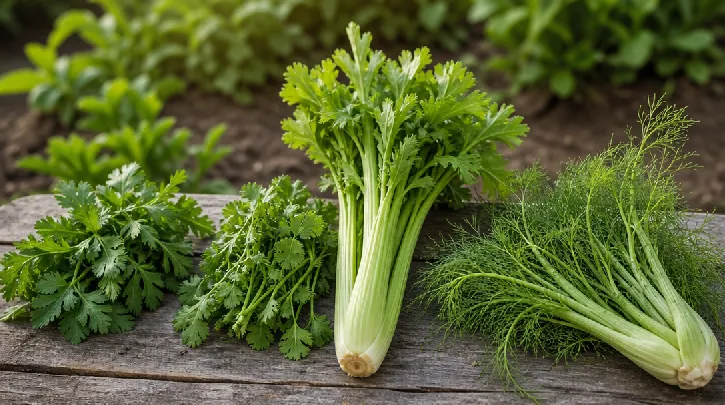
For many home cooks and foragers, confidently telling celery plants apart from its botanical relatives can be a significant challenge, especially since some resemble celery but are dangerously toxic. This guide will provide you with the critical knowledge and practical techniques needed to accurately identify celery plants, ensuring safety in your kitchen and garden while helping you avoid poisonous lookalikes.
Know Your Celery: Essential Characteristics for Safe Identification
True celery, Apium graveolens, is a biennial plant typically grown as an annual. It belongs to the Apiaceae family, a group notorious for its diverse members, some of which are highly prized for their culinary uses and others that are deadly poisonous. Understanding the distinct features of actual celery plants is your first line of defense against misidentification.
Stem and Stalk Structure
Celery is best known for its crisp, succulent leaf petioles, commonly referred to as stalks. These stalks grow upright from a central crown, forming a tight, often cylindrical bunch. The stalks are typically light green to yellowish-green, sometimes tinged with red, and possess a distinct groove running down their inner, concave side. When snapped, a healthy celery stalk makes a clean break and releases a characteristic aroma.
Leaf Morphology and Arrangement
The leaves of celery are compound, meaning they are divided into multiple leaflets. These leaflets are typically bright green, somewhat glossy, and have a triangular or diamond shape with serrated or toothed edges. They grow in an alternating pattern along the leaf stalk. The overall leaf structure is what botanists call pinnate or bipinnate.
Distinctive Aroma and Flavor Profile
One of celery’s most reliable identifiers is its unique scent. Crushing a small piece of a celery stalk or leaf releases a strong, fresh, slightly peppery, and earthy aroma. This distinct scent carries over into its flavor, which is savory, a little bitter, and slightly salty, often described as refreshing. This aromatic fingerprint is a crucial differentiator from many lookalikes.
Common Celery Lookalikes and How to Distinguish Them
Several plants share visual similarities with celery, making careful identification essential. While some are edible and flavorful, others pose significant health risks. This section will focus on comparing celery with its most frequently confused counterparts.
Celery vs. Parsley: Aromatic Cousins with Key Differences
Parsley (Petroselinum crispum) is arguably the closest relative to celery in terms of appearance and botanical family. Both are members of Apiaceae and share a somewhat similar leaf structure, but critical distinctions exist.
- Stalks: Celery stalks are thick, fibrous, and form a substantial part of the plant. Parsley stems are much thinner, more delicate, and less prominent, primarily serving as supports for the leaves.
- Leaves: While both have compound leaves, parsley leaves are generally smaller, more finely divided, and often have a more intense, darker green color. Flat-leaf parsley (Italian parsley) has broader, flatter leaflets, while curly-leaf parsley has tightly ruffled leaves. Celery leaves are larger, broader, and less ruffled.
- Aroma and Flavor: Both have a fresh, herbaceous aroma. Parsley’s flavor is typically described as clean, peppery, and bright, often stronger than celery’s leaves. Celery’s overall aroma, particularly from the stalks, is distinctively earthier and more robust.
- Growth Habit: Parsley usually grows in a denser, bushier clump closer to the ground, with a more open growth habit for its individual stems. Celery grows taller, with its stalks forming a more upright and compact rosette.
Celery vs. Cilantro: Different Flavors, Similar Leaf Shapes
Cilantro (Coriandrum sativum), also known as coriander, is another member of the Apiaceae family often confused with flat-leaf parsley and, by extension, celery leaves, especially when young.
- Leaves: Cilantro leaves are typically smaller and more deeply lobed than celery leaves, with a somewhat lacy appearance. They are often described as fan-shaped or resembling flat-leaf parsley, but with more pronounced indentations. Celery leaves are broader and less intricately cut.
- Aroma and Flavor: This is the most significant differentiator. Cilantro has a very strong, distinct, citrusy, and somewhat soapy flavor and aroma that some people find unpleasant. Celery’s aroma is fresh and earthy, lacking the intense pungency of cilantro. There’s no mistaking the two once you smell them.
- Stems: Cilantro stems are very thin and delicate, used primarily as an herb. Celery stalks are thick, crunchy, and a primary vegetable.
Celery vs. Fennel: Bulbous Base and Anise Notes
Fennel (Foeniculum vulgare) is a versatile Apiaceae family member, prized for its bulb, stalks, and frilly leaves. While its overall appearance, especially the feathery leaves, can resemble other plants in the family, its unique characteristics make it relatively easy to distinguish from celery.
- Base: The most obvious difference is the bulbous, pale green or white base of fennel, which grows above ground. Celery has no such bulb; its stalks emerge individually from a small central crown.
- Leaves: Fennel leaves are very fine, feathery, and almost dill-like in appearance, often called fronds. They are much more delicate and wispy than celery leaves.
- Aroma and Flavor: Fennel has a very strong and unmistakable anise or licorice-like aroma and flavor, which is entirely absent in celery. This distinct scent is present in all parts of the plant, from the bulb to the fronds.
- Stalks: While fennel has stalks, they are flatter and less crisp than celery stalks, radiating from the bulb rather than forming a tight upright bunch.
The Perilous Lookalikes: Avoiding Poisonous Plants
Identifying wild celery or any Apiaceae family member found in nature requires extreme caution. Several highly toxic plants belong to this family and can be mistaken for edible varieties, with potentially fatal consequences. The phrase “avoid poisonous lookalikes” is not an exaggeration.
Water Hemlock (Cicuta maculata)
Considered one of North America’s most poisonous plants, water hemlock is often mistaken for celery, parsley, parsnip, or even wild carrots. The plant
contains cicutoxin, a potent neurotoxin.
- Stalks/Stems: Water hemlock has stout, hollow stems that are often purplish-streaked or mottled, especially near the base. Celery stalks are typically solid (though they can have a hollow center in older stalks) and generally lack the prominent purple streaking.
- Leaves: The leaves are compound and typically have finely toothed leaflets. While similar to celery in overall structure, careful examination is critical.
- Roots: This is a crucial identifier. Water hemlock has a cluster of thick, tuberous roots that, when cut open, often reveal chambers filled with a yellowish, oily liquid. This liquid is extremely poisonous. Celery has a fibrous root system.
- Habitat: Water hemlock typically grows in wet areas, such as ditches, marshes, and along stream banks.
- Smell: While some suggest a “parsnip-like” smell, relying on scent for water hemlock is dangerous due to its toxicity.
Do not ever consume a plant suspected of being water hemlock. Even a small amount can be lethal. For a more comprehensive identification guide, consult resources from trusted botanical organizations like the U.S. Forest Service or university extension offices, such as this guide from the USDA Natural Resources Conservation Service.
Poison Hemlock (Conium maculatum)
Another deadly member of the Apiaceae family, poison hemlock, is infamous for its role in the death of Socrates. It contains highly toxic alkaloids, particularly coniine.
- Stems: Poison hemlock stems are hollow, smooth, and notably purplish-spotted, especially towards the base. These spots are a key characteristic. Celery stems are typically green and lack these distinct spots.
- Leaves: The leaves are finely divided and fern-like, often described as lacy, resembling parsley or wild carrot leaves but usually larger. They are alternate and glossy.
- Roots: It has a taproot, similar to a parsnip or wild carrot, but without the distinctive smell of those edible plants.
- Smell: When crushed, poison hemlock often emits a strong, unpleasant, “mousy” or “fetid” odor, especially from its roots. This is very different from celery’s fresh aroma.
- Habitat: Commonly found in disturbed areas, roadsides, fields, and waste areas.
If you encounter a plant with purple-spotted, hollow stems and a disagreeable odor, assume it is poison hemlock and avoid all contact. Always prioritize safety. For more detailed identification and control methods, refer to resources from university extensions like this guide from Michigan State University Extension.
Step-by-Step Guide to Identifying Celery Plants
To confidently identify celery plants and differentiate it from its common lookalikes, follow this systematic approach. This process emphasizes observation of multiple characteristics rather than relying on a single feature.
- Examine the Overall Growth Habit:
- Celery: Grows as a compact, upright bunch with thick, often parallel stalks emerging from a central crown.
- Parsley/Cilantro: Typically smaller, bushier, and more sprawling.
- Fennel: Distinguished by its prominent, bulbous base.
- Poisonous Lookalikes (Hemlocks): Often taller, with more open, branched structures and potentially distinctive stem markings.
- Inspect the Stalks/Stems:
- Celery: Look for thick, rigid, crisp stalks with a prominent groove on the inner side. The color is typically light to yellowish-green.
- Parsley/Cilantro: Stems are much thinner and more delicate.
- Fennel: Stems are flatter, less crisp, and radiate from a bulb.
- Poisonous Lookalikes:
- Water Hemlock: Hollow stems, often purplish-streaked near the base.
- Poison Hemlock: Smooth, hollow stems with distinctive purple spots. This is a crucial warning sign.
- Analyze the Leaves:
- Celery: Compound leaves with broader, somewhat glossy, triangular or diamond-shaped leaflets that have serrated edges.
- Parsley: Smaller, more finely divided leaves (flat-leaf) or tightly curled leaves (curly-leaf).
- Cilantro: Smaller, lacy, deeply lobed, fan-shaped leaves.
- Fennel: Very fine, feathery, dill-like fronds.
- Poisonous Lookalikes: Finely divided, fern-like leaves, but do not rely solely on leaf shape for identification of hemlocks due to variations.
- Perform the “Smell Test” (with caution for unknown plants):
- Celery: Crush a small piece of stalk or leaf. It should have a fresh, earthy, slightly peppery, and distinctly “celery” aroma.
- Parsley: Fresh, green, peppery aroma.
- Cilantro: Strong, citrusy, sometimes described as soapy or pungent.
- Fennel: Unmistakable anise or licorice scent.
- Poison Hemlock: Often a disagreeable, “mousy” or “fetid” odor. Do not taste.
- Water Hemlock: No distinct pleasant aroma; some report a “carrot-like” smell. Do not taste or rely on smell alone.
- Consider the Habitat and Root Structure (especially for wild plants):
- Celery: Typically cultivated, or escapes into moist, fertile soil. Has a fibrous root system.
- Water Hemlock: Almost always in wet areas; has a cluster of tuberous roots with internal chambers.
- Poison Hemlock: Disturbed areas, roadsides; has a taproot but often an unpleasant smell.
Never consume any wild plant unless you are 100% certain of its identification. When in doubt, throw it out.
Expert Tips for Confident Celery Identification
Even experienced gardeners and foragers can benefit from refined observation techniques. Developing a keen eye for details and understanding the nuances of plant growth can make all the difference in identifying celery plants safely.
Cultivate Familiarity with Edible Api
aceae
Spend time with known, cultivated celery, parsley, cilantro, and fennel. Touch them, smell them, and examine their stems and leaves. The more familiar you are with their distinct, safe characteristics, the easier it will be to spot deviations in unknown plants. This firsthand experience builds a reliable mental database.
The “Three-Feature Rule” for Wild Plants
When foraging, never rely on a single characteristic for identification, especially with plants from the Apiaceae family. Instead, aim to confirm at least three distinct features that match your target plant and, crucially, rule out features of all known poisonous lookalikes. For example, if a plant looks like celery, confirm its smell, stalk structure, and leaf shape, and actively check for the purple spots or hollow stems of hemlocks.
Photograph and Consult
If you encounter a wild plant that you suspect might be celery or a lookalike, take clear, well-lit photographs from multiple angles (overall plant, close-up of leaves, stems, flowers if present, and base). Do not touch or ingest it. Use these photos to consult with a local botanical expert, a university extension office, or reliable online plant identification forums. Many botanical gardens and arboretums offer identification services. The Lady Bird Johnson Wildflower Center provides excellent resources for native plant identification. [cite: Lady Bird Johnson Wildflower Center] You can also consult university resources such as those from Penn State Extension for plant identification advice.
Understand Growth Stages and Variations
Young celery plants can be particularly tricky to identify, as some distinguishing features may not yet be fully developed. For instance, the characteristic purple spots on poison hemlock stems might be less pronounced on very young plants. Always be more cautious with immature specimens. Environmental factors can also influence a plant’s appearance, making some features slightly different from textbook descriptions.
Use Reliable Identification Guides
Invest in reputable field guides specific to your region. Look for guides that include detailed descriptions, high-quality photographs, and information on both edible and poisonous lookalikes. Cross-reference information from several sources when unsure. The Cornell University College of Agriculture and Life Sciences provides practical guides on identifying common plants, including those in the Apiaceae family. [cite: Cornell CALS]
Common Mistakes to Avoid When Identifying Celery and Lookalikes
Rushing the identification process or making assumptions can lead to dangerous errors. Being aware of common pitfalls helps ensure accurate identification.
Relying Solely on Leaf Shape
Many members of the Apiaceae family have similar compound leaf structures. While leaf shape is a valuable clue, it is rarely enough on its own to differentiate between celery, parsley, and especially the hemlocks, which can have surprisingly varied leaf appearances depending on age and growing conditions. Always cross-reference with stalk characteristics and smell.
Ignoring the Scent Test (Or Misinterpreting It)
The unique aroma of celery is a strong identifier. However, do not assume any “green” or “earthy” smell means it’s safe. Specifically, know the distinct smells of edible herbs like parsley and cilantro, and be wary of any unpleasant, chemical, or “mousy” smells, which can indicate poisonous plants like poison hemlock. And never taste for identification if there’s any doubt about the plant’s safety.
Foraging Without Local Knowledge
Plant identification varies by region. A plant that is harmless in one area might have a toxic lookalike in another. Always use identification guides and local resources specific to your geographical location. Local foraging groups or experienced botanists can provide invaluable localized knowledge about which dangerous lookalikes are prevalent in your specific ecosystem.
Assuming “If it grows here, it must be edible”
Many highly toxic plants thrive in diverse environments, from well-maintained gardens to wild meadows and roadsides. The presence of a plant in a cultivated area or alongside edible plants does not guarantee its safety. Always approach every unknown plant with skepticism.
Frequently Asked Questions About Celery Identification
What is the easiest way to tell celery apart from parsley?
The easiest way to tell celery apart from parsley is by examining their stalks and overall size. Celery has thick, crisp, substantial stalks, whereas parsley has much thinner, more delicate stems that are primarily supports for its leaves. Celery plants are also generally much larger and taller than parsley plants.
Can I eat wild celery?
While some plants referred to as “wild celery” exist, and some are edible, it is incredibly risky to forage for them without expert knowledge. The Apiaceae family, to which celery belongs, includes deadly poisonous plants like water hemlock and poison hemlock, which can look very similar. It is highly recommended to only consume celery from cultivated sources.
Are there any other common edible plants that look like celery?
Besides parsley, cilantro, and fennel, other edible Apiaceae plants that share some visual characteristics with celery include lovage and celeriac. Lovage has similar leaves and a strong celery-like flavor, but it grows much taller and bushier. Celeriac is grown for its edible, turnip-like root, with leaves that resemble celery but are typically darker green and less palatable.
What should I do if I accidentally consume a poisonous lookalike?
If you suspect you or someone else has consumed a poisonous plant, seek immediate medical attention. Call emergency services or the Poison Control Center (1-800-222-1222 in the United States) immediately. Do not wait for symptoms to appear. If possible, collect a sample of the plant for identification by medical professionals.
Accurate identification of celery plants is crucial for both culinary enthusiasts and those venturing into foraging. By meticulously examining key characteristics like stalk structure, leaf morphology, and distinctive aromas, alongside a keen awareness of dangerous poisonous lookalikes such as water hemlock and poison hemlock, you can ensure safety and confidence in your plant-based endeavors. Always remember that when it comes to wild plants, caution and thorough identification are paramount.
