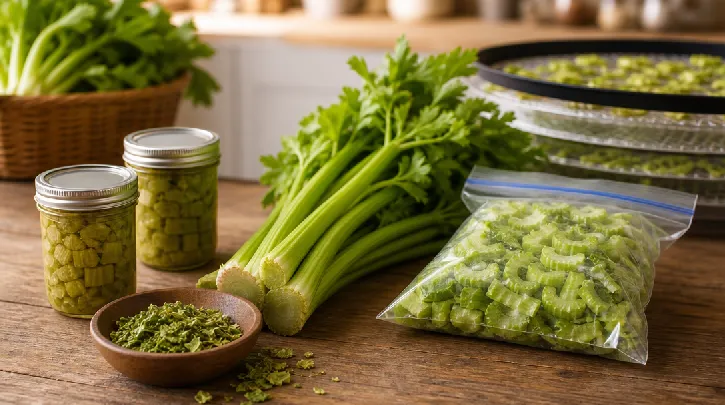
The best way to preserve celery from your garden depends on how long you need to store it and how you plan to use it. For short-term freshness, wrapping whole celery stalks tightly in aluminum foil and refrigerating them can keep them crisp for several weeks. For longer preservation, freezing blanched celery is highly recommended as it retains flavor and texture for up to a year, making it ideal for cooked dishes like soups and stews. Dehydrating is another excellent long-term option, especially for making celery flakes or powder for seasonings.
There’s nothing quite like the crisp, vibrant taste of freshly harvested celery. However, a bountiful garden harvest often means more celery than you can use immediately. Learning effective preservation techniques allows you to extend the life of your homegrown celery, ensuring you can enjoy its unique flavor and nutritional benefits long after the growing season has ended. This guide, born from hands-on experience, will walk you through various methods, from simple refrigeration tricks to more advanced long-term storage solutions, helping you minimize waste and maximize your garden’s bounty.
Why Preserve Celery?
Preserving celery offers numerous advantages for any home gardener or cook.
- Reduces Food Waste: A large celery harvest can quickly go bad if not stored properly. Preservation methods prevent spoilage, ensuring you get the most out of your efforts.
- Year-Round Availability: Enjoy the taste of fresh, homegrown celery even when your garden isn’t producing. This means access to healthy ingredients regardless of the season.
- Cost Savings: By preserving your own celery, you reduce the need to purchase it from grocery stores, leading to savings on your food budget.
- Enhanced Flavor: Garden-fresh celery often has a more robust flavor than store-bought varieties. Preserving it at its peak captures this intense taste for future meals.
- Nutritional Value: While some nutrients may diminish with processing, proper preservation helps retain a significant portion of celery’s vitamins and minerals, such as vitamins A, C, and K, and folate.
Understanding Celery’s Freshness Challenge
Celery’s high water content, typically around 95%, makes it prone to wilting. It loses moisture quickly once harvested, which is why it often becomes limp in the refrigerator after just a few days. This vegetable also produces little ethylene, a ripening gas, and is not very sensitive to low levels of exogenous ethylene.
Optimal storage conditions are crucial for maintaining celery’s crispness and green color. Ideal temperatures are just above its freezing point, coupled with high humidity. Storing celery at 0 to 2°C (32 to 36°F) and 98-100% relative humidity can help it retain good quality for 5 to 7 weeks. Prompt cooling after harvest is also essential.
Best Preservation Methods for Garden Celery
Refrigeration (Short-Term Freshness)
For keeping celery fresh and crisp for a few weeks, your refrigerator is the first line of defense. There are two highly effective methods that go beyond simply tossing it in the crisper drawer.
The “Celery in Water” Method
This technique rehydrates the celery, keeping it crisp and extending its refrigerator life. It’s particularly useful for cut celery or stalks that have started to go limp.
Preparation: Wash the celery stalks thoroughly. Trim both ends of the stalks.
Cutting: Cut the celery into your desired snack-sized pieces or lengths that fit your container.
Storage: Place the cut celery upright in an airtight container, such as a glass jar or Tupperware. Cover the celery completely with fresh, filtered water.
Refrigeration: Seal the container with a lid and store it in your refrigerator. Change the water every 1-2 days to maintain freshness.
Lifespan: Celery stored this way can remain crisp for up to a week, or even longer with regular water changes.
The “Foil Wrap” Method
Wrapping celery tightly in aluminum foil allows the ethylene gas it naturally produces to escape, while still protecting it from moisture loss. This method helps maintain crispness for a surprisingly long time.
Preparation: Ensure the celery is dry after washing. You can cut off most of the leaves if desired, as leaves don’t last as long as the stalks.
Wrapping: Wrap the entire head of celery tightly in aluminum foil, ensuring no celery is left exposed.
Refrigeration: Place the foil-wrapped celery in your refrigerator’s crisper drawer.
Lifespan: This method can keep celery fresh and crisp for several weeks, often up to four weeks.
Freezing (Longer-Term Storage)
Freezing is widely considered one of the best home preservation methods for celery, especially for use in cooked dishes. While frozen celery will lose its crisp texture, it will still impart excellent flavor to soups, stews, casseroles, and sauces.
Blanching and Freezing Celery Stalks
Preparation: Wash celery stalks thoroughly. Trim the ends and remove the leaves. Cut the stalks into desired sizes—slices, diced celery, or 1-inch pieces are common for cooking.
Blanching: Bring a large pot of water to a rolling boil. Add the chopped celery and blanch for 2 to 3 minutes.
Cooling: Immediately remove the celery with a slotted spoon and plunge it into a large bowl of ice water for 2 to 3 minutes to stop the cooking process.
Drying: Drain the celery well and pat it thoroughly dry with a clean kitchen towel. Excess moisture can lead to freezer burn.
Flash Freezing (Recommended): Spread the dried celery in a single layer on a parchment-lined baking sheet. Freeze for 1 to 2 hours until solid. This prevents pieces from clumping together.
Packaging: Transfer the flash-frozen celery to freezer-safe bags or airtight containers. Remove as much air as possible (a vacuum sealer is ideal). Label with the date.
Storage: Store in the freezer at 0°F (-18°C) or colder. Blanched celery maintains its best quality for 8 to 12 months.
Note: You can freeze raw celery without blanching, but it will have a softer, mushier texture and less distinct flavor after thawing. It will also have a shorter shelf life, about 2-3 months.
Freezing Chopped Celery for Soups and Stews
This method is similar to blanching and freezing stalks but focuses on pre-portioned, ready-to-use pieces.
Prepare and Blanch: Follow the steps above for washing, chopping, blanching (1-2 minutes for chopped), and ice bathing the celery.
Dry Thoroughly: Pat the celery very dry to prevent ice crystals from forming.
Pre-freeze: Spread the chopped celery on a baking sheet and freeze until solid.
Portion and Store: Once frozen, transfer the celery to freezer bags or containers. Consider dividing it into one-cup or half-cup portions for easy use in recipes. Label and freeze.
Dehydrating (Space-Saving and Flavorful)
Dehydrating celery is an excellent way to preserve its flavor in a compact form, ideal for seasoning and cooked dishes. While it won’t retain its fresh crunch, dried celery can be rehydrated for use in soups, stews, casseroles, or ground into a powder for celery salt.
Steps for Dehydrating Celery
Preparation: Wash celery ribs well to remove any dirt. You can de-string the celery if desired. Chop the celery into small, uniform pieces (½ inch strips are common).
Blanching (Optional but Recommended): Blanching celery before dehydrating can improve its color, texture, and help it dry faster and rehydrate better. Submerge celery in boiling water for 2-4 minutes, then immediately cool in an ice bath.
Drying: Arrange the prepared celery in a single layer on dehydrator trays. Set the dehydrator temperature to 125°F (52°C) or 140°F (60°C). Drying typically takes 6-18 hours, depending on the thickness of the pieces and dehydrator model.
Testing for Dryness: Celery should be brittle, hard pellets, not spongy, when completely dry. Allow a few pieces to cool to room temperature before testing.
Conditioning: Once dry, let the celery cool completely. Transfer it to an airtight container and shake it daily for about a week. This “conditioning” step helps equalize any residual moisture, preventing mold. If any moisture appears, dehydrate further.
Storage: Store cooled, conditioned dehydrated celery in airtight containers, such as canning jars or vacuum-sealed bags, in a cool, dark place. It can last up to two years.
Dehydrated celery leaves can also be dried at 95°F/35°C for 4-8 hours until crisp and used as an herb or to make celery salt.
Canning (Pressure Canning Only)
While some older recipes might suggest canning celery, the National Center for Home Food Preservation (NCHFP) does not recommend canning plain celery by itself due to a lack of tested, safe guidelines for processing times. The University of Illinois Extension also states that there are no tested recipes for canning celery on its own.
Pressure Canning Celery for Safety
Celery can be included as an ingredient in tested pressure canning recipes for mixed vegetables, soups, and spaghetti sauces, as long as the recipe comes from a reputable source like Ball, Bernardin, or the USDA Guide. These recipes have established safe processing times.
It is crucial to understand that low-acid foods, such as most vegetables including celery, must be pressure canned to destroy the bacterium Clostridium botulinum, which can produce a deadly toxin in sealed, low-acid environments.
As Sharon K.K. Beals, Vice President of FSQA at US Foods and Chief of Food Safety at CTI Foods, emphasizes, “Food safety cannot exist in isolation. It’s not a department, a checklist, or a compliance requirement—it’s a reflection of organizational values.” This underscores the importance of adhering to tested, reliable methods for food preservation to ensure the safety of your family.
Always refer to the latest USDA Complete Guide to Home Canning or your local university extension office for current, safe canning guidelines. Guessing at processing times is never safe.
Fermentation (Probiotic-Rich Option)
Lacto-fermentation transforms celery into a tangy, probiotic-rich food. This method preserves celery while also enhancing its nutritional profile with beneficial bacteria. Fermented celery maintains its crunch and can add a unique sourness to dishes.
Lacto-Fermenting Celery Sticks
Preparation: Wash fresh, crisp celery thoroughly. Cut the stalks into sticks or bite-sized pieces that will fit snugly into a clean quart-sized glass jar.
Brine Solution: Prepare a 2-3% brine solution. For example, dissolve 2-3 tablespoons of natural sea salt in 1 quart of non-chlorinated water.
Packing the Jar: Place optional flavorings like garlic cloves, fresh dill, or pickling spice at the bottom of the jar. Pack the celery sticks very tightly into the jar, leaving about 1 inch of headspace.
Pouring Brine: Pour the brine over the celery, ensuring all vegetables are fully submerged. If using, a fermentation weight can help keep the celery under the brine.
Sealing and Fermenting: Cover the jar with a fermentation lid (e.g., airlock lid or tightly sealed lid that allows gas to escape). Place the jar in a cool, dark spot at room temperature.
Fermentation Time: Allow the celery to ferment for 5-7 days, or up to 2-3 weeks for optimal flavor and health benefits. You should see bubbles forming after 48 hours.
Storage: Once fermentation is complete and the celery reaches your preferred sourness, remove the fermentation lid, place a regular canning lid and band on the jar, and refrigerate. Fermented celery can last for months in the refrigerator.
Comparing Celery Preservation Methods
Choosing the best method often comes down to desired texture, storage duration, and how you plan to use the celery. Here’s a comparison to help you decide:
| Method | Storage Duration | Texture After Preservation | Best Use Cases | Pros | Cons |
|---|---|---|---|---|---|
| Refrigeration (Foil/Water) | 1-4 weeks | Crisp (retains original texture) | Snacking, salads, fresh dishes | Simple, minimal equipment, retains fresh texture and flavor | Shortest preservation time |
| Freezing (Blanched) | 8-12 months | Soft, suitable for cooking | Soups, stews, casseroles, sauces | Long-term, retains good flavor and nutrients for cooked dishes | Loses crispness, requires freezer space |
| Dehydrating | Up to 2 years | Hard, brittle (rehydrates to soft) | Seasoning, soups, stews, celery powder/salt | Very long-term, space-saving, adds intense flavor | Requires dehydrator, not suitable for fresh eating, texture change |
| Canning (as ingredient in tested recipes) | 1 year+ | Very soft | Soups, stews, sauces (as an ingredient) | Extremely long-term, shelf-stable, convenient for meal prep | Cannot can plain celery alone (safety risk), requires pressure canner, significant texture change |
| Fermenting | Several months (refrigerated) | Crunchy, tangy | Snacks, salads, side dishes, probiotic benefits | Adds unique flavor, probiotic benefits, good crunch | Requires specific conditions and attention during fermentation, not for everyone’s taste |
Tips for Harvesting and Preparing Celery for Preservation
Starting with high-quality celery is the first step to successful preservation. No matter the method, preservation does not improve inferior food.
When to Harvest Celery
For optimal flavor and texture, harvest celery when the stalks are firm, crisp, and have reached full size, typically 3-4 months after planting. You can harvest individual outer stalks as needed, allowing the inner stalks to continue growing, or harvest the entire plant by cutting it cleanly at the soil line. Focus on older, outer stalks for individual harvesting.
Cleaning and Trimming
Proper cleaning removes dirt and debris, which can harbor bacteria and affect the quality of your preserved celery.
Separate Stalks: Pull apart individual celery stalks from the main head.
Wash Thoroughly: Rinse each stalk under cool running water, using your fingers or a vegetable brush to remove any lodged dirt. Avoiding soaking in water too long, especially before dehydrating.
Trim Ends: Cut off the root end and any tough or damaged sections.
Remove Leaves: While edible, celery leaves have a shorter shelf life and are often removed before preserving stalks. They can be preserved separately, such as by dehydrating for use as a seasoning.
Frequently Asked Questions
Can I preserve celery leaves?
Yes, celery leaves can be preserved. They are excellent for dehydrating and using as a seasoning in soups, stews, or for making celery salt.
How long does preserved celery last?
The lifespan varies significantly by method. Fresh celery in the refrigerator can last 1-4 weeks (foil-wrapped lasts longer). Blanched and frozen celery is good for 8-12 months. Dehydrated celery can last up to two years, and properly fermented celery can last for several months in the refrigerator.
What are the best uses for preserved celery?
Frozen celery is best for cooked dishes like soups, stews, casseroles, and sauces, as it loses its crispness. Dehydrated celery is excellent for adding flavor to cooked dishes or making celery powder/salt. Fermented celery can be enjoyed as a tangy snack or addition to salads.
Is it safe to can celery at home?
No, it is not recommended to home can plain celery by itself. There are no current, tested guidelines for safe processing times for plain celery. Celery can, however, be safely included as an ingredient in tested pressure canning recipes for mixed vegetables or soups from reputable sources like the USDA or Ball.
Conclusion: Enjoying Your Garden’s Bounty Year-Round
Preserving celery from your garden is a rewarding endeavor that extends your harvest and enhances your culinary options. Whether you opt for the short-term crispness of a foil wrap, the long-term convenience of freezing, the concentrated flavor of dehydration, or the probiotic benefits of fermentation, each method offers unique advantages.
By understanding celery’s characteristics and applying these proven techniques, you can confidently store your homegrown celery. This ensures that the fresh, vibrant taste and nutritional goodness of your garden’s bounty are available for healthy meals and delicious snacks all year long. Embrace these preservation methods and savor every stalk!
