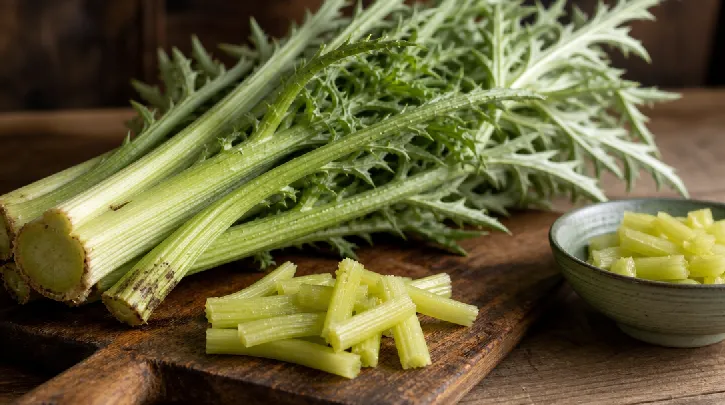
Cardoon, often called the artichoke thistle, is a captivating vegetable with a unique flavor that rewards adventurous home cooks. While resembling giant celery, its taste is distinctly artichoke-like with earthy, nutty, and subtly bitter notes that elevate a wide array of dishes. Fully understanding and utilizing cardoon means embracing its preparation, which transforms this unassuming stalk into a tender, flavorful culinary delight.
This ancient Mediterranean plant, a close relative of the globe artichoke, offers more than just intriguing taste. Its striking appearance, rich history, and surprising health benefits make it a truly exceptional ingredient. From braised to fried, cardoon provides a distinctive texture and depth that can redefine your cooking.
What is Cardoon? The Plant Behind the Plate
Cardoon, scientifically known as Cynara cardunculus, is an herbaceous perennial belonging to the thistle family (Asteraceae). It shares its genus and species with the globe artichoke, Cynara cardunculus ssp. scolymus, making them botanical cousins.
The edible part of the cardoon plant is its thick, fleshy leaf stalks, which bear a resemblance to large, spiny celery stalks. Unlike artichokes, where the immature flower bud is primarily consumed, cardoon is harvested for its blanched stems.
Cardoon has a long and storied history, with cultivation dating back to ancient Greek, Roman, and Persian cuisines. It was also a popular vegetable in colonial America until the late 19th century. Today, it remains a culinary staple in Southern Europe and North Africa, particularly in Italy, Spain, Portugal, and Morocco.
In the United States, cardoon is primarily available in farmers’ markets and specialty grocers during its seasonal window, typically from winter to early spring, sometimes extending into May. California, with its mild, damp, maritime climate, is particularly well-suited for growing cardoons, though they are also cultivated as annuals in cooler zones.
The Unique Flavor Profile of Cardoon
The flavor of cardoon is its most defining characteristic, often described as a more intense, earthy version of an artichoke heart. It possesses a mild sweetness balanced by a distinct bitterness, which some describe as tasting like celery root or sunchokes. This bitterness can vary depending on the plant’s maturity and how it’s prepared.
When cooked, cardoons develop a tender, velvety texture. “Those who have had it grown and prepared properly say the taste is like that which comes from the tenderest part of an artichoke heart, the taste that you never get enough of when eating artichokes,” says CooksInfo. This nuanced flavor makes cardoon a truly distinctive ingredient in the culinary landscape.
Celebrated chef and author Jennifer McLagan, known for her book “Bitter: A Taste of the World’s Most Dangerous Flavor,” emphasizes the importance of bitterness in cuisine. She states that bitterness, like salt, adds complexity and depth, making food more interesting and less flat. Cardoon embodies this principle, offering a profound depth of flavor that sweet or bland vegetables cannot.
Selecting and Preparing Cardoon: From Garden to Kitchen
Working with cardoon requires some dedicated preparation, but the results are incredibly rewarding. This hands-on process is key to transforming its raw, sometimes tough and bitter form into a tender, delicious vegetable.
Choosing Fresh Cardoons
When selecting cardoons at the market, look for firm, pale stalks without any spongy or blackened spots. Most of the top leaves will already be trimmed, leaving stalks that resemble large, thick celery bunches. The inner stalks tend to be milder and less stringy, with a delicate silver-green color.
Essential Cleaning and Trimming
Cardoons have fibrous strings and often small thorns that need to be removed. You will want to use gloves for thorny varieties.
Follow these steps for proper cleaning and trimming:
- Cut off the bottom of the stalks and separate them.
- Use a vegetable peeler or a sharp knife to remove any leaves, thorns, and the tough outer skin, pulling off the stringy fibers along the stalks.
- As you cut the stalks into desired pieces (e.g., 2-3 inch batons), immediately place them into a bowl of cold water with a splash of lemon juice or white vinegar. This prevents discoloration and helps reduce bitterness.
The Importance of Blanching
Blanching is a crucial step to reduce cardoon’s natural bitterness and tenderize its stalks. This process involves par-boiling the cleaned and trimmed cardoon pieces.
Here’s how to blanch effectively:
- Fill a large pot with generously salted water and add lemon juice or vinegar. Some culinary experts, like author Paula Wolfert, even suggest whisking in a bit of flour to the boiling water to help with bitterness and color.
- Bring the water to a boil.
- Add the prepared cardoon pieces and boil for 15 to 40 minutes, or until tender. Older, tougher stalks may require longer cooking times.
- Drain the blanched cardoons. At this point, they are ready for further cooking or can be stored.
For gardeners, blanching can also refer to a technique performed in the garden before harvest. This involves excluding sunlight from the growing stalks for several weeks to make them whiter, more tender, and less bitter. This is typically done by tying the stalks together and wrapping the bottom 12 inches with cardboard, newspaper, or burlap for 2-4 weeks before harvesting.
Unlocking Culinary Potential: Cooking with Cardoon
Once properly prepped and blanched, cardoon transforms into a versatile ingredient ready for numerous culinary applications. Its unique flavor pairs exceptionally well with rich, savory, and even creamy elements.
Versatile Cooking Methods
Cardoons can be cooked in a variety of ways, each bringing out different aspects of their flavor and texture:
- Braising: This is a classic method that yields incredibly tender results. Cardoons are often braised in broths, wines, or sauces, absorbing deep flavors. They are a common addition to tagines in North Africa.
- Frying: Frying provides a delightful contrast of textures. Battered and fried cardoons, often in fritters or tempura style, become crispy on the outside and tender within. Roman-style fried cardoons are a notable example. Deep frying is also known to help counter any lingering bitterness.
- Gratins and Casseroles: Cardoons shine in baked dishes, particularly gratins, where they are often combined with cheese and creamy sauces. A traditional Provençal Christmas Eve dinner features a cardoon gratin, often with bone marrow.
- Soups and Stews: Their hearty texture makes cardoons an excellent addition to soups and stews. They can be added to any soup where you might use celery. A cardoon and meatball soup is a traditional Italian Christmas meal starter in the Abruzzo region.
- Roasting: Roasting and lightly charring cardoon stalks can also help to mellow out bitterness.
- Raw: While often cooked, young, tender cardoon stalks, especially those blanched in the garden, can be eaten raw. They can be served with dips like hummus or nut butter.
The culinary expert and writer Hank Shaw notes, “Pretty much every cardoon recipe requires this initial trimming and blanching step. Once that’s done, you have lots of options.”
Flavor Pairings and US Regional Influences
Cardoon’s earthy, slightly bitter profile pairs wonderfully with a range of ingredients. Common pairings include:
- Rich Fats: Olive oil, butter, and bone marrow help to round out cardoon’s bitterness.
- Cheese: Cheeses, especially savory and melty varieties, complement cardoon beautifully in gratins and baked dishes.
- Acidic Elements: Lemon and vinegar brighten the flavor and cut through richness.
- Garlic and Anchovies: These strong flavors enhance cardoon’s earthy notes, as seen in the classic Italian dish bagna cauda, where blanched cardoons are a traditional dipping vegetable.
- Meats: Cardoons are excellent with white meats, lamb, or beef, often appearing in stews and tagines.
In the US, cardoon’s culinary presence is often tied to Italian-American traditions. For instance, Italian immigrants, finding true cardoons less available, sometimes substituted burdock, particularly in the Northeast and Mid-Atlantic, creating their own adaptations of classic fried cardoon dishes.
Beyond the Plate: Health Benefits of Cardoon
Cardoon is not just a culinary curiosity; it also offers a compelling nutritional profile and potential health benefits. This makes it a valuable addition to a balanced diet.
Nutritional Profile
Cardoon is a low-calorie vegetable, primarily composed of water. A 100-gram serving of raw cardoon provides only about 17 calories. It is a good source of fiber, which is crucial for digestive health.
According to USDA data, raw cardoon is rich in several essential vitamins and minerals.
| Nutrient (per 100g raw) | Amount | % Daily Value (approx.) | |
|---|---|---|---|
| Calories | 17 kcal | ||
| Water | 94% | ||
| Carbohydrates | 4% (2.47g net carbs) | ||
| Protein | 0.7g | ||
| Fiber | ~1.6g | ||
| Potassium | 400mg | 12% | |
| Copper | 0.23mg | 26% | |
| Folate (Vitamin B9) | 204µg (per 178g serving) | 51% (per 178g serving) | |
| Magnesium | 42mg | 10% | |
| Manganese | 0.26mg | 11% | |
| Calcium | 70mg | 7% | |
| Iron | 0.7mg | 8.8% | |
| Vitamin C | 6mg | 6.7% |
Cardoon is also noted for containing Vitamin B6 and potassium, supporting nervous system function and blood pressure regulation.
Bioactive Compounds and Health Properties
Cardoon is packed with bioactive compounds, particularly phenolic compounds like cynarin and chlorogenic acid, and sesquiterpene lactones. These compounds contribute to a range of potential health benefits.
Research indicates that cardoon may offer:
- Antioxidant Properties: Phenolic compounds act as powerful antioxidants, helping to protect cells from damage.
- Digestive Health Support: Its high fiber content promotes regular bowel movements and aids in maintaining a healthy gut. The natural compounds in cardoon can also stimulate bile production, which is essential for fat digestion.
- Liver Protection: Cynarin, a key compound in cardoon, has been studied for its potential hepato-protective (liver-protecting) effects.
- Cholesterol Lowering: Some studies suggest cynarin may contribute to reducing cholesterol levels. Research in the 1970s and a 2000 study indicated a decrease in total cholesterol and low-density lipoprotein (LDL) with cynarin extract.
- Anti-inflammatory and Antimicrobial Activity: The plant’s bioactive compounds, including sesquiterpene lactones, contribute to these beneficial effects.
As noted by a systematic review published in 2024, cardoon by-products are rich in bioactive compounds with significant health benefits, due to their excellent polyphenol profiles. These findings highlight cardoon as a functional food with considerable industrial potential.
Growing Cardoon in Your Garden: A Gardener’s Perspective
For those who love to cultivate unique edibles, growing cardoon can be a rewarding experience. Its dramatic foliage also makes it an excellent ornamental plant.
Climate and Soil Requirements
Cardoon thrives in full sun and warm weather. It is perennial in USDA hardiness zones 7-10, meaning it can return year after year. In cooler zones, it is typically grown as an annual, where it still produces edible stalks but may not have enough time to bloom.
Cardoons prefer very fertile, well-drained soil with a pH of 6.5–7.0. Amending the soil with compost or well-rotted manure before planting provides essential nutrients.
Planting and Care
- Starting Seeds: Start cardoon seeds indoors 4-8 weeks before the last expected frost. Sow seeds about a quarter-inch deep in small pots.
- Transplanting: Transplant seedlings outdoors after all danger of frost has passed and the soil has warmed. Cardoon plants need ample space, growing 3-4 feet tall and 4-5 feet wide, so space them at least 24 inches apart.
- Watering: Keep the soil consistently moist, especially during establishment. Mature plants are somewhat drought-tolerant due to their deep taproots, but regular deep watering during dry spells ensures tender stalks.
- Feeding: Beyond initial soil amendments, cardoons benefit from regular feeding, such as compost tea or liquid kelp, to support their vigorous growth.
Harvesting and Blanching for the Gardener
Harvest cardoon stalks after about 3 months of growing, typically in late winter to early spring, or in the fall once temperatures cool. The cooler weather helps to mellow their bitterness.
As mentioned earlier, garden blanching is highly recommended for less bitter, more tender stalks. This involves tying the leaves together and wrapping the lower stalks with material like cardboard or newspaper for 3-4 weeks before harvest. Ensure the stalks are dry before wrapping to prevent rot.
Some popular varieties for growing include ‘Bianco Avorio’ (thin stalks, 110 days to mature) and ‘Gobbo di Nizza’ (thick, less spiny stalks, 110 days to mature), with ‘Porto Spineless’ also being a good choice.
Common Misconceptions and Troubleshooting
Despite its unique appeal, cardoon can sometimes be intimidating for new cooks or gardeners. Addressing common concerns helps demystify this intriguing vegetable.
“It’s Too Bitter!”
Bitterness is inherent in cardoon, but it can be managed. The most crucial steps are proper blanching and subsequent cooking. Adding salt to blanching water, changing the water once, or roasting and lightly charring can all help. Pairing with rich fats, sweet elements, or strong flavors like cheese also balances the bitterness.
“It’s Hard to Find!”
Cardoon is a seasonal vegetable, typically available from December to early spring in the US. While not as ubiquitous as artichokes, you can often find fresh cardoons at farmers’ markets, specialty Italian grocery stores, and some upscale supermarkets. If local availability is an issue, consider growing your own from seed.
“Is it just an artichoke stem?”
While genetically related, cardoon and artichoke are cultivated for different parts of the plant, leading to distinct culinary experiences. Artichokes are grown for their immature flower buds, while cardoons are grown for their edible leaf stalks. Their flavors are similar but not identical; cardoon offers a unique intensity.
FAQ
What does raw cardoon taste like?
Raw cardoon has a distinct earthy, artichoke-like flavor with pronounced bitter notes. Some find it woody and chewy when uncooked, though young, tender stalks can be enjoyable when marinated or served with dips.
How long does blanched cardoon last?
Blanched cardoon can typically be stored in the refrigerator for a few days. It can also be frozen for later use after blanching, which is a convenient way to preserve a harvest or bulk purchase.
What are the main differences between cardoon and artichoke?
The main difference lies in the edible parts: cardoons are cultivated for their thick, edible leaf stalks, which resemble celery, while artichokes are grown for their immature flower buds. Both are thistles with similar flavors, but cardoon stalks require more preparation.
Can you freeze cardoon?
Yes, cardoon can be frozen after it has been properly cleaned, trimmed, and blanched. This pre-preparation helps preserve its flavor and texture, making it convenient for future recipes.
Where can I buy cardoon in the US?
In the US, cardoons are primarily found seasonally (winter to early spring) at farmers’ markets, specialty Italian grocery stores, and some high-end supermarkets. Availability can vary by region.
Conclusion
Cardoon is a culinary gem, offering a unique flavor and versatile potential that beckons the adventurous cook. While its preparation demands a little effort, the reward is a tender, earthy vegetable with a captivating artichoke-like taste, capable of transforming simple dishes into memorable meals. From robust gratins to delicate braises, cardoon provides a distinctive texture and depth that enriches any plate.
Embracing cardoon means tapping into an ancient culinary tradition and discovering a vegetable that not only adds a sophisticated bitterness to your palate but also brings an array of health benefits. Whether sourced from a local market or grown in your own garden, cardoon proves that some of the most rewarding flavors are found in unexpected places, waiting to be unlocked.
