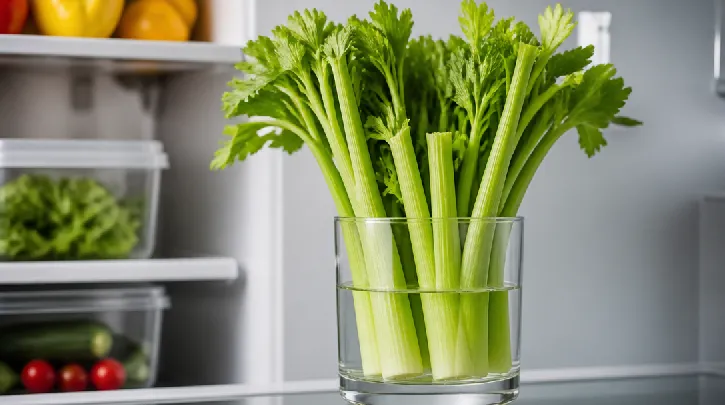
Keeping celery crisp and fresh for an extended period is a common kitchen challenge, yet it is entirely achievable with the right techniques. The most effective way to store whole celery stalks for maximum freshness is by using a science-backed water immersion method, which can extend its crispness for weeks. For cut celery, submerging pieces in water within an airtight container also works wonders for shorter periods.
Nothing is more disappointing than reaching for celery, only to find it limp and rubbery. This widespread issue contributes significantly to household food waste. In the United States, fresh produce accounts for 45.4% of all surplus food, and American households discarded about 43 million tons of food in 2022, accounting for close to half of the food that ends up in a landfill. Learning proper storage methods not only saves you money but also helps reduce this substantial waste.
Why Celery Wilts: Understanding the Science of Crispness
Celery’s signature crunch comes from its high water content, primarily stored within its cells. When celery loses moisture, these cells lose turgor pressure, causing the stalks to become limp and flexible. This process is called transpiration, where water evaporates from the plant tissue.
Another factor contributing to celery’s demise is ethylene gas. Celery naturally produces this plant hormone, which can accelerate ripening and spoilage in many fruits and vegetables. Trapping this gas, for instance, in its original plastic packaging, speeds up its deterioration. While celery produces relatively low levels of ethylene and isn’t highly sensitive to it at low temperatures, prolonged exposure to higher concentrations (10 ppm or more) can lead to a loss of its green color.
The Water Immersion Method: The Science-Backed Gold Standard for Whole Celery
For truly remarkable, long-lasting crispness for whole celery, the water immersion method is superior. This technique leverages osmotic equilibrium, allowing celery’s xylem vessels to draw water upward passively. This replenishes moisture loss and maintains cell wall turgidity.
A 2023 University of California Davis postharvest trial demonstrated the effectiveness of this method. Water-stored celery samples retained 94% of their initial turgor at Day 14, while foil-wrapped controls dropped to 41%. This method can extend peak crispness from 3-4 days to 12-18 days.
How to Store Whole Celery in Water:
- Choose a tall, airtight container, such as a large glass jar or food storage container with a lid.
- Trim about an inch off the root end of the celery bunch.
- Place the celery upright (stems-down) in the container.
- Fill the container with 1-2 inches of cold, filtered water, ensuring only the bottom is submerged, not the entire stalks.
- Cover the container loosely with a lid or silicone cover, allowing for slight air circulation but preventing excessive evaporation.
- Store the container in your refrigerator’s high-humidity crisper drawer at 32-35°F (0-2°C).
- Change the water every 3 days and trim a small slice off the stem ends before refilling to maintain freshness.
This method works by constantly rehydrating the celery, counteracting the natural moisture loss. “A vegetable that is fully moist and firm will seem both crisp and more tender than the same vegetable limp from water loss,” explains Harold McGee in On Food and Cooking: The Science and Lore of the Kitchen.
Foil Wrap: A Popular and Effective Technique for Whole Celery
While the water immersion method for whole celery has scientific backing for superior results, wrapping whole celery in aluminum foil is a widely popular and effective method that significantly extends its freshness compared to plastic bags. This technique can keep celery crisp for two to four weeks, or even longer.
The success of the foil method lies in its ability to strike a balance: it holds moisture in, preventing the celery from drying out, while also allowing the naturally produced ethylene gas to escape. Plastic bags, on the other hand, trap ethylene gas, which hastens spoilage.
How to Store Whole Celery in Aluminum Foil:
- Remove the celery from its original plastic packaging as soon as you bring it home.
- Wrap the entire bunch of celery tightly in aluminum foil.
- Some experts suggest leaving the cut end of the celery barely poking out of the foil. This allows for just enough breathability, preventing moisture accumulation and potential rot at the bottom. However, other sources advocate for completely wrapping it tightly.
- Place the foil-wrapped celery in your refrigerator’s crisper drawer.
It is important to note a different perspective on foil storage. Some research indicates that foil is impermeable to water vapor, can trap ambient humidity leading to mold growth, and does not effectively block ethylene gas, potentially accelerating lignin synthesis that makes celery woody. However, the anecdotal success and widespread endorsement from many sources suggest that for many home cooks, it remains a very practical and effective improvement over plastic storage.
Plastic Bags: When to Use Them (and When Not To)
You should generally avoid storing whole celery in its original plastic bag. Plastic traps ethylene gas, accelerating wilting and spoilage. However, plastic bags can be useful in specific scenarios, especially when combined with other elements.
For chopped celery, an airtight plastic container can be effective, especially if combined with water. For a whole bunch, if foil isn’t available, a loosely closed plastic bag or one with a few ventilation holes might offer a slight improvement over a completely sealed bag, but it’s not ideal.
Storing Cut Celery: The Water Bath Method
Once celery is cut, it loses moisture at a much faster rate. To combat this, submerging cut celery in water is the most effective short-term storage solution. This method keeps the celery hydrated and crisp for up to a week or two.
Steps for Storing Cut Celery in Water:
- Wash and trim the celery stalks thoroughly.
- Cut the celery into your desired snack-sized sticks or chopped pieces.
- Place the cut celery into an airtight container, such as a glass jar or a food storage container with a lid.
- Completely cover the celery with cold, filtered water.
- Seal the container tightly with its lid.
- Store the container in the refrigerator for 4-5 days, making sure to change the water daily or every other day to prevent it from getting cloudy or fermenting.
This method is excellent for meal prepping or having quick, healthy snacks readily available. “Storing celery sticks in mason jars with water makes grabbing them for a snack or a lunch box so easy,” says Taesha Butler of The Natural Nurturer.
Freezing Celery for Longer Storage
Freezing is an excellent option for long-term storage, especially if you plan to use celery in cooked dishes like soups, stews, casseroles, or stir-fries. It’s crucial to understand that freezing changes celery’s texture; it will lose its crispness and become soft or mushy when thawed. For this reason, frozen celery is not suitable for raw consumption.
Blanching Celery for Freezing:
Blanching is highly recommended before freezing, particularly for longer storage, as it helps preserve flavor, color, and texture. This process deactivates enzymes that cause deterioration and helps kill surface bacteria. Blanched celery can last 8-12 months or even longer in the freezer.
- Preparation: Wash celery stalks thoroughly. Trim the ends and any leaves. Chop the celery into desired sizes for cooking (e.g., 1-inch lengths for soups).
- Boil: Bring a large pot of water to a rolling boil. Add the chopped celery and blanch for 2-3 minutes.
- Ice Bath: Immediately transfer the blanched celery to a large bowl of ice water for 2-3 minutes to stop the cooking process. This helps maintain its color and texture.
- Dry: Drain the celery thoroughly and pat it very dry with paper towels or a clean cloth. Excess moisture can lead to freezer burn.
- Flash Freeze: For best results and to prevent clumping, spread the dried celery pieces in a single layer on a parchment-lined baking sheet. Freeze for 1-2 hours, or until solid.
- Package: Transfer the flash-frozen celery into freezer-safe bags or airtight containers. Remove as much air as possible (using a vacuum sealer if available).
- Label and Store: Label with the date and store at 0°F in the freezer.
Freezing Celery Without Blanching:
While blanching is ideal, you can freeze celery without it if you plan to use it within a few months. Unblanched celery typically lasts 1-3 months in the freezer.
- Preparation: Wash, trim, and chop celery into desired cooking sizes.
- Dry: Pat the celery thoroughly dry.
- Flash Freeze: Spread in a single layer on a baking sheet and freeze until solid (1-2 hours).
- Package: Transfer to freezer-safe bags or airtight containers, removing as much air as possible.
- Label and Store: Label with the date and store in the freezer.
Frozen celery can be added directly to cooked dishes without thawing. This convenience makes it a valuable ingredient for quick meal preparation. Chef Chris Mentzer, director of operations for Rastelli Market Fresh, emphasizes, “Freezing celery is a great way to make sure you always have this commonly used ingredient on hand”.
Other Storage Options and Considerations
- Crisper Drawer Settings: Your refrigerator’s crisper drawers are designed for specific humidity levels. Celery thrives in a high-humidity crisper drawer (slider closed) at 32-35°F (0-2°C). Avoid storing it in a low-humidity drawer (slider open), which can accelerate spoilage.
- Ethylene-Producing Fruits: Keep celery away from fruits that produce high levels of ethylene gas, such as apples, bananas, and tomatoes, as this can hasten its ripening and wilting.
- Celery Leaves: Don’t discard celery leaves! They are edible and have a stronger celery flavor. You can use them like parsley in salads, soups, or stir-fries. Store them briefly with the stalks or freeze them separately for cooking.
- Regrowing Celery: You can even regrow celery from its base. Place the trimmed base in a shallow dish of water in a sunny spot. New stalks and leaves will sprout, offering a fresh supply.
Reviving Limp Celery
If your celery has gone a little limp but shows no signs of spoilage, you can often revive it. Limpness is primarily due to water loss, which is largely reversible.
Simply cut a small slice (about a quarter-inch) off the bottom of the celery stalks. This opens up the vascular system of the plant. Then, stand the stalks in a tall glass or container filled with cold, filtered water for a few hours, or even overnight. The celery will absorb the water, rehydrate its cells, and regain much of its crispness.
Signs of Spoilage and When to Discard
Knowing when to discard celery is crucial for food safety. Eating spoiled celery can lead to food poisoning, with symptoms including abdominal pain, vomiting, and diarrhea.
Here are the key signs that your celery has gone bad:
- Softness and Limpness: While slightly limp celery can often be revived, if the stalks are mushy, rubbery, or excessively bendable and don’t regain crispness after a water bath, it’s time to toss them.
- Discoloration: Fresh celery is pale green. If your celery stalks or leaves turn yellow, brown, or develop black spots, it indicates spoilage.
- Slimy Texture: Any slimy or wet film on the celery stalks is a clear sign of bacterial growth and means the celery should be discarded immediately.
- Mold: Fuzzy white, green, or black mold growing on any part of the celery is a definitive sign of spoilage. While you might be able to cut away a small moldy spot if the rest is pristine, it’s generally safer to discard it if mold is widespread.
- Odor: Fresh celery has a mild, earthy scent. If it develops an acrid, sour, or ammonia-like smell, it has spoiled.
Always inspect your celery before consumption. When in doubt, throw it out.
Maximizing Celery Freshness: A Comparison of Storage Methods
Here’s a quick comparison of the most effective ways to store celery:
| Method | Type of Celery | Longevity | Best Use | Pros | Cons |
|---|---|---|---|---|---|
| Water Immersion (Whole) | Whole Stalks | 12-18 days | Raw & Cooked | Maintains peak crispness significantly, scientifically backed. | Requires a tall container and regular water changes. |
| Aluminum Foil (Whole) | Whole Stalks | 2-4 weeks or more | Raw & Cooked | Very effective, widely used, prevents moisture loss while allowing ethylene escape. | Some scientific sources question its effectiveness in preventing mold and ethylene escape compared to water. |
| Water Bath (Cut) | Cut Stalks/Pieces | 1-2 weeks | Raw & Cooked | Keeps cut celery very crisp, great for meal prep. | Requires regular water changes. |
| Freezing (Blanched) | Chopped | 8-12 months | Cooked dishes only | Longest storage duration, convenient for cooking. | Loses crispness, unsuitable for raw consumption. |
| Freezing (Unblanched) | Chopped | 1-3 months | Cooked dishes only | Faster prep than blanched freezing. | Shorter shelf life, potentially more flavor and texture degradation than blanched. |
FAQ
What is the absolute best way to keep celery crisp?
The science-backed water immersion method for whole celery is considered the absolute best for maintaining crispness for up to 12-18 days. This involves trimming the base, placing the celery upright in 1-2 inches of cold water in an airtight container, and regularly changing the water.
Can you really revive limp celery?
Yes, you can often revive limp celery. Trim a quarter-inch off the bottom of the stalks and stand them in a glass of cold, filtered water for a few hours. The celery will absorb the water and regain its crispness.
Why does celery get slimy?
Celery becomes slimy due to bacterial growth, often accelerated by too much trapped moisture or improper storage. A slimy texture is a clear sign of spoilage, and the celery should be discarded.
Should I wash celery before storing it?
Generally, you should not wash celery before storing it, unless you plan to use the water immersion method for cut celery. Excess moisture on unwashed celery can promote bacterial growth and spoilage during storage. Always wash right before use.
Is it better to store celery whole or cut?
For maximum longevity, it is generally better to store celery whole. Once cut, celery loses moisture much faster. If you do cut it, use the water bath method to maintain freshness.
Conclusion
Mastering the art of celery storage is a valuable skill that not only enhances your culinary experience but also plays a role in reducing household food waste. Whether you choose the science-backed water immersion method for whole stalks, the popular foil wrap technique, or opt for freezing for long-term cooking needs, understanding the principles of moisture retention and ethylene gas management is key. By implementing these expert strategies, you can enjoy crisp, fresh celery for weeks, making your meals more flavorful and your grocery budget go further.
