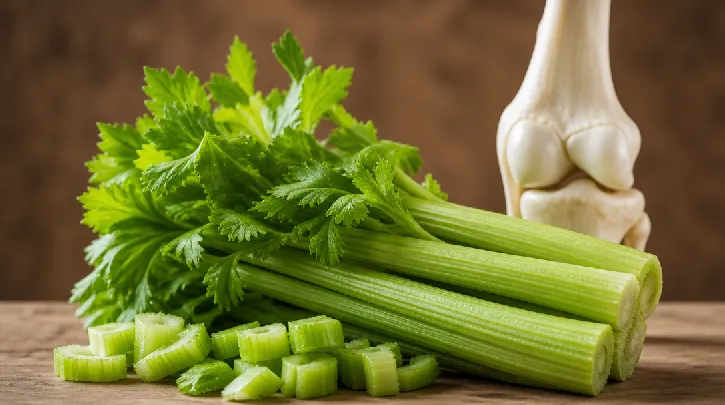
Celery offers a modest but meaningful contribution of Vitamin K, a crucial nutrient for maintaining strong bones. A single cup of chopped raw celery typically provides around 29.6 to 30 micrograms (mcg) of Vitamin K, specifically Vitamin K1 (phylloquinone). This amount represents approximately 25-30% of the recommended daily value for adults, making celery a good supplemental source within a bone-healthy diet.
While often celebrated for its hydrating properties and low-calorie crunch, celery’s role in skeletal health extends far beyond simple hydration. Its Vitamin K content, combined with other synergistic nutrients, makes it a valuable addition for anyone looking to support their bone density and overall bone structure. Understanding how this often- overlooked vegetable contributes to your body’s framework can empower you to make more informed dietary choices.
Understanding Vitamin K: The Bone Builder’s Ally
What is Vitamin K?
Vitamin K is a fat-soluble vitamin essential for several bodily functions, most notably blood clotting and bone health. The “K” in Vitamin K is derived from the Danish and German word “koagulation,” referring to its role in coagulation or clotting.
Unlike some other fat-soluble vitamins, Vitamin K is broken down quickly and excreted from the body. This means consistent dietary intake is important to maintain adequate levels.
Types of Vitamin K: K1 vs. K2
There are two primary forms of Vitamin K found in the diet: Vitamin K1 (phylloquinone) and Vitamin K2 (menaquinones).
- Vitamin K1: This is the most common type found in plant foods, especially green leafy vegetables. Celery primarily contains Vitamin K1.
- Vitamin K2: This form is found in some animal foods, fermented foods, and is also produced by bacteria in the human gut. While K1 is critical for blood clotting, K2 is considered more important for functions outside of blood clotting, including bone and cardiovascular health.
Why is Vitamin K Crucial for Bone Health?
Vitamin K plays a significant, though sometimes overlooked, role in maintaining robust bones. It helps activate specific proteins involved in bone metabolism, particularly osteocalcin.
Osteocalcin is a protein that binds calcium within the bone matrix, which is vital for bone mineralization and maintaining bone density. Without sufficient Vitamin K, osteocalcin cannot function properly, hindering the bone’s ability to incorporate calcium effectively.
Furthermore, Vitamin K can positively affect calcium balance and may help regulate genes involved in bone building and breakdown. Adequate Vitamin K intake is associated with a lower risk of fractures, making it a key nutrient for preventing conditions like osteoporosis.
Celery’s Nutritional Profile: Beyond the Crunch
Celery is more than just a low-calorie, watery snack. It’s a nutrient-dense vegetable that offers several compounds beneficial for bone health and overall well-being.
Focus on Vitamin K Content
Celery is a valuable source of Vitamin K1. Its contribution, while not as high as some dark leafy greens, is significant enough to make a difference when consumed regularly.
Other Bone-Supporting Nutrients in Celery
Celery also provides a blend of other vitamins and minerals that work synergistically to support bone health:
- Calcium: Essential for building and maintaining strong bones, calcium is the primary mineral component of bone structure.
- Magnesium: This mineral supports muscle and nerve function, energy production, and plays a role in bone structure. Low magnesium levels are linked to conditions like osteoporosis.
- Potassium: By helping to maintain the body’s pH balance, potassium can reduce calcium loss through urine, thus helping to preserve bone density.
- Folate (Vitamin B9): Crucial for red blood cell production and DNA synthesis, folate supports cell division, which is important for the growth and repair of bone tissues.
- Antioxidants: Celery is rich in antioxidants, including flavonoids and Vitamin C, which protect bone cells from oxidative damage and reduce inflammation. Chronic inflammation can contribute to bone loss.
The Specifics: How Much Vitamin K is in Celery?
Understanding the exact quantity of Vitamin K in celery can help you integrate it effectively into your diet. Most of the Vitamin K in celery is Vitamin K1 (phylloquinone).
A standard serving of raw, chopped celery provides a notable amount of Vitamin K:
- One cup of chopped raw celery contains approximately 29.6 to 30 mcg of Vitamin K.
- This equates to roughly 25-30% of the daily value (DV) for Vitamin K for adults.
- One medium celery stick (about 40g) provides around 5.6 calories and is rich in Vitamin K, Vitamin C, Vitamin A, folate, potassium, and fiber.
When celery is cooked, its water content reduces, which can slightly concentrate the vitamins. For instance, a cup of cooked, boiled, and drained celery contains around 47% of the Daily Value for Vitamin K, or approximately 56.4 mcg (based on a 120 mcg DV).
Comparison with Other Vitamin K-Rich Foods
While celery is a good source, it’s helpful to see how it stacks up against other vegetables known for their high Vitamin K content. This table focuses on Vitamin K1, the primary form found in these plant sources.
| Food (Serving Size) | Approximate Vitamin K1 (mcg) | % Daily Value (based on 120 mcg for men, 90 mcg for women) |
|---|---|---|
| Kale (1 cup, cooked) | 419-544 mcg | 349-453% (men), 465-604% (women) |
| Spinach (1 cup, cooked) | Over 500 mcg | >400% (men), >550% (women) |
| Collard Greens (1 cup, cooked) | Over 500 mcg | >400% (men), >550% (women) |
| Broccoli (1 cup, cooked) | 180-220 mcg | 150-183% (men), 200-244% (women) |
| Brussels Sprouts (1 cup, cooked) | 180-200 mcg | 150-167% (men), 200-222% (women) |
| Celery (1 cup, raw chopped) | 29.6-30 mcg | 25-30% (men), 33-33% (women) |
| Celery (1 cup, cooked, diced) | ~56.4 mcg | ~47% (men), ~62% (women) |
This comparison shows that while celery provides a good amount of Vitamin K, darker leafy greens like kale and spinach are significantly richer sources. However, celery’s consistent intake contributes to your overall daily Vitamin K needs.
Maximizing Vitamin K Absorption from Celery
Since Vitamin K is a fat-soluble vitamin, consuming it with a source of healthy fat can significantly enhance its absorption.
Tips for Consumption
- Pair with Healthy Fats: Always try to combine celery with a source of healthy fat. This could be a drizzle of olive oil, avocado slices, nuts, seeds, or a dressing made with healthy oils.
- Chop and Chew Thoroughly: Breaking down the celery physically helps release nutrients for better digestion and absorption.
- Consider Juicing (with caution): While juicing can concentrate nutrients, it’s important to be aware that a large quantity of celery used for juicing can lead to a rapid increase in Vitamin K intake. This is especially relevant for individuals on blood thinners.
- Cook Lightly: Light steaming or sautéing can slightly concentrate Vitamin K by reducing water content, but overcooking can reduce some nutrient levels.
Storage Tips
To preserve celery’s nutritional value, store it properly. Keep celery in a plastic bag, loosely tied or knotted, in the refrigerator. Do not wash celery until you are ready to use it.
The Role of Celery in a Bone-Healthy Diet
Incorporating celery into your daily diet is a simple yet effective way to support bone health. Its blend of Vitamin K, calcium, magnesium, potassium, and antioxidants works together to maintain bone density and reduce inflammation.
Integrating Celery into Meals
Celery’s mild flavor and crisp texture make it versatile in many dishes:
- Snacks: Enjoy celery sticks with hummus, almond butter, or guacamole (healthy fat sources).
- Salads: Add chopped celery to green salads, tuna salad, chicken salad, or egg salad for crunch and nutrients. Dress with olive oil-based dressings.
- Soups and Stews: Celery, often combined with onions and carrots, forms a foundational aromatic base for many savory dishes.
- Smoothies: While less common, a stalk of celery can be blended into a green smoothie, especially if you include a source of healthy fat like avocado or flax seeds.
Synergistic Effects with Other Foods
The benefits of celery are amplified when consumed as part of a varied diet rich in other bone-building nutrients. Pairing it with foods high in Vitamin D and calcium, such as dairy products, fortified plant milks, or fatty fish, creates a powerful combination for skeletal health. Vitamin K and Vitamin D work synergistically on bone density.
Expert Insights on Vitamin K and Bone Health
Leading experts emphasize the growing understanding of Vitamin K’s importance beyond its well-known role in blood clotting. Its contribution to bone health is gaining significant recognition.
“Vitamin K, especially K2 as MK-7, plays an important role in keeping calcium in the bones and out of the arteries, benefiting both bone density and cardiovascular health,” states Dr. Susan Brown, a leading authority on bone health.
Research consistently demonstrates that adequate Vitamin K intake is associated with stronger bones and a reduced risk of fractures. For instance, a study involving nearly 1400 older Australian women over 14.5 years found that those who consumed more than 100 mcg of Vitamin K1 daily were 31% less likely to experience any fracture and almost 50% less likely to suffer hip fractures compared to those with lower intake. This level of intake can be easily achieved through consuming 75-150g (about 1-2 serves) of vegetables like spinach, kale, broccoli, and cabbage.
Furthermore, intervention studies have shown that Vitamin K can increase bone mineral density in individuals with osteoporosis and even reduce fracture rates. The synergistic action of Vitamin K with Vitamin D, a classic in bone metabolism, has also been observed to improve bone density.
Potential Considerations and Dietary Needs
While Vitamin K is vital, some individuals need to monitor their intake carefully due to potential interactions.
Daily Recommended Intake of Vitamin K
The Adequate Intake (AI) for Vitamin K for adults in the U.S. is generally:
- Adult men (19 years and older): 120 micrograms (mcg) daily
- Adult women (19 years and older): 90 micrograms (mcg) daily
- Pregnant or breastfeeding women: 90 micrograms (mcg) daily
Most people in the United States get enough Vitamin K from their diets, and deficiency is rare.
Interactions (Blood Thinners)
It is crucial for individuals taking blood-thinning medications, such as warfarin (Coumadin), to maintain a consistent intake of Vitamin K.
Sudden, large changes in Vitamin K intake can interfere with the medication’s effectiveness, potentially leading to dangerous bleeding (if intake decreases) or blood clots (if intake increases). Always consult with your healthcare provider about dietary changes if you are on blood thinners.
FAQ
Does celery directly build new bone tissue?
Celery provides essential nutrients like Vitamin K that help activate proteins crucial for bone mineralization and density. It supports the process of maintaining and strengthening existing bone tissue, rather than directly building new tissue.
Can cooking celery affect its Vitamin K content?
Cooking celery can slightly concentrate its Vitamin K content due to water loss. For instance, a cup of cooked celery may have more Vitamin K than a cup of raw celery.
Are there any risks to eating too much celery for bone health?
Generally, there is no known risk of Vitamin K toxicity from food sources, including celery. However, if you are on blood-thinning medication, large, sudden increases in Vitamin K intake from any source, including excessive juicing of celery, should be discussed with your doctor.
What is the best way to eat celery to get the most Vitamin K?
To maximize Vitamin K absorption from celery, consume it with a source of healthy fat. This could be alongside olive oil, avocado, nuts, or seeds.
Conclusion
Celery, with its modest but consistent Vitamin K content, plays a valuable supporting role in promoting strong and healthy bones. Providing around 25-30% of the daily recommended Vitamin K per cup, this crunchy vegetable contributes to the activation of osteocalcin, a protein critical for calcium integration into the bone matrix. Beyond Vitamin K, celery offers a symphony of bone-supporting nutrients like calcium, magnesium, potassium, and antioxidants, all working in concert to maintain skeletal integrity. By incorporating celery regularly into a balanced diet, especially alongside healthy fats for optimal absorption, you can effectively fuel your framework and support your long-term bone health.
Disclaimer: The information provided in this article is for educational and informational purposes only and is not intended as medical advice. Always consult with a qualified healthcare professional before making any decisions about your health, diet, or treatment. This content is not a substitute for professional medical advice, diagnosis, or treatment.
Explore Related Content
- Health
- Nutrition
- What Specific Compounds in Celery Help Lower High Blood Pressure and Improve Cardiovascular Health? Unlock Celery’s Heart-Healthy Secrets
- Celery Juice for Chronic Inflammation & Gut Health: Does it Really Work?
- Does Celery Juice Cleanse Actually Detox Your Liver? The Scientific Truth Revealed
- Signs of Celery Allergy in Pets: What Symptoms to Watch For and How to React
- Pet Choking on Celery or Bad Reaction: Your First Aid Guide
