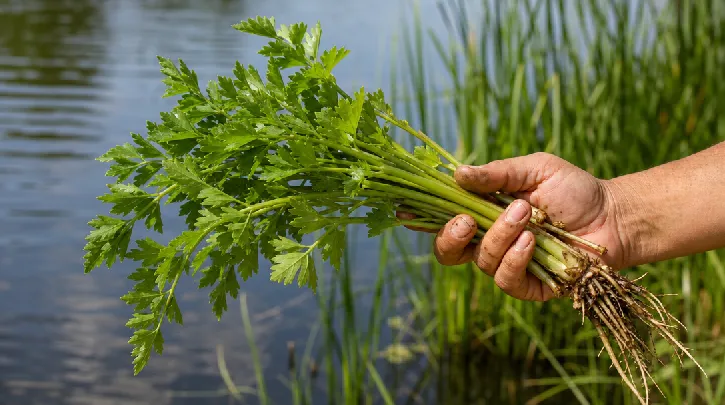
The promise of fresh, free, and flavorful greens often tempts the adventurous forager, but misidentification in the wild can lead to severe consequences. Understanding the precise characteristics for wild celery identification is not merely a skill; it is a critical safeguard. This guide provides detailed features and expert insights to confidently distinguish edible wild celery from its potentially dangerous look-alikes, transforming your foraging efforts into rewarding culinary experiences.
Demystifying Wild Celery: A Guide for Safe Foraging
Many plants bear the name “wild celery,” leading to confusion for beginners. Foraging wild celery requires a clear understanding of what you are seeking. Generally, the term refers to two primary categories: true wild forms of garden celery, Apium graveolens, and the aquatic plant known as water celery plant, or tape grass, Vallisneria americana. Both are considered native celery species in parts of North America, offering unique characteristics and uses.
What Exactly is Wild Celery?
The aquatic plant, Vallisneria americana, is commonly known as wild celery, tape grass, or eelgrass. It is a submerged perennial found in fresh and brackish waters across North America. This species is an important food source for waterfowl and other aquatic wildlife, but its tender leaves are also edible for humans.
Separately, you might encounter wild variants of Apium graveolens, the same species as cultivated celery. These plants typically grow in damp, disturbed soils, often near coastal areas or floodplains. They tend to be tougher and more intensely flavored than their garden counterparts, but they share the same fundamental botanical structure, making them a true native celery species in a different context.
Pinpointing Key Identification Features for Vallisneria americana
Identifying aquatic wild celery, Vallisneria americana, requires a focus on its submerged growth habit and leaf structure. Accurate identification is paramount to ensure you harvest the correct edible wild celery.
- Leaves: The most distinctive feature is its long, ribbon-like leaves, which grow directly from the rootstock. These leaves are typically green to reddish-brown, range from 1/4 to 3/4 inch wide, and can be several feet long, often reaching the water’s surface. They are thin, flexible, and possess a prominent central vein (midrib) that runs their entire length.
- Flowers: Vallisneria americana has distinct male and female flowers. Male flowers are tiny, white, and detach from the plant to float to the surface, where they release pollen. Female flowers are also small and white, borne on long, coiled stalks that allow them to reach the water surface for pollination. After successful pollination, the female flower stalk coils up, pulling the developing fruit underwater.
- Roots/Rhizomes: The plant anchors itself with short, fibrous roots and spreads via creeping stolons (horizontal stems) that produce new plants, often forming dense underwater meadows.
- Growth Habit: It is entirely submerged, except for its flowers. It typically grows in colonies, often forming extensive beds in suitable habitats.
- Habitat: This water celery plant thrives in clear, slow-moving fresh water, including lakes, ponds, rivers, and tidal flats. It prefers sandy or muddy bottoms and depths from a few inches to several feet.
- Size and Structure: The length of the leaves can vary significantly depending on water depth and current. In shallower, calm waters, the leaves might be shorter and more robust. In deeper, moving water, they can be exceptionally long and delicate.
Identifying Terrestrial Wild Celery (Apium graveolens)
If you’re looking for a wild celery species closer to its garden relative, keep these features in mind:
- Leaves: These plants have pinnately compound leaves, meaning smaller leaflets arranged along a central stem. The leaflets are typically broad, toothed, and somewhat shiny, resembling standard celery leaves but often smaller and more rugged.
- Stems: The stems are ribbed and can be green to reddish, similar to cultivated celery but usually thinner and tougher.
- Flowers: Small, white to greenish-white flowers grow in umbrella-shaped clusters (umbels) at the top of the stalks. These are characteristic of the carrot family (Apiaceae).
- Habitat: Terrestrial wild celery prefers moist, often saline, disturbed ground such as coastal marshes, ditch banks, and damp meadows.
- Scent: Crushing a leaf or stem will release a distinct, strong celery aroma, which is a key identifying factor.
Where to Discover Edible Wild Celery
Successful foraging wild celery depends heavily on understanding its preferred environments. For Vallisneria americana, focus your search on aquatic settings. Look in the sh_allows of freshwater lakes, slow-moving rivers, and quiet ponds. The plant is often found in areas with moderate sunlight penetration to the waterbed. My experience suggests that clearer water bodies, where submerged vegetation is visible, offer the best chances. Always consider water quality; stagnant or polluted waters are not suitable for harvesting any edible plant. The warmer months, from late spring through early fall, are generally the best times for foraging wild celery, as the plants are robust and easily visible.
For terrestrial wild Apium graveolens, search in damp, open areas, often near coasts or in disturbed wetlands. These plants are less common than their aquatic counterparts and can be harder to spot among other herbaceous growth. Both types require careful observation of their specific habitat and a keen eye for their unique features.
Distinguishing Wild Celery from Dangerous Look-Alikes
The importance of accurate wild celery identification cannot be overstated. The plant family Apiaceae, to which garden celery and terrestrial wild celery belong, also contains some of the most toxic plants in North America. Foraging wild celery requires vigilance, particularly when distinguishing it from deadly look-alikes. Misidentification can have severe, even fatal, consequences.
Critical Differences: Why Misidentification Can Be Deadly
When foraging for any wild plant, especially those resembling familiar edibles, understanding the dangerous look-alikes is crucial. While Vallisneria americana (aquatic wild celery) has fewer deadly look-alikes in its specific submerged habitat, terrestrial wild celery shares its family with several highly toxic species.
The most infamous and dangerous look-alike in the Apiaceae family is Water Hemlock (Cicuta maculata), considered one of the most poisonous plants in North America. Every part of this plant is toxic, especially the roots. Ingesting even a small amount can cause violent convulsions, nausea, vomiting, abdominal pain, and death.
- Water Hemlock’s Distinguishing Features:
- Stems: Often purple-streaked or mottled, hollow but with horizontal chambers or diaphragms at the base when cut lengthwise. This is a critical identifier.
- Leaves: Compound leaves with finely toothed leaflets. The veins on the leaflets typically run to the notches between the teeth, not to the tips of the teeth, unlike many benign plants.
- Roots: A cluster of thick, fleshy, tuberous roots that emit a rank odor, not the pleasant aroma of celery.
- Habitat: Grows in wet areas, ditches, stream banks, and marshes, similar to some terrestrial wild celery.
Other plants sometimes confused with celery due to their large, segmented leaves include Cow Parsnip (Heracleum maximum) and the invasive Giant Hogweed (Heracleum mantegazzianum). While cow parsnip is native and less toxic, its sap can cause photodermatitis, leading to painful blisters when exposed to sunlight. Giant Hogweed is highly toxic and causes severe burns. These are generally much larger and more robust plants than wild celery, but their umbrella-shaped flower clusters (umbels) might cause confusion for those unfamiliar with plant families.
A Comparison Table: Wild Celery vs. Look-Alikes
This table focuses on the terrestrial forms of wild celery (Apium graveolens) that are more likely to be confused with toxic members of the Apiaceae family. Vallisneria americana (water celery plant) is typically distinct in its aquatic environment.
| Feature | Wild Celery (Apium graveolens) | Water Hemlock (Cicuta maculata) | Cow Parsnip (Heracleum maximum) |
|---|---|---|---|
| Habitat | Moist, often saline, disturbed soil; coastal areas, ditches, marshes. | Wet meadows, ditches, stream banks, marshes. | Moist woods, open areas, stream banks. |
| Leaves | Pinnately compound, broad, somewhat shiny, celery-like leaflets. | Pinnately compound, finely toothed leaflets; veins run to notches, not tips. | Very large, deeply lobed, maple-like leaves; often hairy. |
| Stems | Green to reddish, ribbed, solid or mostly solid. Strong celery odor when crushed. | Often purple-streaked/mottled. Hollow with horizontal diaphragms at base. No celery odor. | Thick, deeply furrowed, hairy. |
| Roots | Fibrous, somewhat fleshy taproot. | Cluster of thick, fleshy tubers; strong, unpleasant odor. | Large taproot. |
| Flowers | Small, white/greenish-white umbels. | Small, white umbels; often flat-topped. | Large, white umbels; often slightly domed. |
| Scent (crushed) | Distinct, pleasant celery aroma. | Rank, unpleasant, or no distinct odor. | Slightly pungent, not celery-like. |
| Toxicity | Edible (though can be bitter/tough). | DEADLY POISONOUS. All parts. | Sap causes photodermatitis (burns with sunlight). |
Preparing and Enjoying Your Foraged Wild Celery
Cleaning and Storage Best Practices
For aquatic wild celery (Vallisneria americana), thorough cleaning is crucial. Gently rinse the harvested leaves under cool running water to remove any sediment, debris, or small aquatic organisms. If the water source is questionable, a quick soak in a weak vinegar solution (1 cup vinegar to 1 gallon water) for a few minutes, followed by a rinse, can help sanitize the greens. I typically give them a good swish in a bowl of cold water, then lift them out, leaving any grit behind.
Terrestrial wild
celery requires similar care. Brush off any soil and rinse well. Inspect leaves and stalks for insects or blemishes. For both types, pat them dry with a clean cloth or use a salad spinner. Store cleaned wild celery in an airtight container or a plastic bag lined with a damp paper towel in the refrigerator. It usually keeps fresh for 3-5 days. For longer storage, blanching and freezing can extend its usability for several months.
Culinary Uses for Wild Celery
The flavor profile of edible wild celery varies significantly between the aquatic and terrestrial varieties. The leaves of the water celery plant (Vallisneria americana) are remarkably tender, mild, and have a faint, almost nutty or grassy taste. They are excellent when used raw in salads, adding a delicate texture and subtle flavor without overpowering other ingredients. I’ve also blended them into green smoothies for a nutrient boost or finely chopped them into a unique pesto. Their mildness makes them versatile.
Terrestrial wild Apium graveolens, on the other hand, typically possesses a more intense flavor, sometimes even bitter, than store-bought celery. When considering other forms of this versatile vegetable, like celery root, different culinary approaches may apply. The stalks can be tougher, making them better suited for cooking. Use them in soups, stews, stir-fries, or to flavor broths, where their strong essence can shine. Some foragers enjoy them blanched and added to potato or tuna salads, offering a robust celery punch. Experimenting with both raw and cooked applications is the best way to discover your preference. I often find the outer stalks of terrestrial varieties too fibrous for raw consumption, but the inner, younger stalks can be surprisingly tender.
Nutritional Benefits and Considerations
Both forms of wild celery contribute valuable nutrients to your diet. Like its cultivated cousin, wild Apium graveolens is a good source of vitamins K and C, folate, and potassium. It also provides dietary fiber, which aids digestion. Vallisneria americana, while not extensively studied for human nutrition, offers vitamins and minerals common to leafy green vegetables.
However, an important consideration for foraging aquatic plants like the water celery plant is the potential for heavy metal accumulation. Plants growing in polluted waters can absorb toxins. Always forage from clean, unpolluted water sources. If you are unsure about the water quality, it is best to avoid harvesting aquatic plants for consumption. The U.S. Environmental Protection Agency (EPA) provides resources on water quality monitoring that can be helpful for assessing local conditions. Information from the EPA on water quality can inform your foraging decisions.
Traditional and Contemporary Uses for Wild Celery
Indigenous peoples across North America have long recognized the utility of native celery species. Vallisneria americana, for instance, has been a traditional food source for various waterfowl, as well as a minor food source for some Native American tribes. Its abundance and ease of harvest made it a reliable wild edible. Today, it is valued by ecological restoration projects for its ability to stabilize sediments and provide habitat for fish and invertebrates. The U.S. Forest Service offers details on the ecological importance of Vallisneria americana.
Terrestrial wild celery, being closely related to cultivated celery, shares many of its traditional uses as a culinary herb and a folk remedy. Its strong flavor made it a valuable seasoning before the widespread availability of cultivated varieties. Modern foragers appreciate it for its robust taste and as a free, nutritious addition to their meals, especially in slow-cooked dishes where its intense flavor can mellow and blend beautifully.
Expert Tips for Sustainable and Safe Wild Celery Foraging
Always Positively Identify
This is the golden rule of foraging: never consume a plant unless you are 100% certain of its identification. When in doubt, throw it out. Use multiple field guides,
cross-reference descriptions, and consult with experienced foragers or botanists if you have any uncertainty. Pay attention to every detail: leaf shape, stem structure, flower arrangement, root system, habitat, and even the scent when crushed. I personally carry at least two different field guides and a magnifying glass when I’m exploring a new area or a plant I’m less familiar with.
Forage Responsibly
Sustainable foraging ensures that wild plant populations can thrive for future generations. Only take what you need and leave plenty behind for wildlife and other foragers. For Vallisneria americana, avoid denuding entire patches. For terrestrial wild celery, if harvesting roots, do so sparingly and consider replanting a portion. Always obtain permission if foraging on private land. Check local regulations for foraging on public lands; some parks or protected areas prohibit it entirely. A good principle is to harvest no more than 10-20% of a healthy patch.
Testing for Palatability and Allergies
Even after positive identification, it’s wise to test for personal palatability and potential allergies. Start by consuming a very small amount of the plant. Wait 24 hours to observe for any adverse reactions, such as skin irritation, digestive upset, or respiratory issues. Some individuals may have allergic reactions to plants in the Apiaceae family, even to cultivated celery. It is always better to err on the side of caution.
What I’d Actually Do: My Foraging Process
When I set out to forage for wild celery, my process is meticulous. First, I scout potential locations, looking for clean, undisturbed water bodies for Vallisneria or moist, open areas for wild Apium. I prioritize locations away from agricultural runoff, industrial sites, or heavy vehicle traffic. I specifically look for clear water, as visibility of the plant is key for the aquatic species, and it generally indicates better water quality. For terrestrial types, I check for any signs of recent herbicide use.
Once I’ve found a promising patch, I perform a thorough identification check, using my field guides and examining all parts of the plant, especially the stem and root structure if it’s an Apiaceae member. I always crush a small piece and smell it, comparing it to my memory of celery. If there’s even a shadow of doubt about it being water hemlock, I walk away. I harvest sparingly, using a sharp knife or my fingers to snip leaves or stalks, being careful not to disturb the root system or surrounding plants. I transport my harvest in a breathable bag or basket to prevent wilting and immediately clean it upon returning home, storing it properly for culinary use. This disciplined approach ensures both safety and sustainability.
Frequently Asked Questions About Wild Celery
Q1: Is all wild celery edible?
A1: The term “wild celery” can refer to a few different plants. Vallisneria americana (aquatic wild celery) is generally considered edible. Wild forms of Apium graveolens (terrestrial wild celery) are also edible, but their flavor can be stronger or more bitter than cultivated celery. However, many toxic plants, especially in the carrot family (Apiaceae), resemble celery. Never eat any wild plant unless you are 100% certain of its identification.
Q2: How does wild celery differ from garden celery?
A2: Aquatic wild celery (Vallisneria americana) has long, ribbon-like leaves and grows submerged in water, making it visually very different from garden celery. Terrestrial wild celery (Apium graveolens) is the same species as garden celery but grows wild. It typically has thinner, tougher stalks and a more intense, sometimes bitter, flavor due to growing in harsher conditions without cultivation.
Q3: Where is the best place to find wild celery?
A3: Vallisneria americana thrives in clear, slow-moving freshwater environments like lakes, ponds, and quiet river sections across North America. Terrestrial wild celery (Apium graveolens) is found in moist, often saline, disturbed areas, such as coastal marshes, ditches, and damp fields.
Q4: What parts of wild celery can you eat?
A4: For both aquatic (Vallisneria americana) and terrestrial (Apium graveolens) wild celery, the leaves and stems (stalks) are typically consumed. Vallisneria americana leaves are tender and suitable for raw consumption. Terrestrial wild celery stalks may be fibrous, making them better suited for cooking.
Q5: Can I grow wild celery at home?
A5: You can cultivate both types. Vallisneria americana can be grown in home aquariums or ponds, where it makes an excellent oxygenator and provides habitat. Wild Apium graveolens can be grown from seed in a garden with moist, fertile soil, though it may retain some of its wild characteristics of stronger flavor and tougher texture compared to cultivated varieties.
Mastering wild celery identification is a rewarding endeavor that opens the door to unique culinary experiences. By understanding the distinct features of edible wild celery, differentiating it from dangerous look-alikes, and committing to safe and sustainable foraging practices, you can confidently integrate these native greens into your diet. Approach foraging with respect, knowledge, and an unwavering commitment to safety.